Claw clip hairstyles for fine hair solve the exact problems fine hair creates: clips that slide out, updos that collapse, and styles that reveal how little hair there really is. The secret is that claw clips are actually ideal for fine hair — their teeth grip without the tension that snaps delicate strands, and the right techniques can make fine hair look twice as thick. These nineteen styles are engineered specifically for fine, thin, or low-density hair, with tricks for grip, volume, and hold built into every one. From the classic French twist to volume-boosted crown styles, each look keeps the clip secure all day and leaves hair looking fuller than it is. No more clips sliding down by noon, no more flat, sad buns — just styles that work with fine hair instead of against it.
Classic French Twist

The classic French twist is the claw clip’s original purpose, and it flatters fine hair beautifully. She gathers her hair as if for a low ponytail, twists it upward along the back of her head, and clamps a medium claw clip vertically over the twist to hold it. The twist’s folded structure creates the illusion of thickness — fine hair doubled back on itself looks twice as dense — while the clip’s teeth grip the twist without the breakage bobby pins cause. It works on shoulder-length and longer fine hair and reads polished enough for professional settings. To build it, she should prep with texturizing spray for grip and choose a clip with strong teeth rather than a smooth fashion clip. Pro tip: she should let the twist’s top fan out slightly over the clip’s edge, which hides the hardware and adds softness.
Half-Up Claw Clip
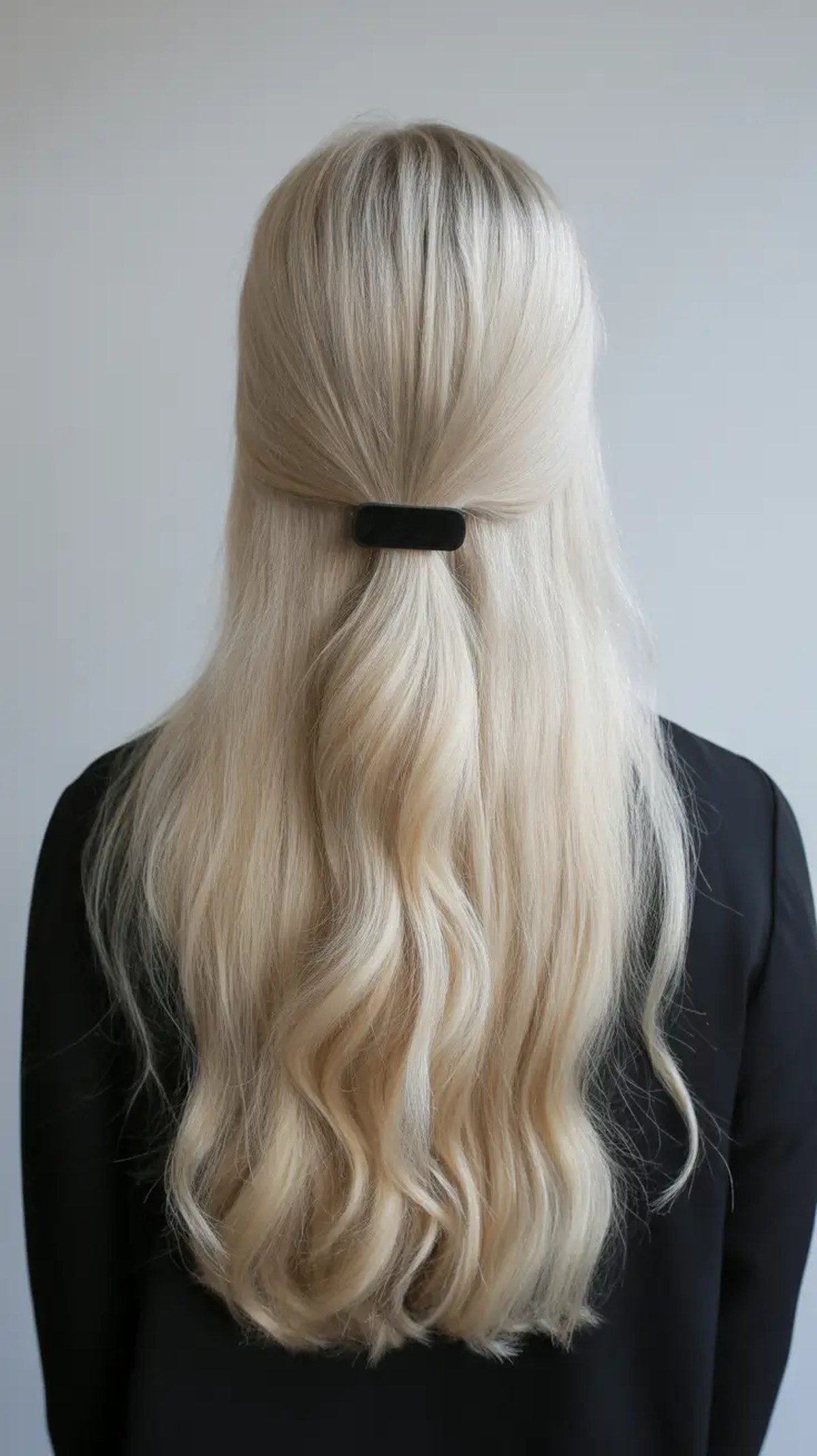
The half-up claw clip is the easiest entry point for fine-haired clip wearers. She gathers the top half of her hair, gives it one loose twist, and clamps a small or medium claw clip at the crown, leaving the bottom half flowing. Because only half the hair needs holding, even the finest hair provides enough bulk for the clip to grip securely — the most common complaint about clips simply does not apply here. The style adds instant crown structure, keeps hair off the face, and takes under a minute. It works on every length past the chin and every texture. To maximize hold, she should backcomb the gathered section lightly before twisting, which gives the clip’s teeth something to bite. Pro tip: positioning the clip’s hinge at the bottom rather than the top distributes the weight better and prevents the slow slide that plagues fine hair.
Mini Claw Clip Accents

Mini claw clip accents sidestep fine hair’s grip problems entirely by using tiny clips that need almost nothing to hold. She twists small face-framing sections or pulls back two thin temple pieces, securing each with a mini claw clip — one on each side, or a scattered trio for a playful look. The small scale means even baby-fine hair provides enough bulk, and the decorative effect reads as intentional styling rather than a failed updo. It works on every length including bobs and pixie grow-outs, making it the most inclusive style on this list. To place them, she should twist each section before clipping for extra grip and choose minis with teeth. Pro tip: matte minis in tortoiseshell or black look chic and grown-up, while colorful ones skew playful — she should match the mood to the occasion.
Low Twisted Bun

The low twisted bun gives fine hair the full, secure updo it rarely achieves on its own. She pulls her hair into a low ponytail, twists the tail loosely, coils it around its base, and clamps a medium claw clip over the coil horizontally. The twist-and-coil method packs fine hair into a dense shape that looks substantial, and the clip holds the whole structure without a single pin — no pin slippage, no collapsed bun by afternoon. It works on medium to long fine hair and suits professional and formal settings. To build it, she should texturize with dry shampoo first and keep the coil loose rather than tight, since a slightly messy coil looks fuller. Pro tip: she should insert the clip with the teeth pointing upward into the coil’s underside, which anchors against gravity instead of with it.
Voluminous Top Knot
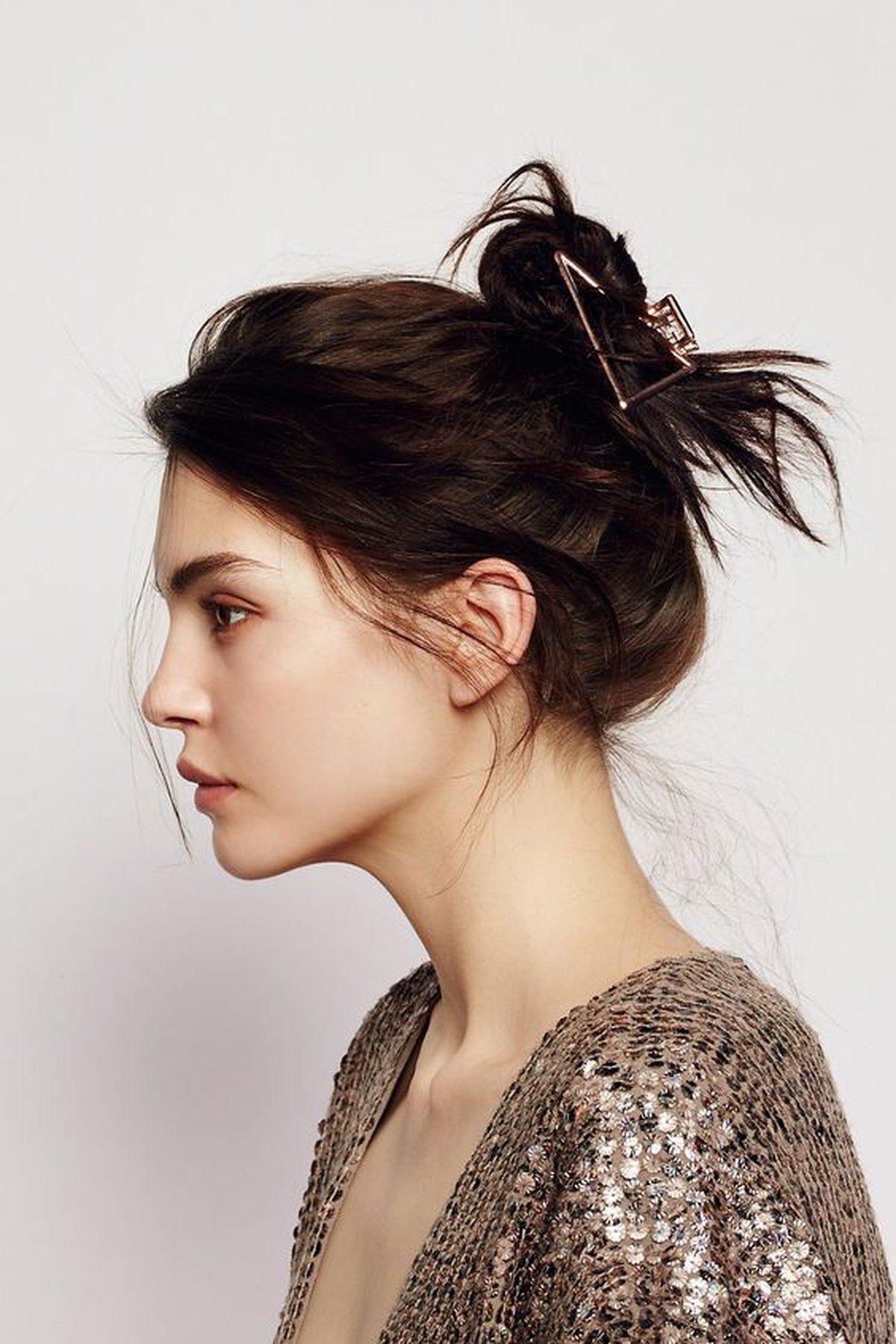
The voluminous top knot uses backcombing and strategic clip placement to give fine hair a bun with real presence. She flips her head forward, gathers her hair into a high ponytail, backcombs the tail lightly, then twists it into a loose knot and secures it with a large claw clip. The upside-down gathering alone adds crown volume that fine hair desperately needs, and the backcombed texture fills out the knot so it looks substantial rather than sparse. It works on medium to long fine hair and is perfect for casual days and workouts. To maximize fullness, she should pancake the finished knot gently, pulling the edges outward. Pro tip: a mesh hair donut hidden inside the knot is the ultimate fine-hair cheat — invisible, weightless, and it triples the knot’s apparent size.
Claw Clip Ponytail
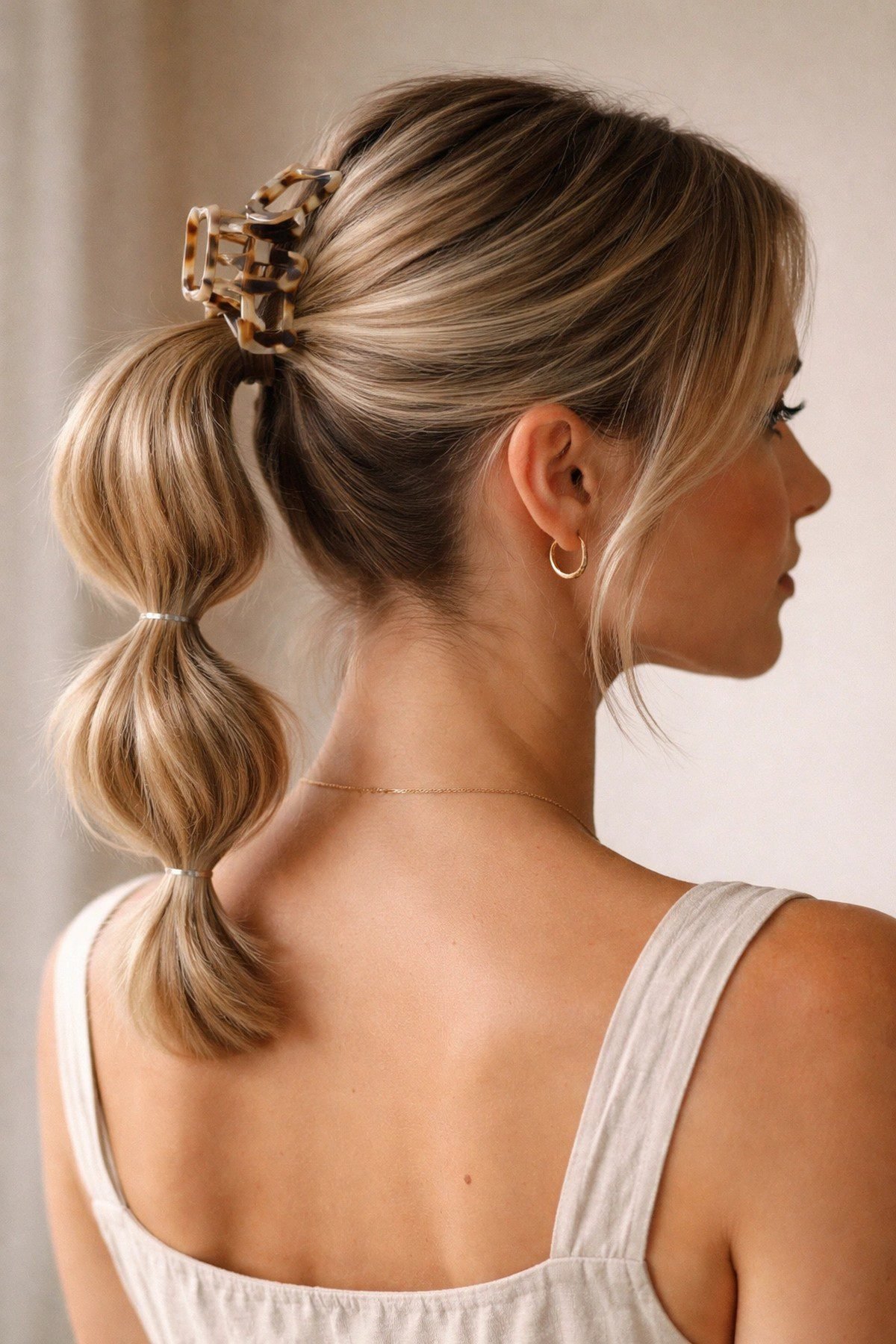
The claw clip ponytail upgrades the basic pony with texture and hold that fine hair needs. She gathers her hair into a mid-height ponytail, then instead of an elastic, clamps a medium claw clip vertically at the ponytail’s base, letting the tail cascade over the clip. The clip creates a lifted, slightly tousled effect at the base that looks fuller than an elastic pony, and its teeth grip fine hair more securely than a stretching elastic. It works on medium to long fine hair and bridges casual and smart-casual settings. To build it, she should backcomb the crown lightly before gathering and choose a clip sized to her hair’s actual volume — too large and it gapes. Pro tip: she should curl the ponytail’s ends with a quick pass of the iron, because defined ends make the whole ponytail look thicker.
Textured Messy Bun

The textured messy bun is fine hair’s best friend because messiness is camouflage. She pulls her hair into a loose high ponytail, backcombs it for texture, twists it roughly into a bun, and clamps a large claw clip over the whole thing. The deliberate undone-ness hides exactly what fine hair wants to hide — sparse spots, thin ends, scalp show-through — while the texture creates an impression of abundance. The clip’s strong grip means the bun survives the whole day, unlike pin-secured messy buns that collapse on fine hair. It works on medium to long fine hair and is ideal for weekends and casual settings. To build it, she should use dry shampoo generously for grit and pull pieces loose after clipping for softness. Pro tip: she should leave the front hairline slightly soft rather than scraped — a little looseness at the front makes the whole style look intentional.
Side-Swept Twist
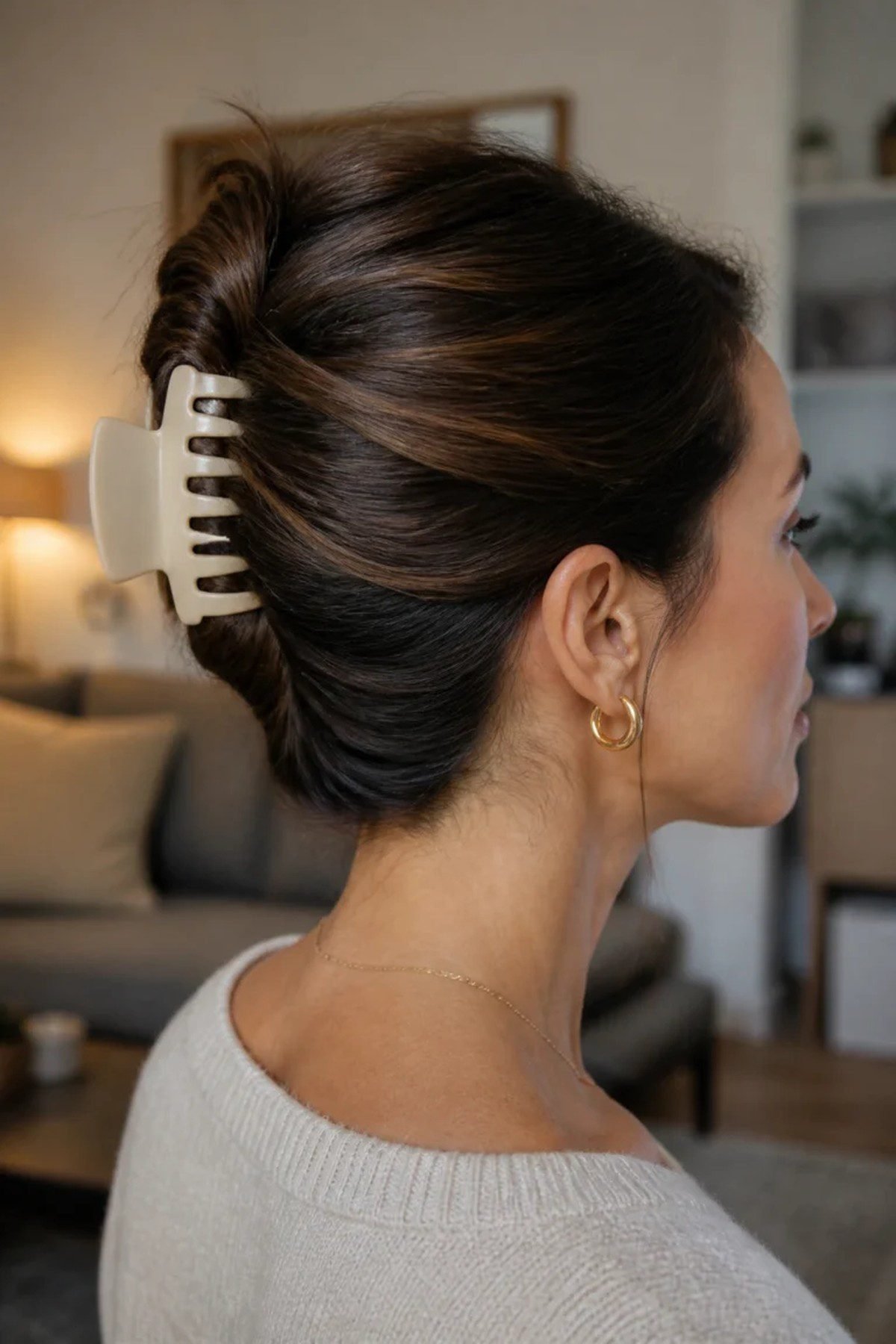
The side-swept twist uses asymmetry to create the fullness fine hair lacks. She sweeps all her hair to one side, twists it loosely from the nape upward, and clamps a medium claw clip vertically along the twist behind one ear. Gathering everything to one side doubles the visible density instantly, and the twist’s rope texture adds dimension that flat fine hair never has on its own. It works on medium to long fine hair and flatters most face shapes, with the side sweep adding width where fine hair usually falls flat. To build it, she should prep with texturizing spray and keep the twist loose enough to pancake slightly. Pro tip: draping the twist over the shoulder in front, rather than leaving it behind, shows off the texture and makes the style look deliberately styled from every angle.
Braided Claw Clip Updo

The braided claw clip updo combines a braid’s grip with a clip’s convenience for maximum fine-hair security. She braids her hair loosely — a single three-strand or fishtail braid — then coils the braid up and clamps it with a medium claw clip. The braid does two jobs: its woven structure gives the clip’s teeth far more to grip than loose fine hair, and pancaking the braid makes it look dramatically thicker before it ever gets pinned up. The result is an updo that genuinely stays put on the finest hair. It works on medium to long fine hair and suits both casual and dressy settings. To build it, she should pancake aggressively — fine hair needs the help — and coil the braid flat against the head. Pro tip: a slightly dirty-hair day is ideal for this style, since natural oils add the grip that makes braids hold.
Double Claw Clip Style

The double claw clip style distributes fine hair’s limited volume across two anchor points for twice the hold. She divides her hair horizontally, twists the bottom section up and clips it, then twists the top section and clips it just above — or she places two clips side by side for a playful, Y2K-inspired look. Splitting the job means each clip holds only half the hair, so neither slides under weight it cannot manage, which is the exact failure mode of single large clips on fine hair. It works on medium to long fine hair and suits casual, creative settings. To build it, she should use medium clips rather than large ones and stagger their positions so they do not compete. Pro tip: two matching mini or medium clips in a pretty finish — tortoiseshell, pearl, matte gold — turn this practical style into a deliberate fashion statement.
Sleek Low Chignon
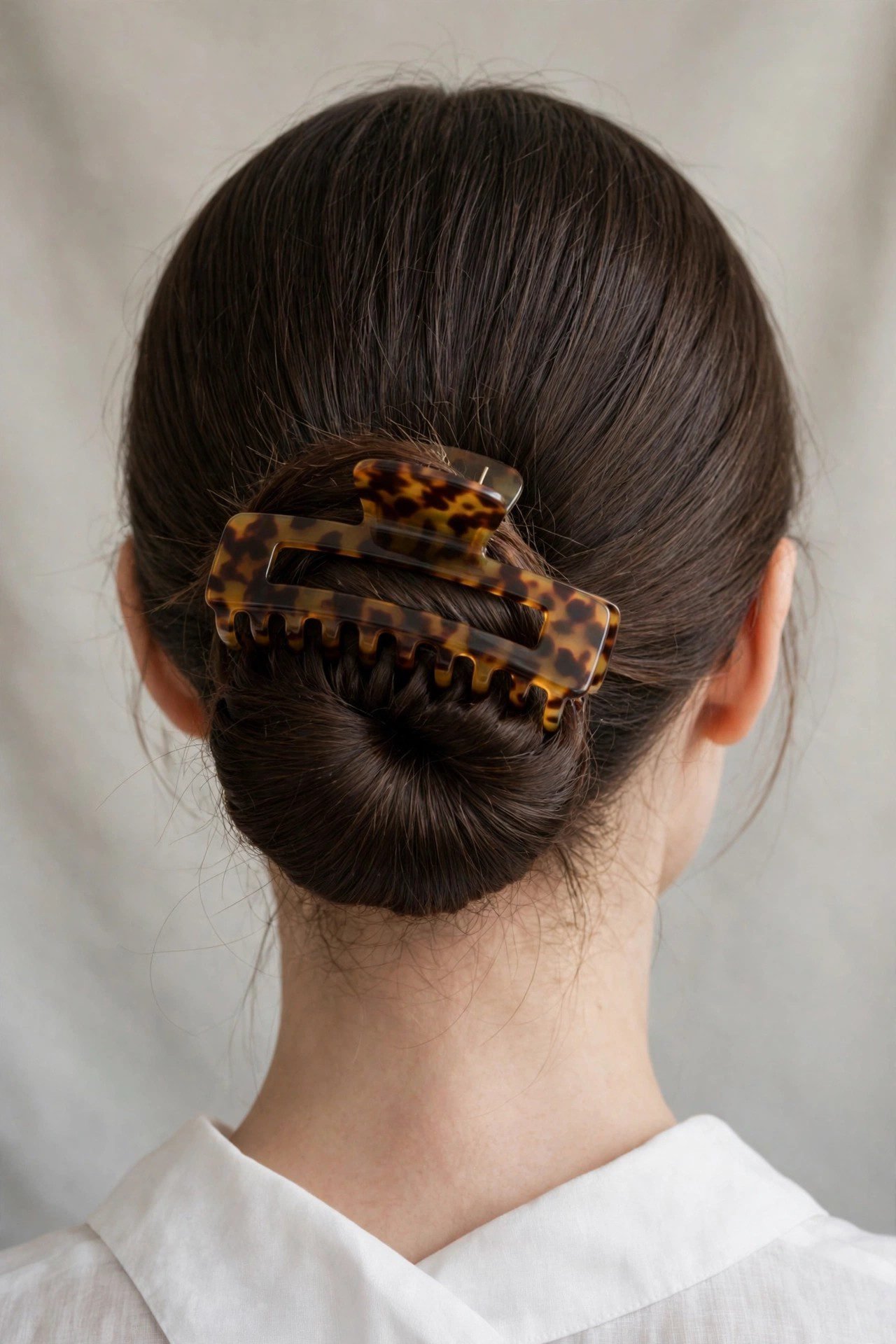
The sleek low chignon proves that fine hair can do polished just as well as thick hair. She smooths her hair back with a light cream, twists it into a neat coil at the nape, and secures it with a medium claw clip placed horizontally. The sleek finish is actually easier on fine hair than on thick hair — there is less bulk to tame — and the low, controlled shape looks refined and professional. The clip replaces the dozen pins a chignon usually needs, and its teeth hold fine hair’s smooth surface better than pins that slide out. It works on medium-length fine hair and is ideal for work and formal events. To get the sleekness, she should brush with a boar-bristle brush after applying product and keep the coil tight and neat. Pro tip: a deep side part before smoothing adds a touch of softness that keeps the sleek style from looking severe.
Fishtail Braid with a Clip
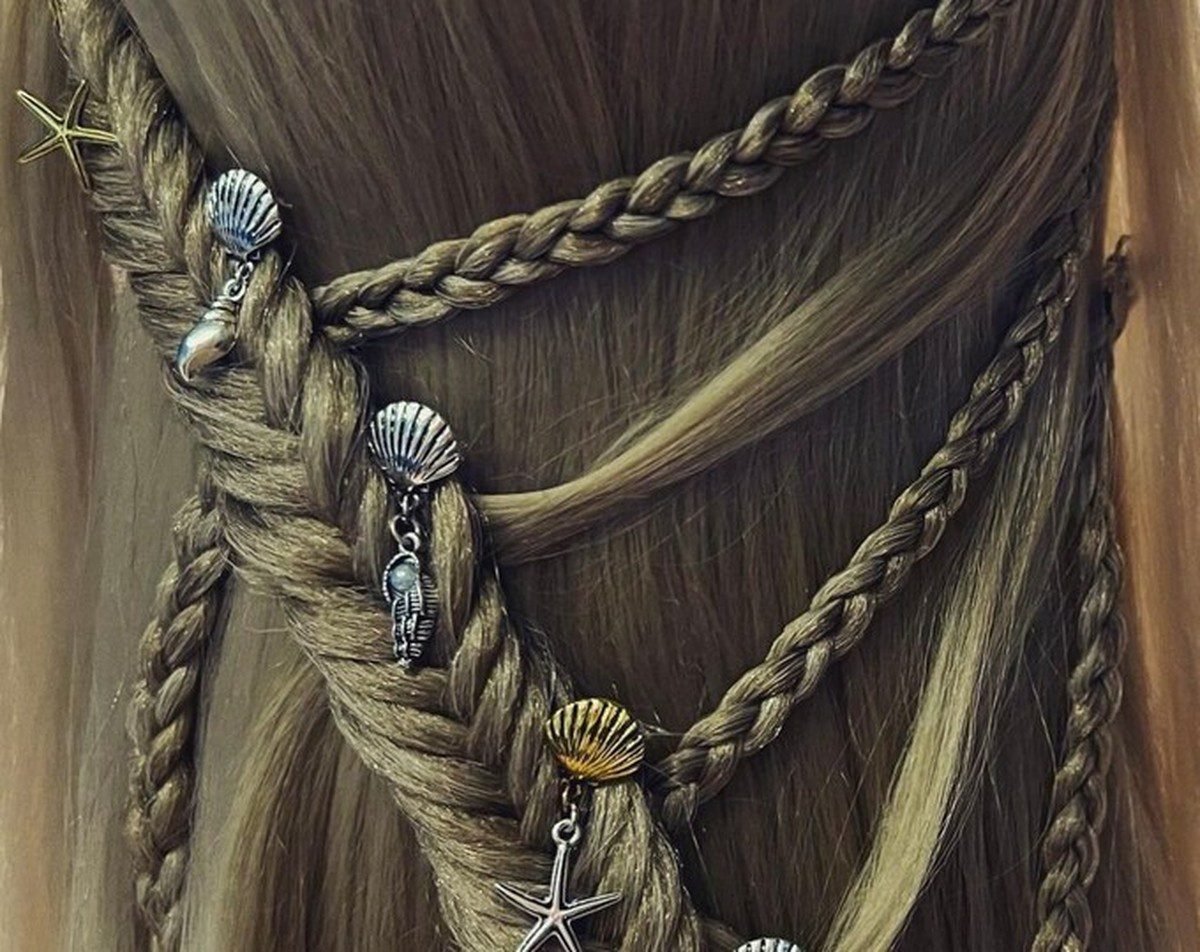
The fishtail braid with a clip turns fine hair’s braiding weakness into a strength. She weaves a loose fishtail braid — the fine, intricate pattern looks delicate and pretty on fine hair rather than sparse — then coils it up or folds it and secures it with a decorative claw clip. Fishtails pancake beautifully, so she can widen the braid dramatically to create the illusion of thickness before clipping it up. The clip’s grip on the textured braid is far stronger than on loose fine hair. It works on medium to long fine hair and suits romantic, bohemian settings. To build it, she should keep the fishtail loose from the start, since tightening later is harder, and pancake each stitch as she goes. Pro tip: a decorative clip — pearl, crystal, or floral — placed where the braid meets the coil makes the hardware look like jewelry.
Curly Pineapple Updo
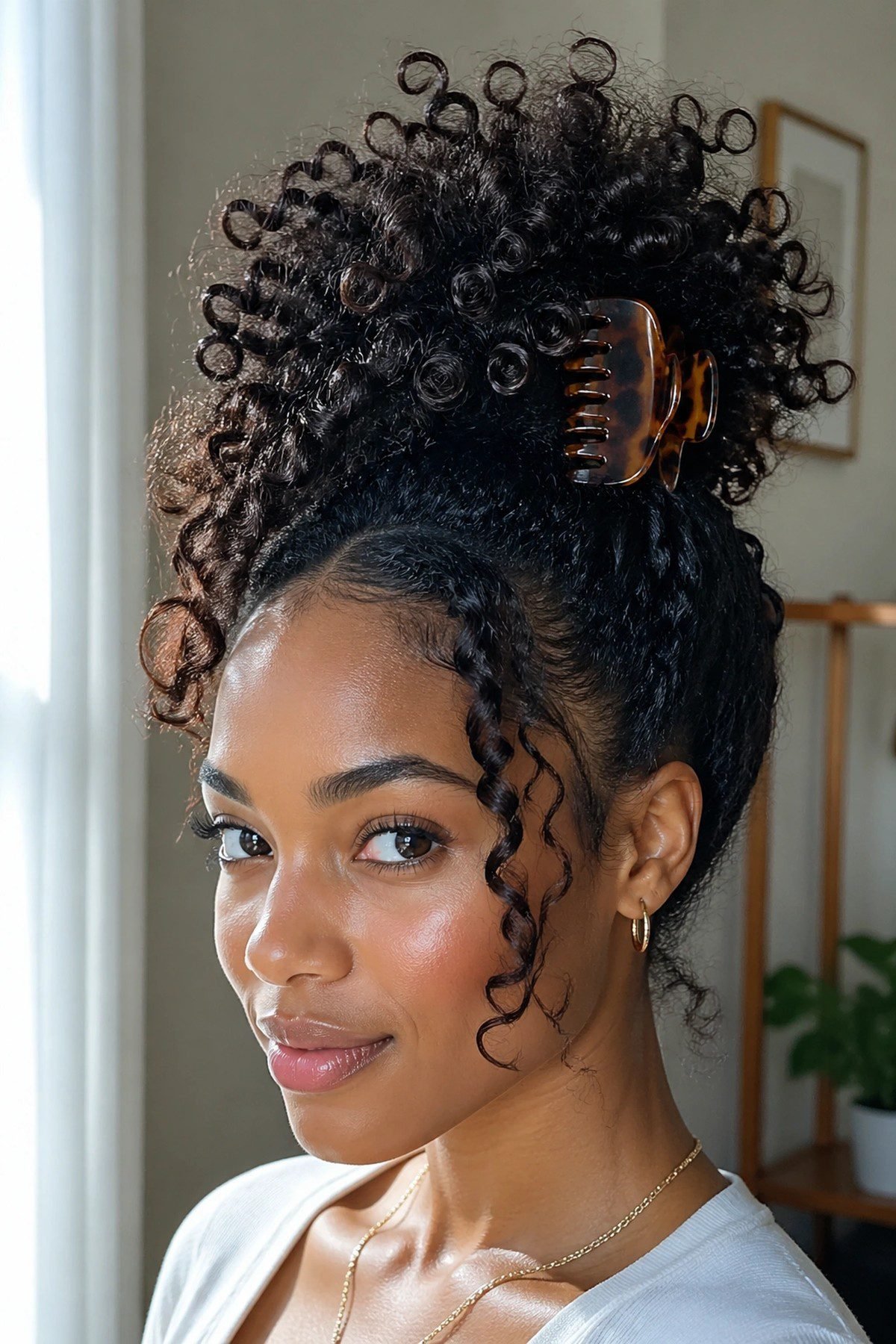
The curly pineapple updo with a claw clip protects fine curls while showing them off. She gathers her curls loosely at the very top of her head — the classic pineapple — and instead of an elastic that would dent the curl pattern, clamps a large claw clip gently around the base. The clip’s wide, toothed grip holds without compressing the curls, preserving the volume that fine curly hair works so hard to build. It works for curly and wavy fine hair of medium length and is perfect for sleeping, working out, or casual days. To do it, she should gather loosely without pulling the curls taut and choose a clip large enough to encircle without squeezing. Pro tip: this is the ideal overnight style — she should pineapple with the clip before bed and wake up to preserved, voluminous curls with no elastic dents.
Twist-and-Tuck Style

The twist-and-tuck is the no-clip-skills-required style that works on the finest hair. She parts her hair down the middle, twists each side back from the temples, and tucks the twisted ends up under a horizontally placed claw clip at the back of the crown. The twists create the entire style — there is no bun or ponytail for the clip to fail at holding — so even the finest hair provides enough twisted texture for a secure grip. It takes two minutes, works on chin-length and longer fine hair, and looks softly romantic. To build it, she should twist firmly enough that the ropes hold their shape and tuck the ends fully under the clip so nothing pokes out. Pro tip: she should cross the two twists over each other before tucking, which creates a pretty woven detail and doubles the anchor points.
Volume-Boosted Crown Twist
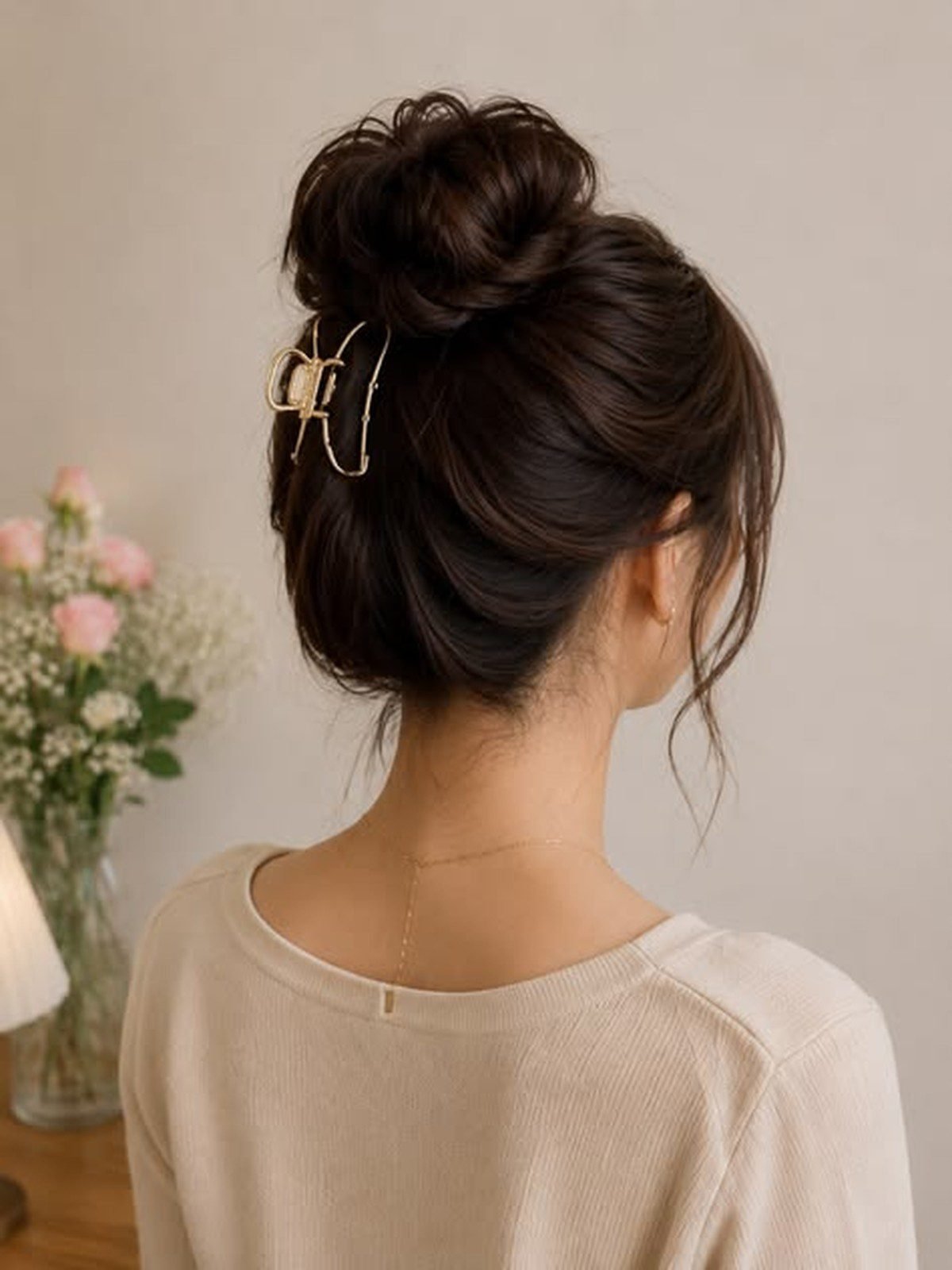
The volume-boosted crown twist is engineered to give fine hair the crown lift it never has naturally. She backcombs the crown section lightly, twists it back loosely — keeping the backcombed volume intact inside the twist — and secures it with a medium claw clip, letting the twist sit high and proud. The backcombing hidden inside the twist is the trick: it creates structural volume that the smooth outer layer conceals, so the crown looks naturally full. The clip holds the twist without flattening the lift the way an elastic would. It works on all fine hair lengths past the chin and instantly makes hair look thicker from the front. To build it, she should backcomb in small sections and smooth only the very top layer. Pro tip: a light mist of volumizing spray on the crown before backcombing makes the lift last all day instead of collapsing by noon.
Claw Clip on a Bob

The claw clip on a bob proves short fine hair is not excluded from the claw clip trend. She gathers the top section of her bob — or all of it for a full updo — twists it once, and clamps a small or medium clip at the back. On bob-length fine hair, even a small gathered section looks substantial relative to the short length, so the style appears full and intentional rather than skimpy. The clip holds bob-length hair easily since there is minimal weight pulling it down — the exact opposite of long hair’s struggle. It works on chin-to-shoulder bobs and is perfect for growing-out phases. To build it, she should use a clip proportioned to the style — small clips for half-up, medium for full-up — and let the bob’s ends fan out over the clip. Pro tip: she should leave the front pieces of the bob loose around the face, which softens the look and shows off the cut.
Milkmaid Twist with a Clip
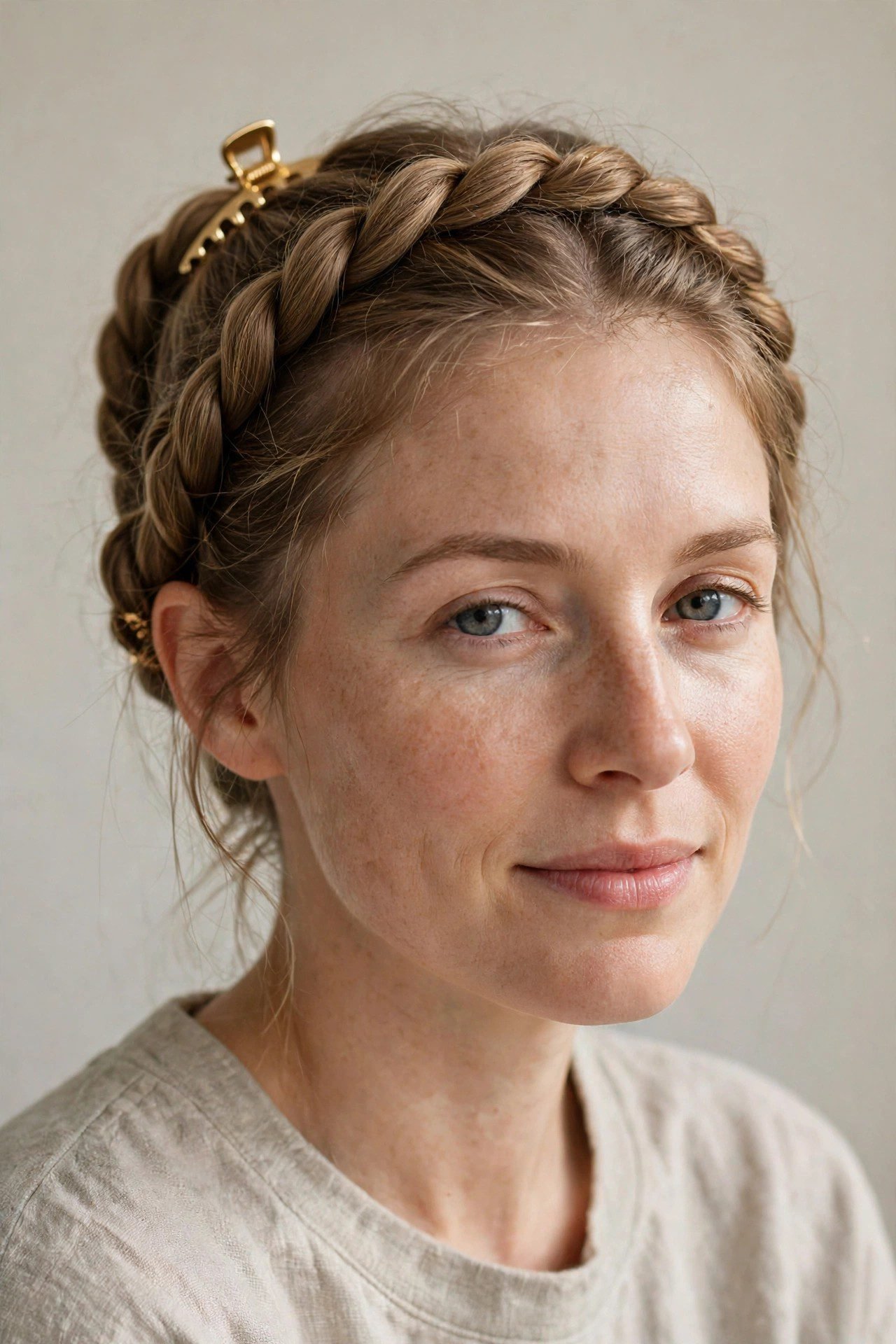
The milkmaid twist with a clip adapts the crown braid for fine hair that cannot fill a full braid. She twists — rather than braids — two sections from each temple up and over the crown, crossing them and securing the ends with small claw clips hidden underneath. Twists need less hair than braids to look full, so fine hair that would make a skimpy milkmaid braid creates a perfectly plump milkmaid twist. The clips hide under the crossed twists, making the style look pin-secured while being far more comfortable. It works on medium-length fine hair and suits romantic and vintage-inspired settings. To build it, she should twist each section away from the face and cross them snugly at the crown’s peak. Pro tip: she should pancake the twists gently before crossing — widening them is what creates the braid-like fullness.
Loose Low Pony with a Clip
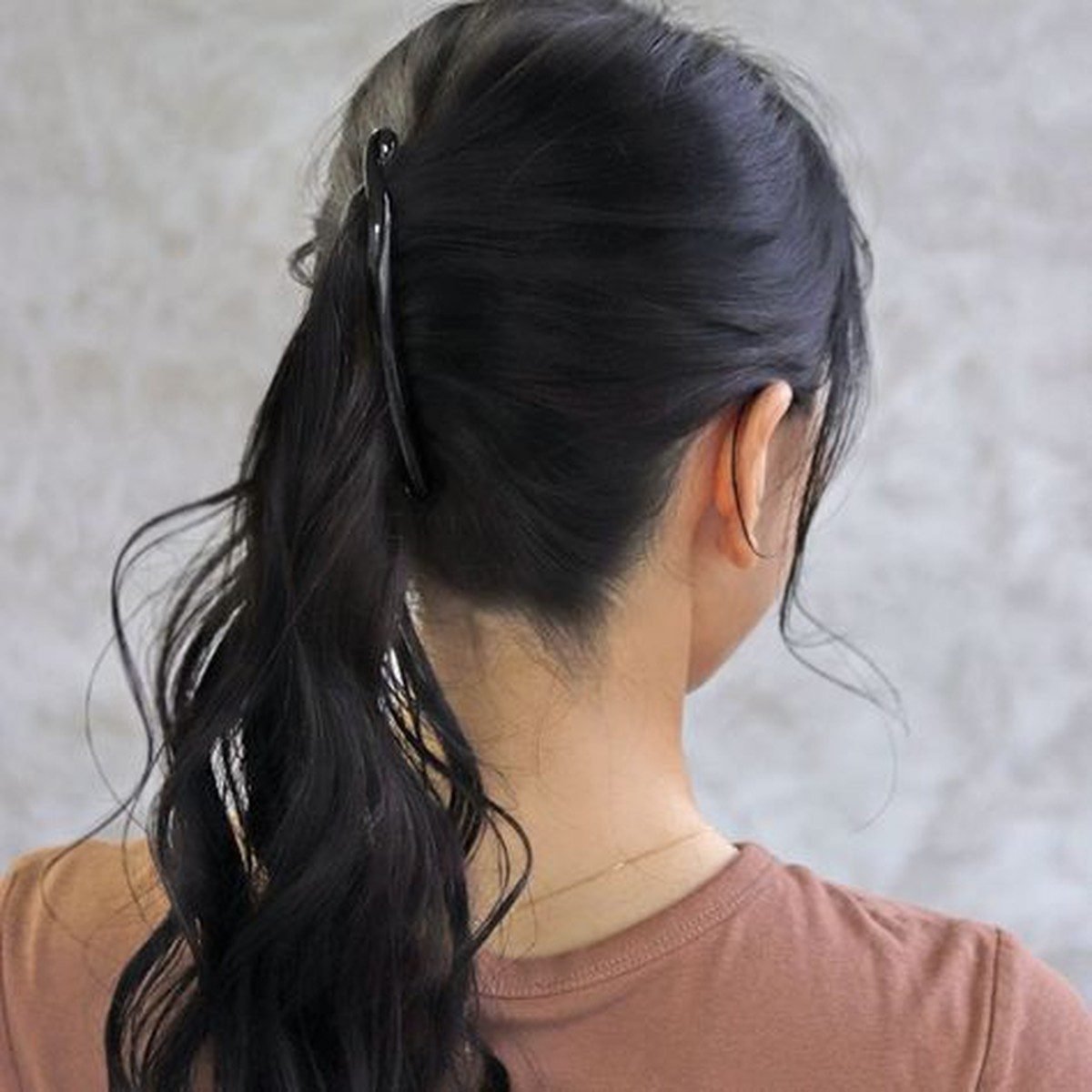
The loose low pony with a clip is the relaxed fine-hair style that still looks styled. She gathers her hair into a loose, low ponytail at the nape — keeping it soft rather than scraped — and clamps a medium decorative claw clip over the base instead of an elastic. The looseness is flattering on fine hair because tight ponytails expose scalp and emphasize thinness, while a soft gather looks fuller; the decorative clip adds the intentional detail that separates this from an afterthought ponytail. It works on medium to long fine hair and suits everyday wear. To build it, she should backcomb the crown lightly before gathering and let a few soft pieces escape at the hairline. Pro tip: she should choose a clip with visual weight — tortoiseshell, acetate patterns, or matte colors — since the clip is the style’s focal point.
Face-Framing Layers with a Clip
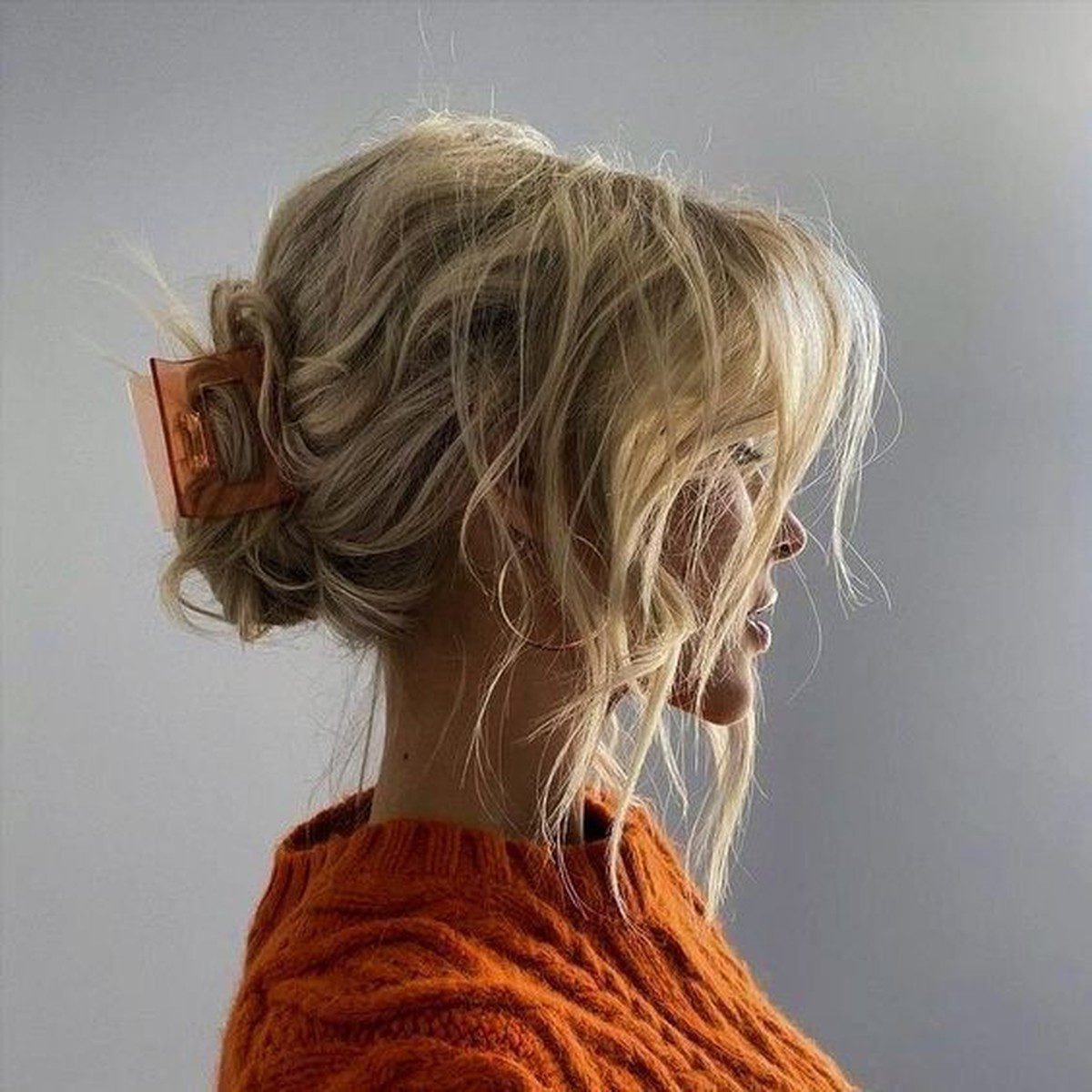
Face-framing layers with a clip turn fine hair’s natural softness into the style’s best feature. She pulls her hair back into a loose low twist or bun secured with a claw clip, then deliberately pulls out the face-framing layers — or curls them lightly — so they frame her face softly. On fine hair, these loose pieces look delicate and pretty rather than stringy, and they draw the eye to the face instead of the updo’s size. The clip-secured back keeps everything neat while the front stays romantic. It works on layered fine hair of any length past the chin. To build it, she should identify her natural layer lines before pulling pieces out, so the framing looks cut-in rather than random. Pro tip: she should curl just the pulled pieces with one quick pass of the iron — defined face-framers elevate the entire style in under a minute.
Fine hair and claw clips are a better match than most people think — the clip’s gentle grip protects delicate strands while the right technique creates volume that lasts. The recurring tricks are simple: texturize first, choose smaller clips with teeth, and build in backcombing or pancaking for fullness. With these nineteen styles, fine hair finally gets the secure, voluminous updos it deserves.