When I first walked into my friend’s new home, I noticed something odd. The living room looked warm. The kitchen felt bright. But the staircase wall stood empty. It felt like a missed chance. A blank page in the middle of a good story. That visit reminded me of a simple truth. Walls along the stairs are not just walls. They guide the eye. They shape the mood. They connect floors and feelings.
A staircase is a path you use every day. You walk up. You walk down. You pass that wall again and again. This space can lift your mood or drain it. Good design brings balance, color, and rhythm. It can add depth to small homes. It can add drama to large ones. Interior designers often treat stair walls as a focal point. Not an afterthought. Research from design leaders like Architectural Digest and Houzz shows that visual continuity improves how people feel inside a space. Clean lines. Thoughtful lighting. Personal touches. These choices matter.
The Story Your Stairs Can Tell

Think of your staircase wall as a storyteller. It can share your memories. It can show your taste. It can create a smooth transition between rooms. A gallery wall speaks of family and travel. A textured finish whispers luxury. A bold mural shouts creativity. Each step becomes part of the experience.
Home styling experts often highlight three elements here. Visual flow. Proper scale. Smart lighting. Flow keeps the design connected to nearby spaces. Scale ensures artwork or décor fits the height and length of the wall. Lighting brings everything to life. The American Society of Interior Designers emphasizes layered lighting for hallways and transitional areas. Wall sconces. LED strips. Accent lights. These tools turn a simple wall into a feature.
Start With Purpose, Not Decoration


Before you hang art or add paint, pause. Ask one clear question. What do I want this wall to do? Add brightness? Show personality? Create elegance? Purpose guides every smart decision. Without it, décor feels random. With it, design feels intentional.
Professional decorators often begin with a mood board. They gather colors, textures, and inspiration. Pinterest, Elle Decor, and Better Homes & Gardens recommend this step because it reduces costly mistakes. It also keeps the design consistent. Choose two or three main tones. Add one accent. Repeat shapes or materials for harmony. This approach keeps the staircase visually calm yet interesting.
Understand Light Before Color


Light changes everything. A dark stairwell needs brightness. A sunlit staircase can handle deeper tones. North-facing walls often feel cooler. South-facing ones feel warmer. Benjamin Moore and Sherwin-Williams both stress test paint samples under real lighting. Morning light differs from evening light. Artificial bulbs shift colors, too.
Use lighting as a design partner. Add LED strip lights along the steps. Install wall sconces for softness. Try recessed spotlights for drama. Lighting improves safety as well. The Illuminating Engineering Society links proper stair lighting with reduced accidents. Beauty and function should work together.
Balance Visual Weight
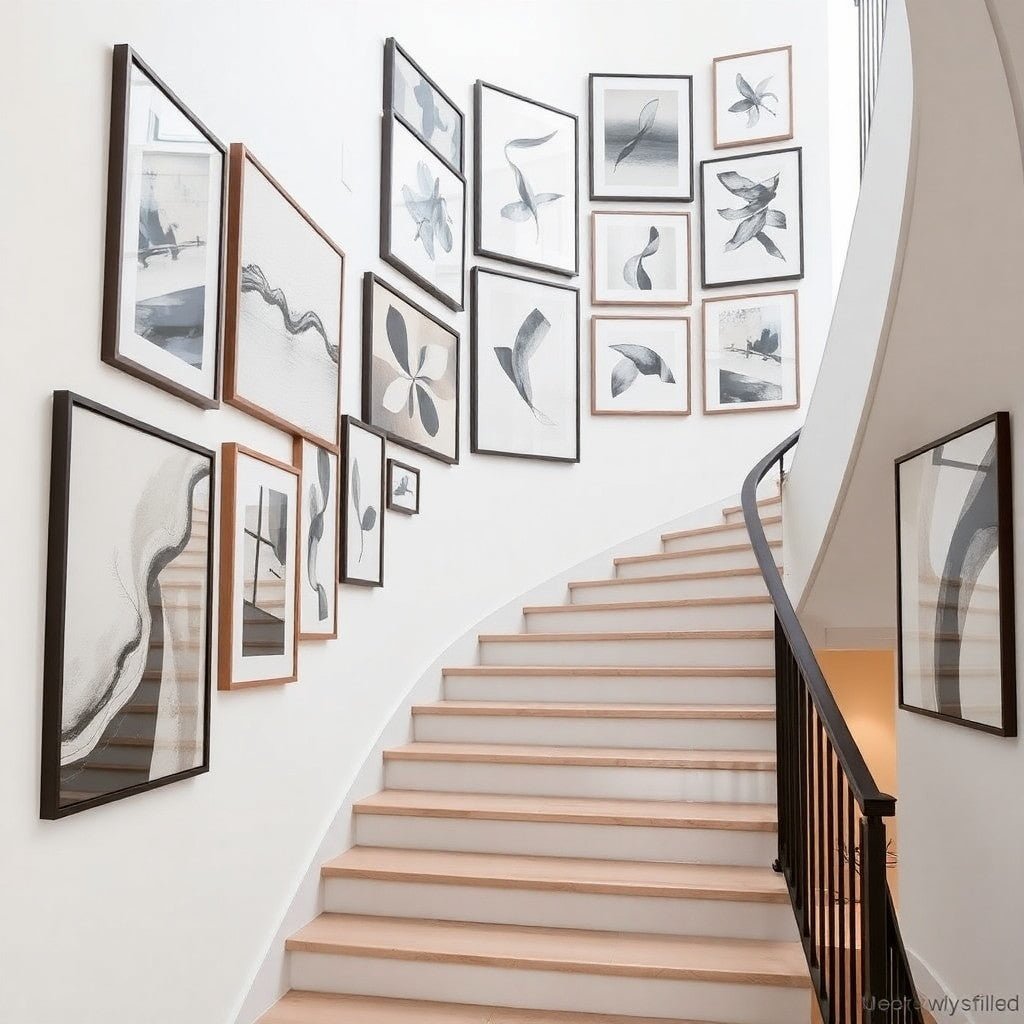

A staircase wall often stretches tall and long. This scale can overwhelm small décor. Tiny frames look lost. Oversized pieces may feel heavy. Balance solves this problem. Designers call this visual weight. It refers to how large or bold an item feels within a space.
Mix sizes for harmony. Pair a large statement piece with smaller accents. Align frames along the stair angle. Keep spacing even. Design schools like Parsons and RISD teach alignment and proportion as core principles. These basics prevent clutter and chaos.
Create Flow Between Floors

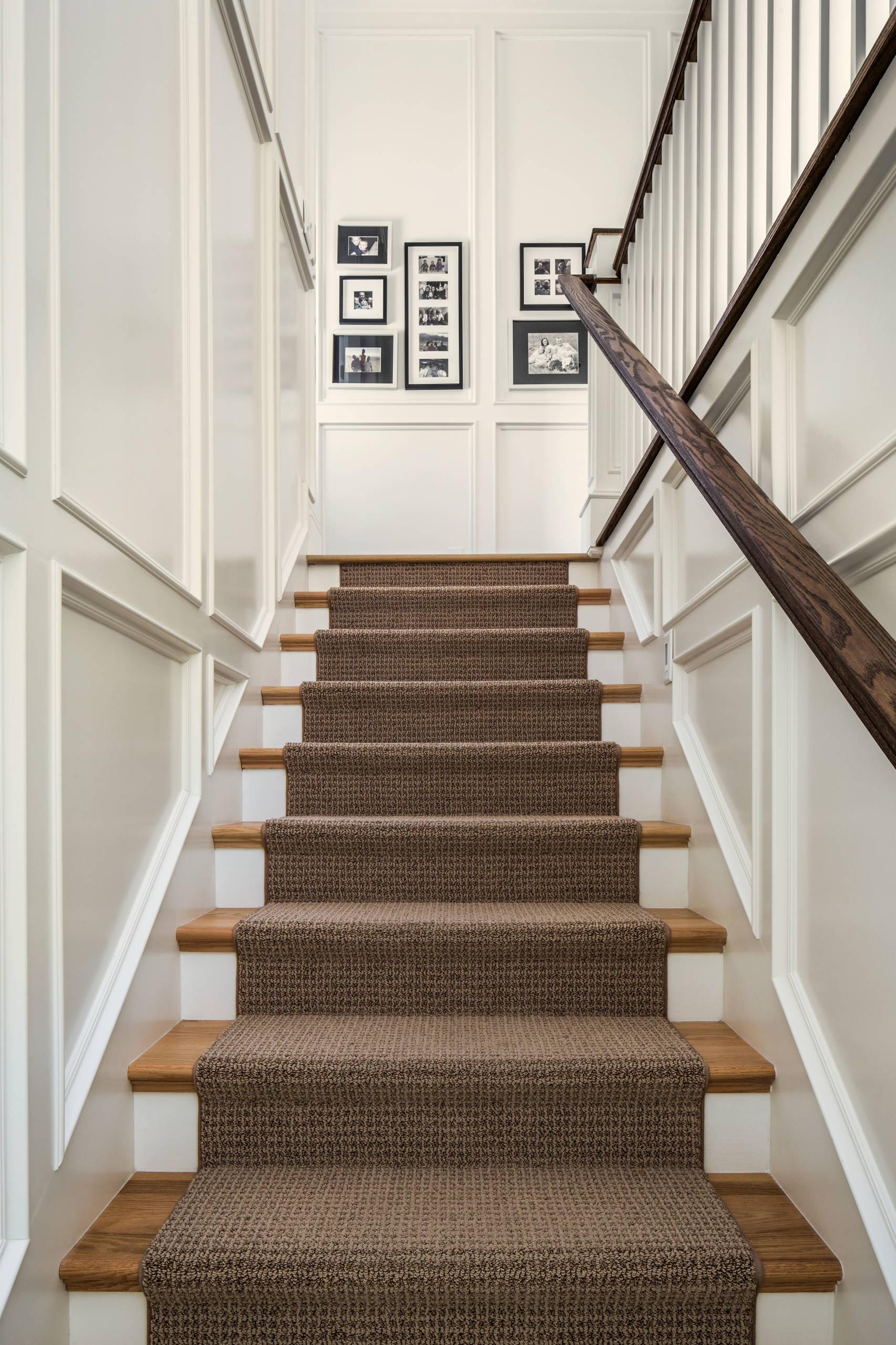
Your staircase connects levels. The design should connect them too. Repeat colors from the lower floor. Echo textures from upstairs. This creates unity. Without flow, spaces feel disconnected.
Interior styling studies show that repetition builds comfort. A shared color palette or material ties rooms together. Use matching frames. Continue a wallpaper pattern. Extend wood tones. Small links create strong cohesion.
Add Personality Without Overcrowding


Personal style gives a home its soul. But too much décor causes stress. Visual clutter overwhelms the brain. Neuroscience research cited by Psychology Today connects cluttered spaces with higher anxiety levels.
Choose meaningful pieces. Not many pieces. A few strong visuals create more impact. Display travel photos. Showcase artwork. Highlight typography. Keep breathing space between items. Simplicity strengthens elegance.
Think Long-Term, Not Trend-Only


4Trends fade. Good design lasts. Experts from House Beautiful and Elle Decor often advise mixing timeless elements with fresh touches. Neutral bases age well. Trend accents update easily.
Paint offers flexibility. Art swaps quickly. Built-in panels or stone finishes require commitment. Invest wisely. Blend durability with creativity.