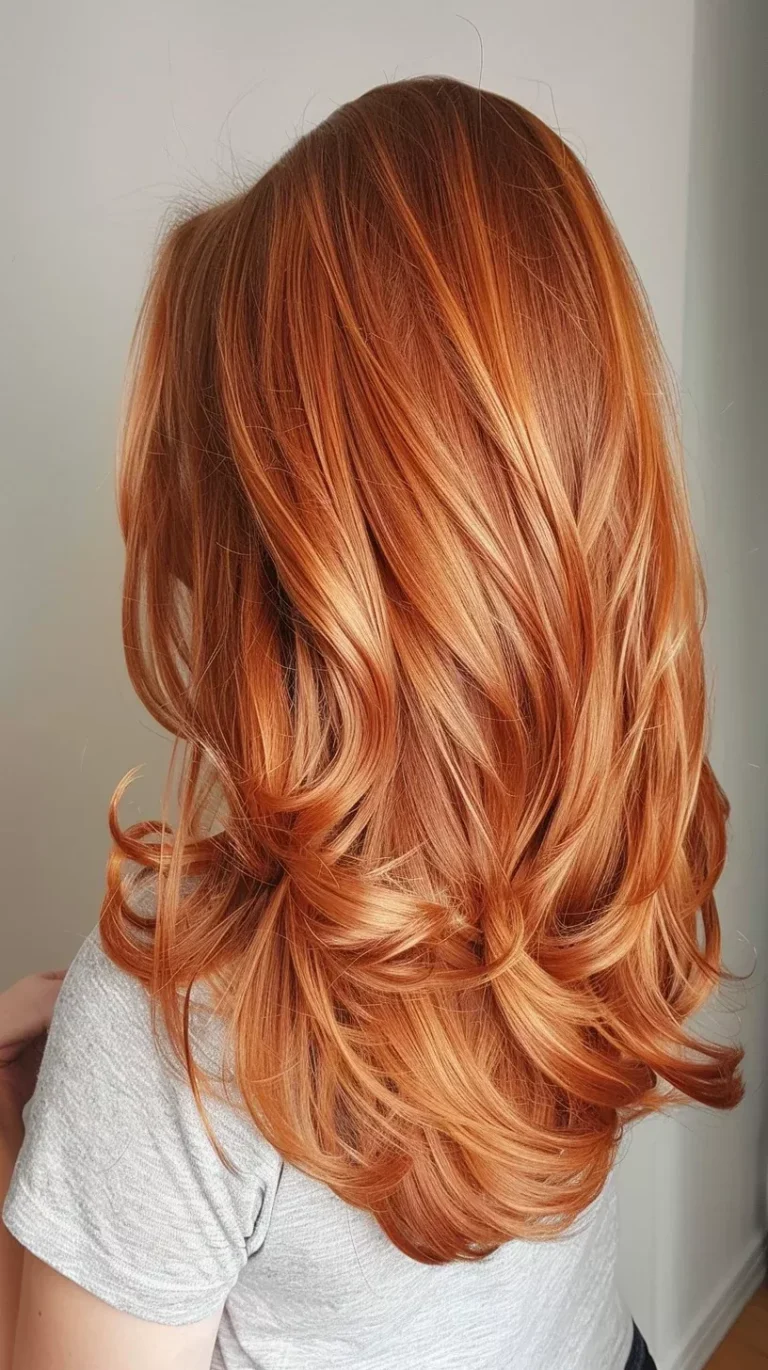
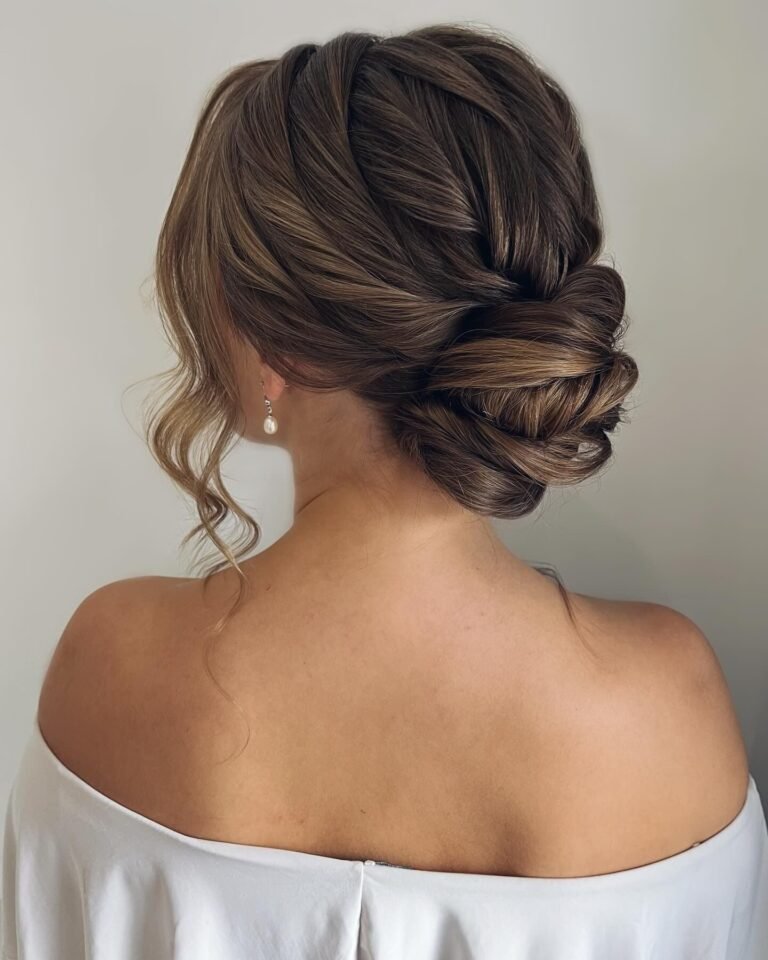
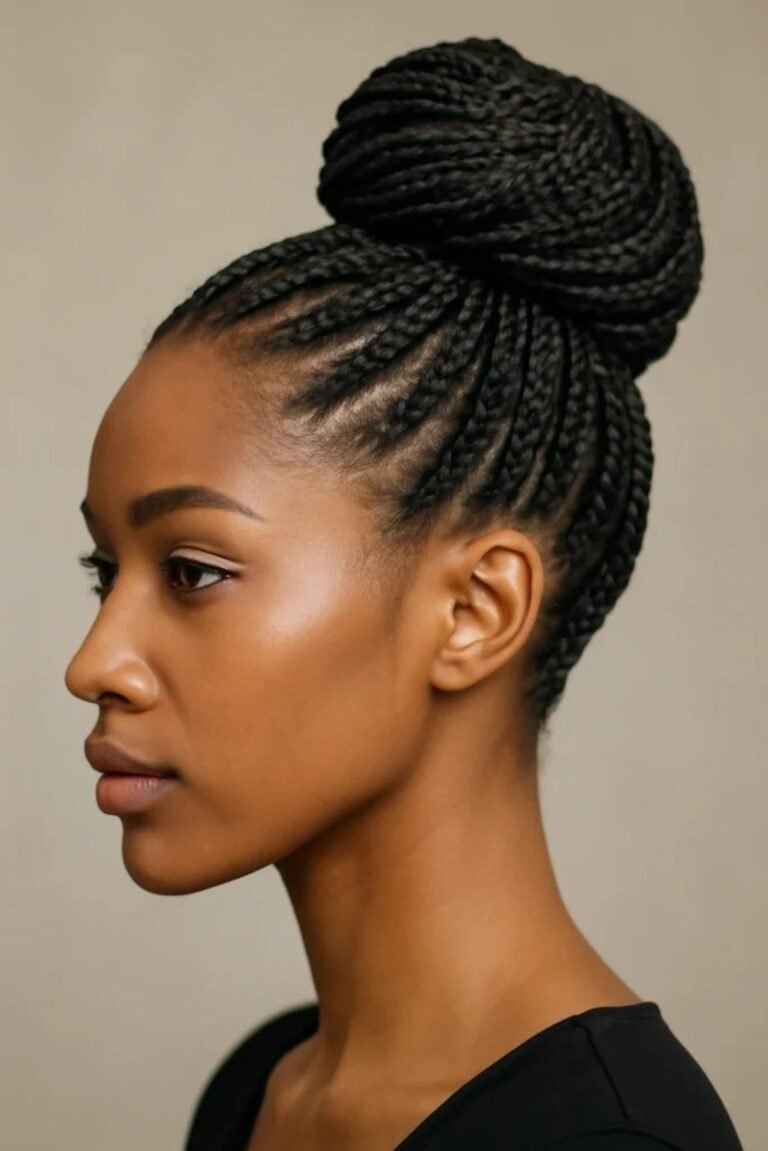
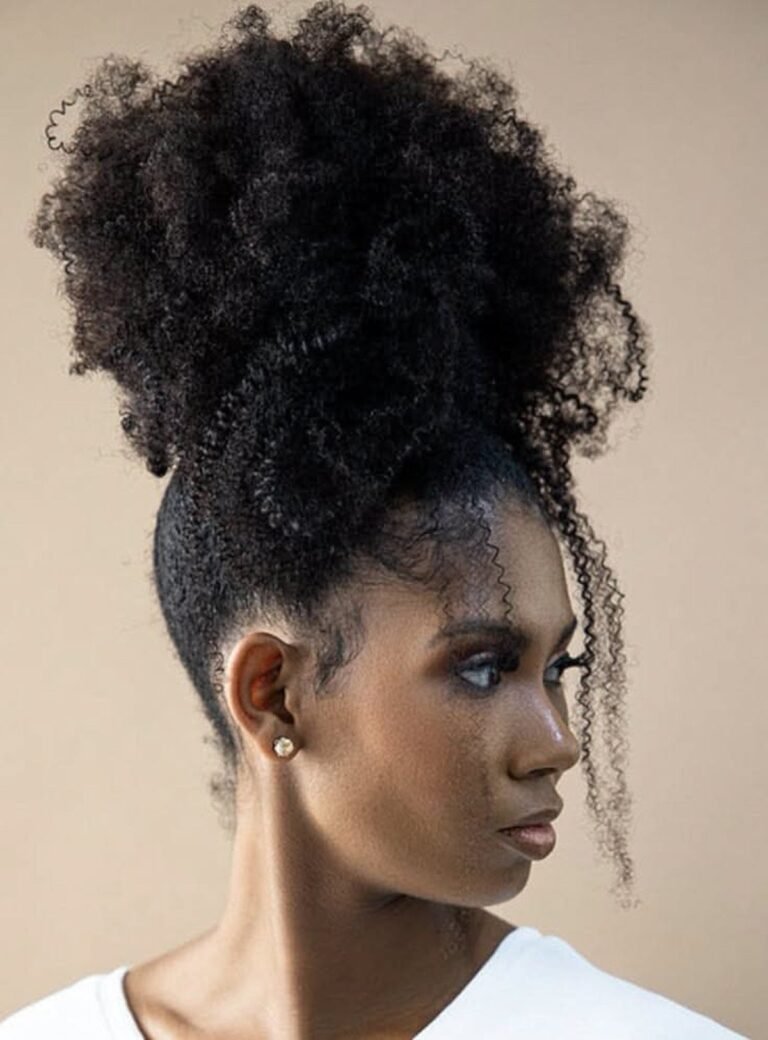
Braided updos that add volume to thin hair work through a simple illusion: braiding redistributes hair so it occupies more space, and pancaking — gently pulling each stitch wider — multiplies that effect. Thin hair that falls flat in a ponytail can look genuinely thick woven into a Dutch braid and coiled into a bun, because the braid’s structure creates dimension where none existed. These sixteen updos are chosen specifically for thin, fine, or low-density hair, with volume-building techniques baked into every style rather than added as an afterthought. From pancaked Dutch braids to pull-through braids that double hair’s apparent thickness, each look keeps thin hair secure while making it look like there is far more of it. The days of updos that expose every sparse spot are over.
Pancaked Dutch Braid Updo

The pancaked Dutch braid updo is the single most effective volume trick for thin hair. She Dutch-braids her hair — the inverted technique that makes the braid sit raised on the head — then gently pulls each stitch outward from the edges, a technique called pancaking that can double the braid’s visible width. The widened braid is then coiled into a bun and pinned, creating an updo with genuine three-dimensional presence from hair that looked flat an hour earlier. It works on medium to long thin hair and suits every occasion from office to wedding. To pancake properly, she should hold the braid’s center with one hand while pulling the edges with the other, working from the bottom up. Pro tip: she should pancake before coiling the bun, because widening a braid that is already pinned is nearly impossible.
Textured French Braid Bun

The textured French braid bun builds volume through deliberate messiness that thin hair wears well. She French-braids from the crown to the nape on hair prepped with texturizing spray, keeping the braid intentionally loose and airy rather than tight and sleek. The loose weave lets light and shadow play across the braid’s surface, creating depth that reads as thickness, and the textured tail coils into a bun that looks full rather than sparse. It works on medium to long thin hair and is ideal for casual and creative settings. To build it, she should braid with consistent looseness — tight at the start defeats the purpose — and pull a few small pieces free along the braid for softness. Pro tip: she should finish with a light-hold texturizing spray rather than a smoothing serum, since shine products flatten the texture that creates the volume illusion.
Voluminous Crown Braid
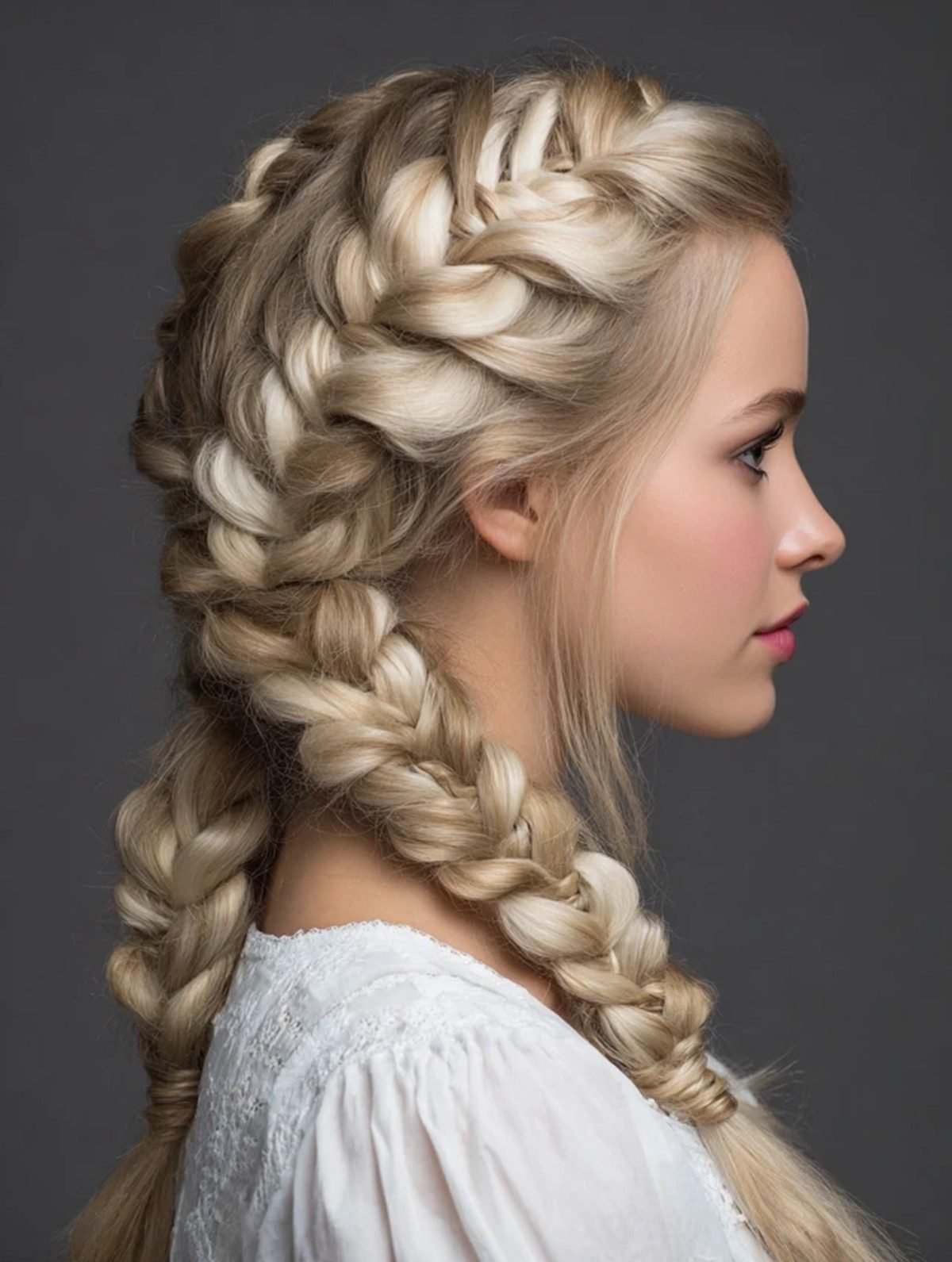
The voluminous crown braid wraps thin hair’s newfound fullness where everyone can see it. She creates a Dutch braid that travels around the hairline — either as one continuous braid or two braids pinned into a ring — pancaking generously as she goes so the braid looks lush and substantial. Because the braid circles the most visible part of the head, its widened texture dominates the eye and thin hair’s usual flatness simply disappears from the picture. It works on medium to long thin hair and suits formal events, festivals, and romantic settings. To build it, she should braid with the head tilted so gravity helps the braid sit forward, and pin the joining point securely underneath. Pro tip: she should leave the braid slightly imperfect — a too-neat crown braid on thin hair can look severe, while soft imperfection reads as effortless volume.
Fishtail Braid Low Bun
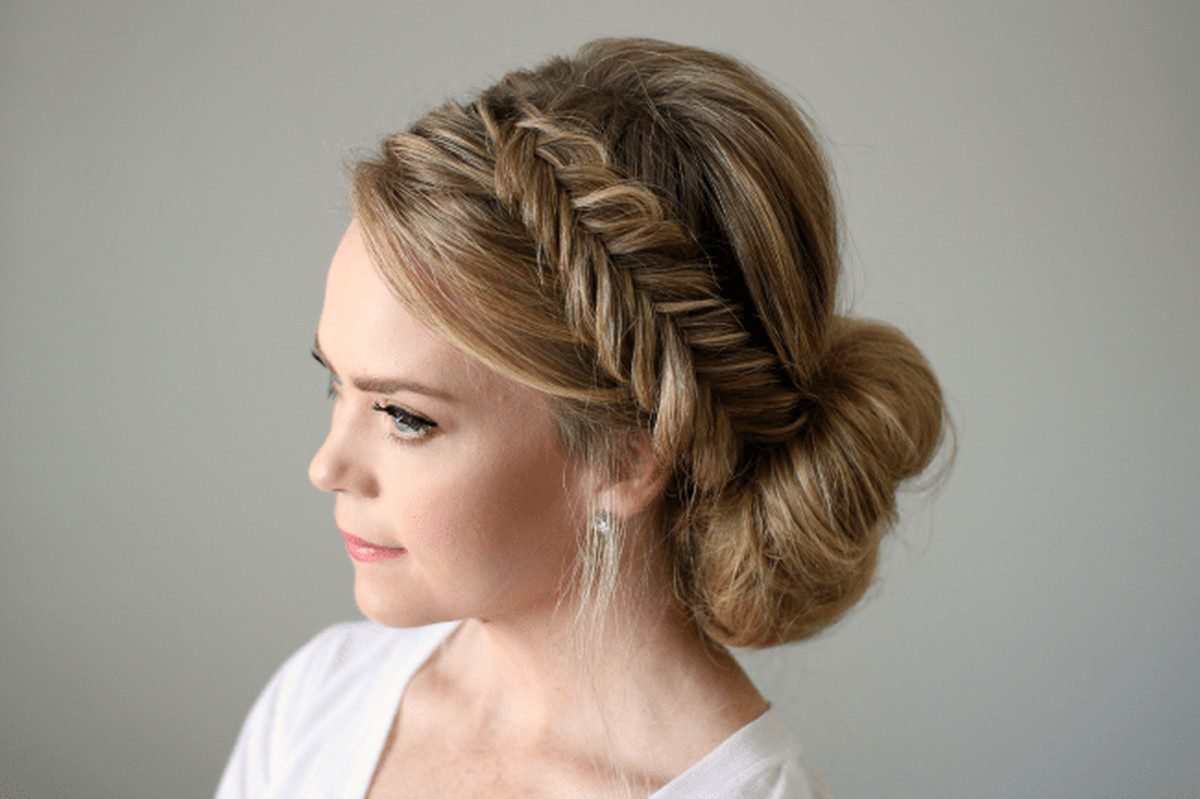
The fishtail braid low bun turns thin hair’s delicacy into an asset. She weaves a fishtail braid — the fine, intricate pattern looks naturally at home on thin strands — starting at the nape, pancakes it wide for fullness, then coils it into a low bun and pins it. Fishtails have a unique advantage for thin hair: their small, numerous stitches create more surface texture per inch than any other braid, so the volume payoff from pancaking is the highest of any technique here. The low bun placement keeps the style comfortable and professional. It works on medium to long thin hair. To weave it, she should work with small sections for the most intricate pattern and pancake each stitch as she goes rather than at the end. Pro tip: a fishtail on second-day hair holds its pancaked shape far better than on freshly washed slippery hair.
Double Braids into a Messy Bun

Double braids into a messy bun multiply thin hair’s volume by splitting it into two textured components. She parts her hair down the middle, braids each side loosely — Dutch or French — pancaking both, then gathers the two braids together into one deliberately messy bun at the crown or nape. The two braids create twice the visible texture of a single braid, and the messy bun’s undone finish hides any thin spots while looking intentionally abundant. It works on medium to long thin hair and suits casual, youthful settings perfectly. To build it, she should keep both braids symmetrical in looseness and gather them without pulling the texture flat. Pro tip: she should pull the bun apart gently after pinning — widening the bun itself is the final volume step most people skip.
Halo Braid Updo

The halo braid updo encircles thin hair in a ring of pancaked texture that looks impressively full. She braids around the full head — Dutch-braiding for a raised, visible braid — pancaking generously so the halo looks lush, then tucks and pins the tail underneath where the braid began. The continuous circle of widened braid creates the impression of abundant hair from every angle, and the updo keeps everything secure without a single elastic showing. It works on medium to long thin hair with enough length to circle the head. To build it, she should maintain even pancaking all the way around, since one thin section breaks the illusion. Pro tip: she should start the braid behind one ear rather than at the forehead — the joining point hides more naturally at the side.
Braided Top Knot
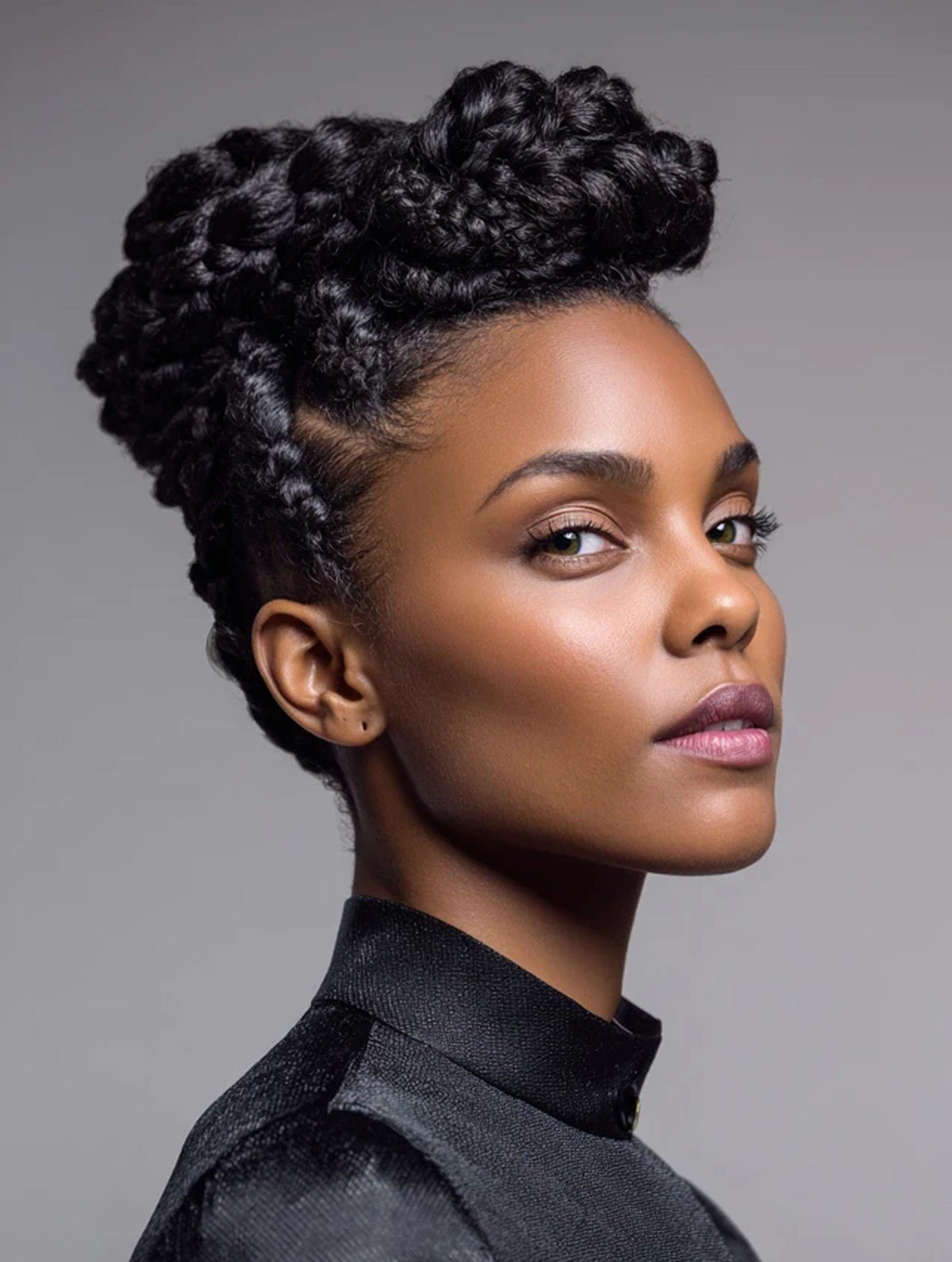
The braided top knot gives thin hair a bun with genuine presence. She gathers her hair into a high ponytail, braids the tail — a simple three-strand braid works — pancakes the braid wide, then coils it into a knot and pins it. The braided texture makes the knot look two to three times larger than a regular twisted bun from the same amount of hair, because the braid’s ridges catch light and create shadow in a way smooth hair cannot. It works on medium to long thin hair and suits everything from workouts to nights out. To build it, she should pancake the braid before coiling and wrap the coil loosely so the texture stays visible. Pro tip: she should position the knot slightly forward on the crown rather than dead center — the forward placement reads as intentional styling and shows off the braid’s texture from the front.
Side Dutch Braid Updo
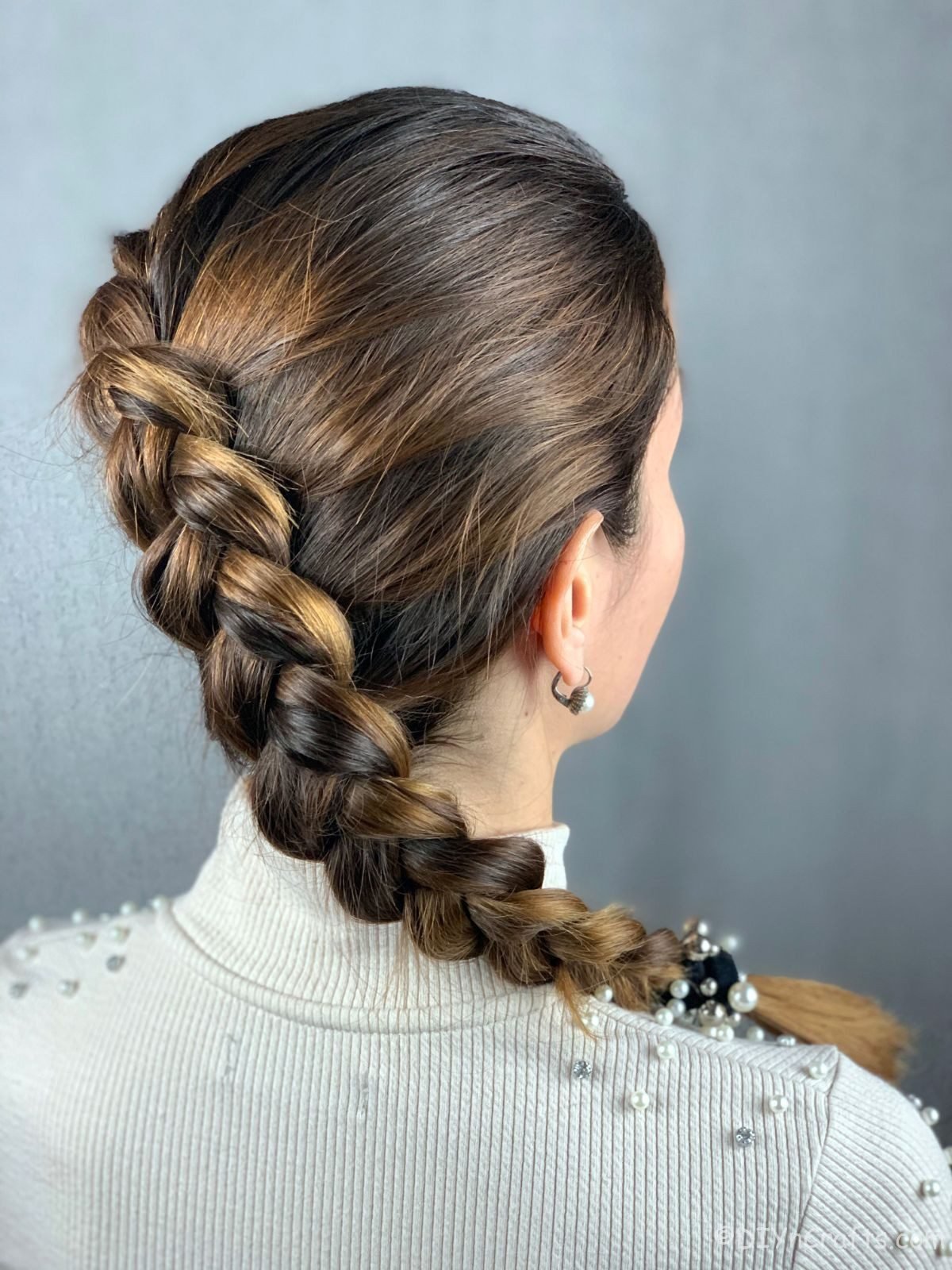
The side Dutch braid updo concentrates thin hair’s volume where it photographs best. She sweeps all her hair to one side, Dutch-braids from the temple down along the hairline to the nape, pancakes the braid generously, then coils the remaining length into a low side bun and pins it. Gathering everything to one side doubles the visible density immediately, and the raised Dutch texture — widened by pancaking — creates a dramatic dimensional detail that draws the eye. It works on medium to long thin hair and flatters most face shapes with its asymmetric line. To build it, she should braid with firm tension at the scalp so the side stays sleek, then pancake only the braid’s outer edge for a balanced look. Pro tip: this style pairs beautifully with statement earrings on the exposed side — the bare ear is a feature, not an afterthought.
Bubble Braid Ponytail Updo
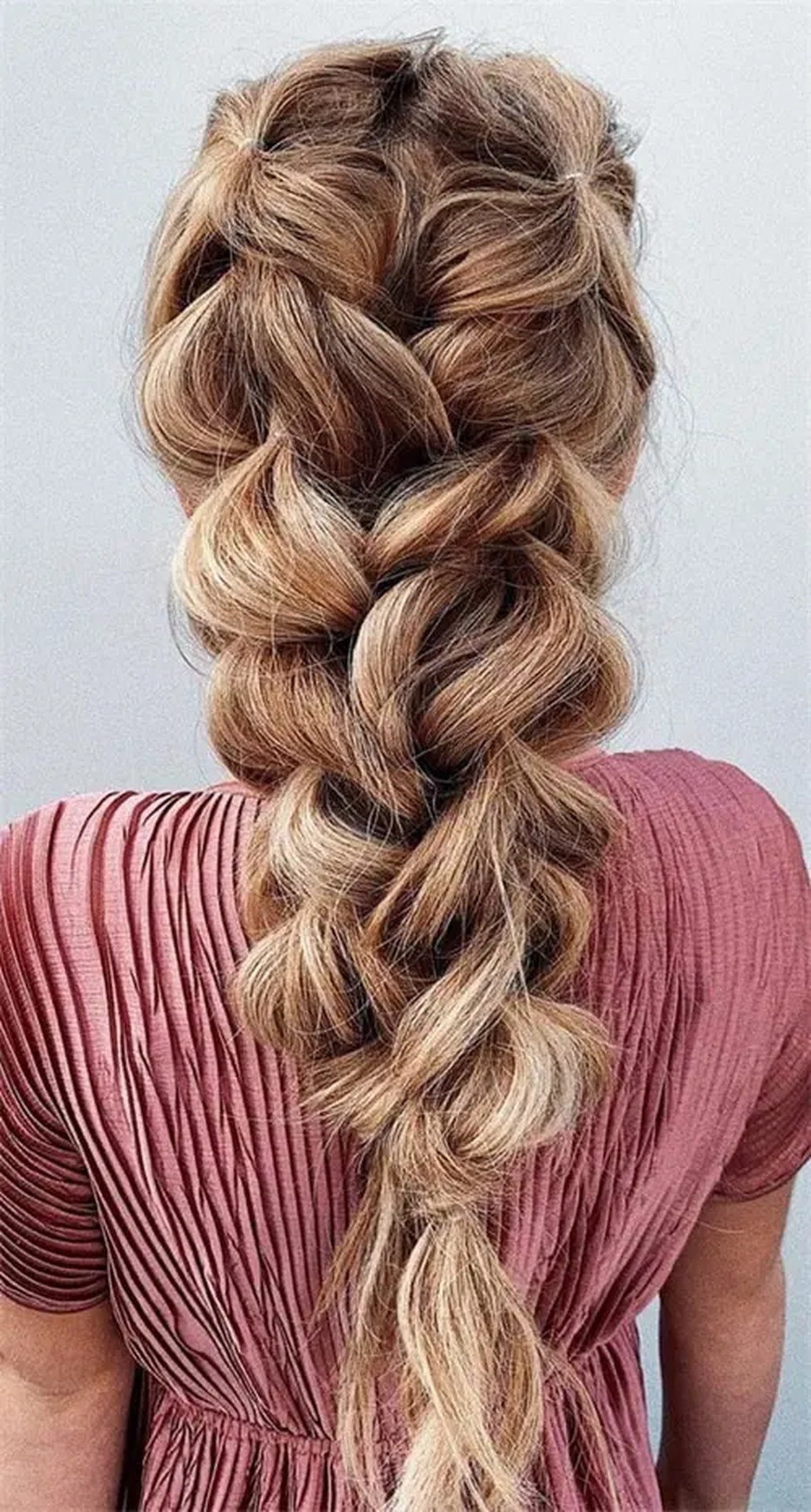
The bubble braid ponytail updo is the highest-volume style on this list for the least effort. She secures a ponytail — high, mid, or low — adds elastics every couple of inches down the tail, and puffs each section into a rounded bubble, then either leaves it as a ponytail or coils the bubbled tail into a bun. Each bubble is pure engineered volume: the technique creates fullness from literally nothing, making it the ultimate thin-hair cheat. The geometric, modern look suits playful and fashion-forward settings. To build it, she should backcomb each section lightly before puffing for maximum roundness and use clear mini elastics for a clean finish. Pro tip: she should make the bubbles progressively smaller toward the ends — graduated bubbles look deliberate and expensive, while uniform ones can look costume-y.
Lace Braid Chignon
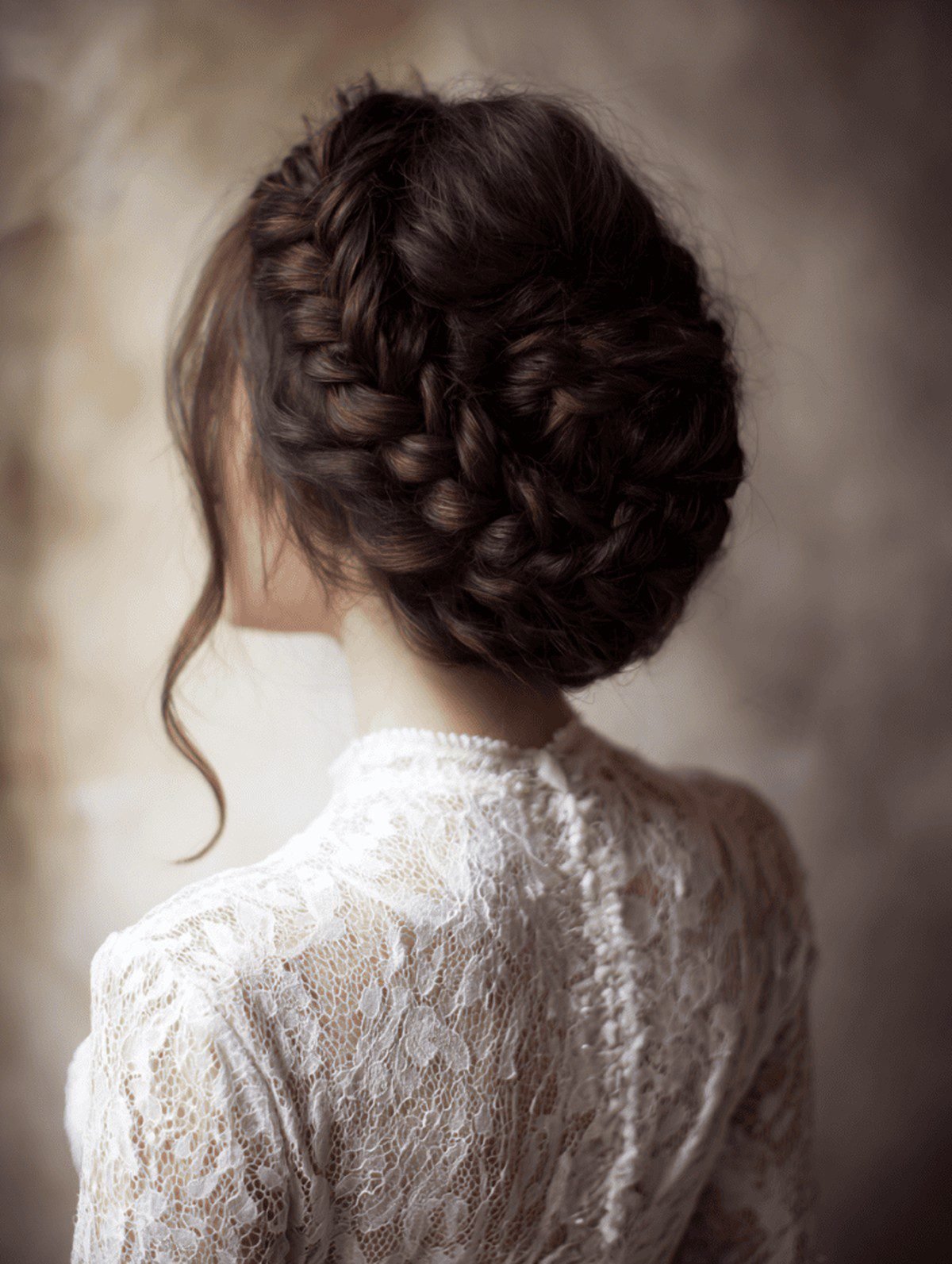
The lace braid chignon adds delicate braided detail to a classic bun, and the detail is what creates the volume impression. She weaves a lace braid — adding hair from only one side, so the braid sits like a decorative edge — along the hairline or crown, then gathers everything into a low chignon. The lace braid’s fine, intricate pattern draws the eye and creates texture right where thin hair usually looks sparsest: at the hairline and crown. The chignon itself stays simple, letting the braid be the star. It works on medium-length thin hair and suits elegant, understated occasions. To weave it, she should keep the added sections small for the most delicate pattern and pin the braid’s tail discreetly into the chignon. Pro tip: two parallel lace braids instead of one double the detail and the volume impression with barely any extra effort.
Pull-Through Braid Bun
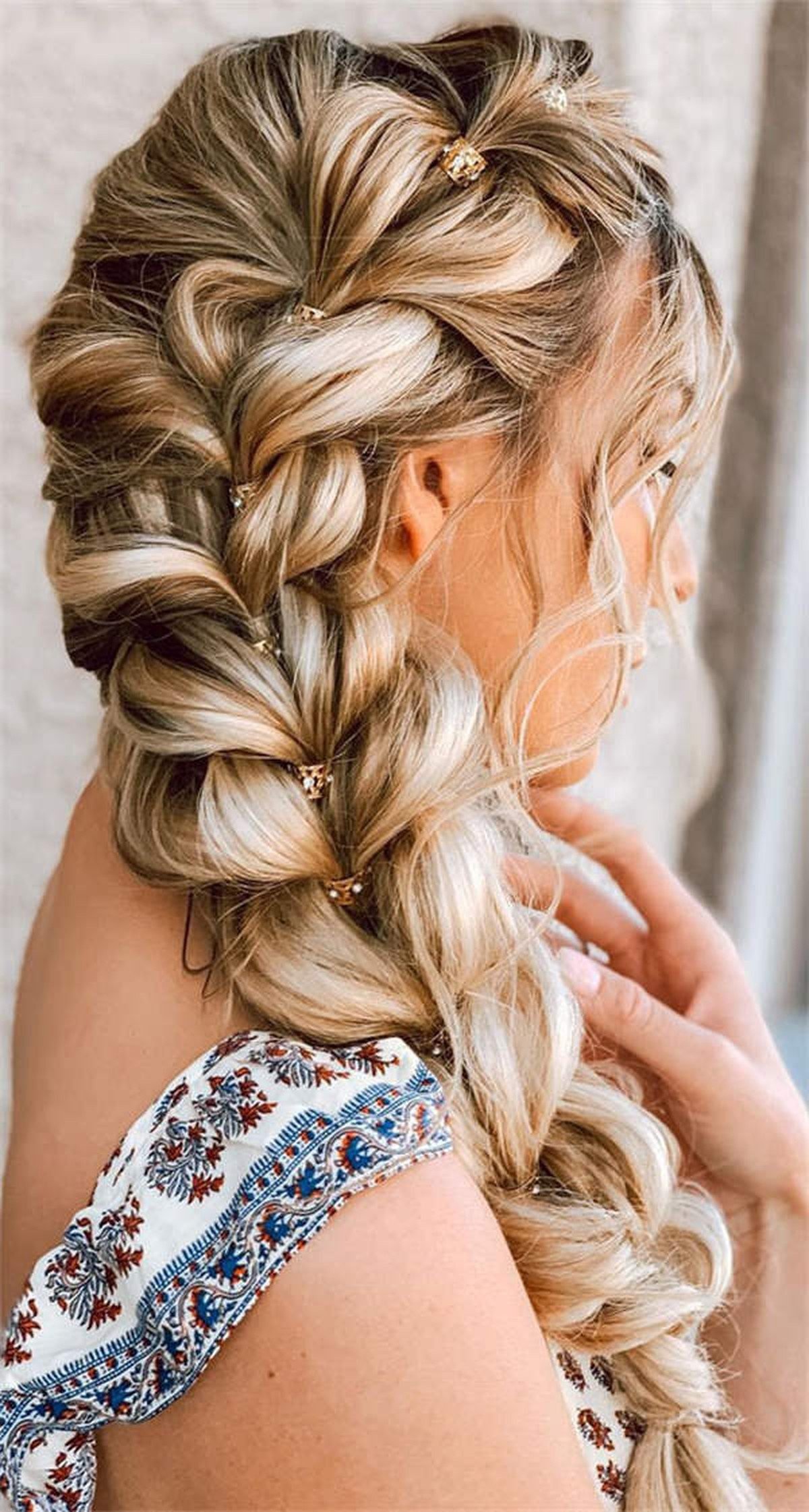
The pull-through braid bun is the volume miracle specifically invented for thin hair. She creates a pull-through braid — sectioning the ponytail and looping each section through the one above, which creates a braid-like effect that pancakes to an astonishing width — then coils the massive-looking braid into a bun. The pull-through technique is uniquely powerful for thin hair because each loop can be widened far beyond what a real braid allows, creating genuinely dramatic fullness from fine strands. It works on medium to long thin hair and stuns at formal events. To build it, she should use small clear elastics and pull each loop wide immediately after forming it. Pro tip: she should watch one video tutorial first — the technique sounds complicated but takes five minutes to learn, and it is the highest-ROI skill in thin-hair styling.
Waterfall Braid Updo
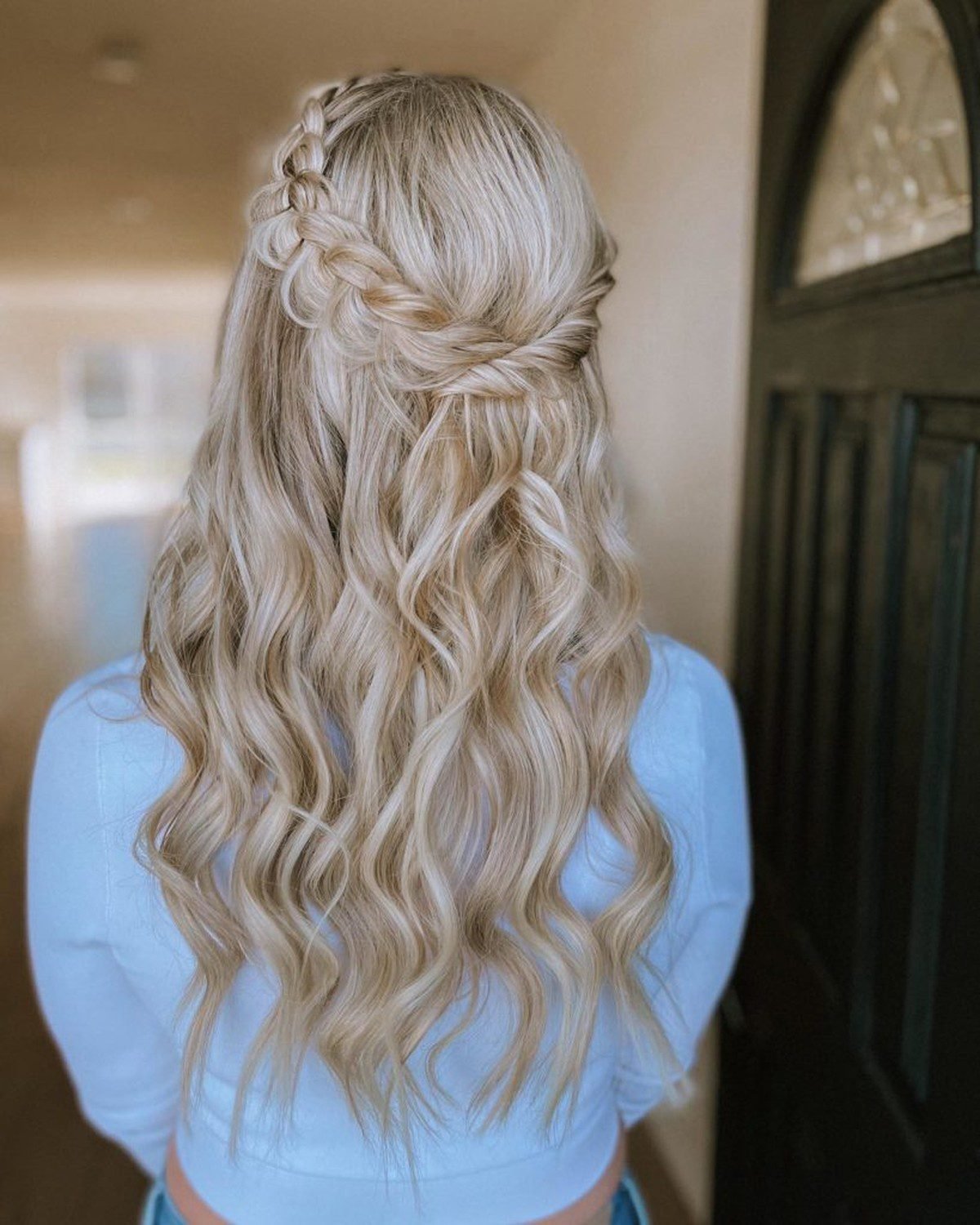
The waterfall braid updo weaves thin hair into a cascading style that looks far more abundant than it is. She braids a waterfall braid across the crown — dropping strands to fall through the braid — then gathers the remaining hair, including the dropped strands, into a soft low bun. The waterfall’s released pieces create the illusion of layers and movement, making thin hair look multi-dimensional, while the gathered bun contains everything neatly. It works on medium to long thin hair with some natural wave, which enhances the cascading effect. To build it, she should curl the hair first so the dropped strands have shape and keep the waterfall braid itself neat as the focal point. Pro tip: she should let a few of the waterfall strands escape the final bun deliberately — the loose pieces are what sell the abundant, romantic effect.
Dutch Braid Space Buns

Dutch braid space buns double thin hair’s visual volume by splitting it into two sculptural shapes. She parts her hair down the middle, Dutch-braids each side from the hairline to the crown, pancakes both braids, then coils each into a bun and pins them. The two braids create symmetrical raised texture across the whole head, and the twin buns — widened by pancaking — look playful and full rather than sparse. It works on medium to long thin hair and suits festivals, casual outings, and youthful settings. To build it, she should keep the braids’ tension even on both sides and position the buns high enough to be visible from the front. Pro tip: she should pull the buns apart after pinning to widen them — space buns should look like deliberate sculptures, and bigger reads as more intentional.
Braided Fauxhawk Updo
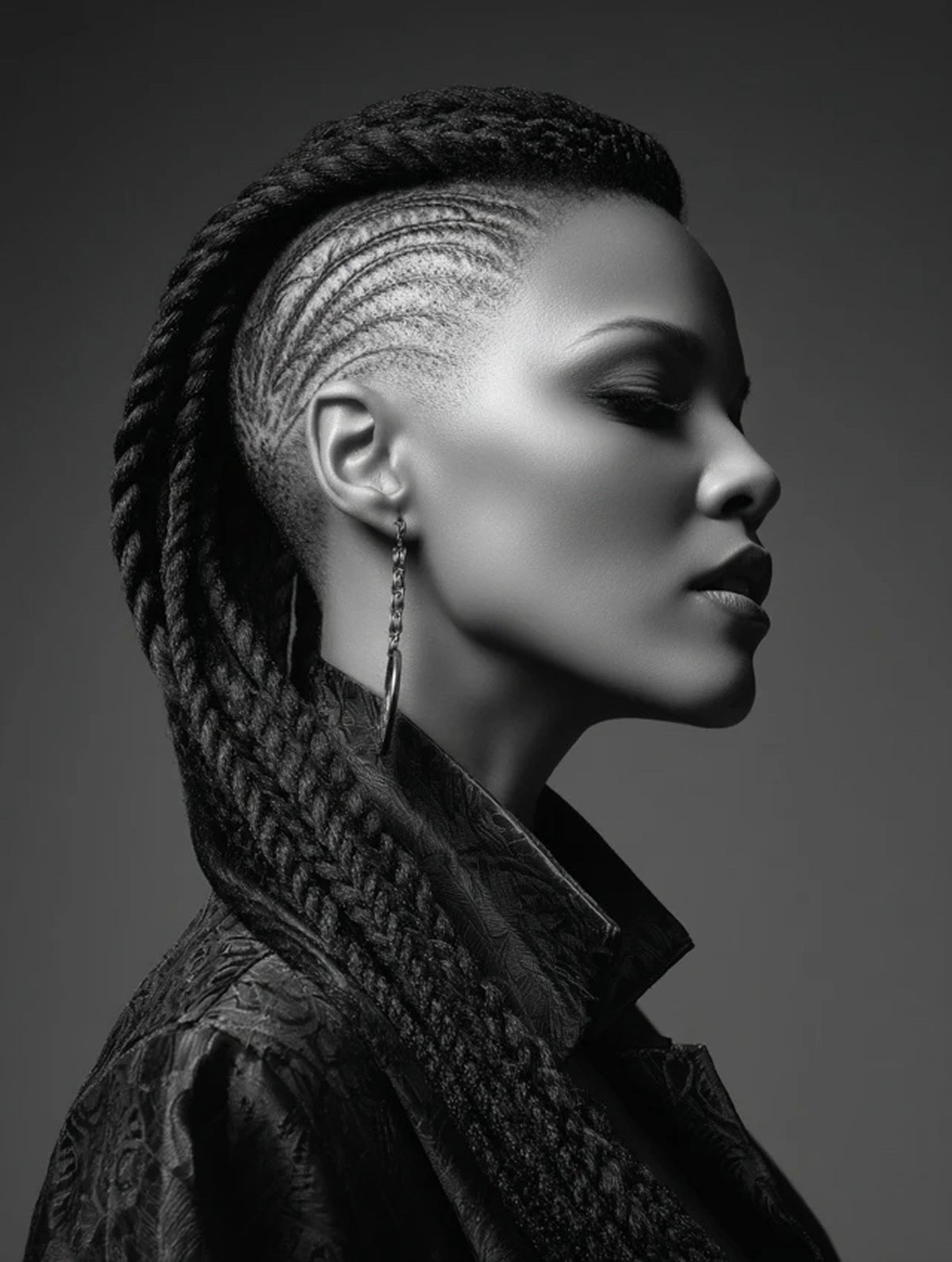
The braided fauxhawk updo creates dramatic height that thin hair rarely achieves on its own. She French- or Dutch-braids a center strip from the forehead to the nape, pancaking it aggressively for maximum width and height, then pins the sides sleek and flat and tucks the braid’s tail under. The contrast between the flat sides and the raised, widened center braid creates an edgy mohawk silhouette with genuine vertical presence — the eye reads height as volume. It works on medium-length thin hair and suits bold, fashion-forward occasions. To build it, she should section the center strip generously — a wider strip makes a more dramatic hawk — and smooth the sides with gel for maximum contrast. Pro tip: she should finish with a strong-hold spray, because the fauxhawk’s architecture depends on the center braid holding its raised shape all day.
Twist-Braid Hybrid Updo

The twist-braid hybrid updo combines two textures for a volume effect neither achieves alone. She twists the front sections back from the temples — twists lie flatter and sleeker than braids — then braids the remaining back hair, pancakes the braid, and pins everything together into a low bun or knot. The smooth twists at the front keep the style polished while the pancaked braid at the back provides the volume and texture, giving thin hair both refinement and fullness in one style. It works on medium to long thin hair and bridges professional and formal settings. To build it, she should make the twists snug so they stay sleek and keep the braid loose for contrast. Pro tip: she should cross the two front twists over each other before pinning — the woven detail at the crown adds a focal point that distracts from any thinness.
Four-Strand Braid Bun

The four-strand braid bun uses a more complex weave to create richer texture from thin hair. She weaves a four-strand braid — the extra strand creates a wider, flatter, more intricate pattern than a three-strand braid — pancakes it gently, then coils it into a bun and pins it. The four-strand pattern has a woven, basket-like appearance with more visible detail per inch, which translates to more perceived volume once pancaked and coiled. It works on medium to long thin hair and impresses at formal events where the intricate detail gets noticed. To weave it, she should think of the strands as numbered and follow the over-under pattern slowly — it is easier than it looks after the first few stitches. Pro tip: she should practice the four-strand braid as a side braid first, since learning the pattern on a visible section is faster than learning it behind her head.
Thin hair’s greatest styling asset is that braids love it — the techniques that create volume work better on fine strands than on thick ones, because every pulled stitch shows. The formula repeats across all sixteen styles: texturize for grip, braid with intention, pancake generously, and pin the result into a shape that shows off the texture. With these updos, thin hair does not just survive being styled up — it thrives.