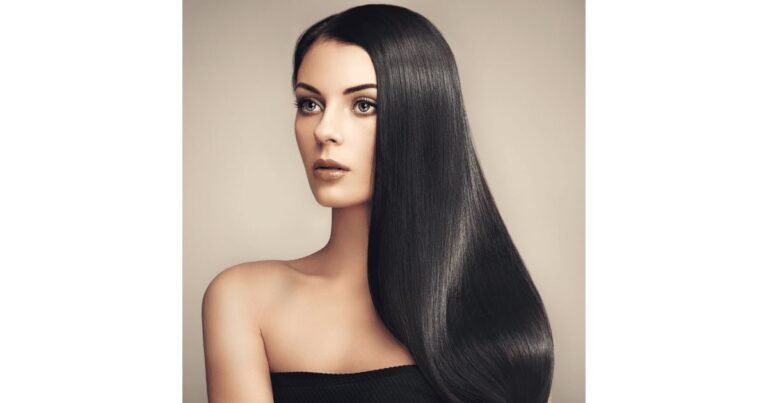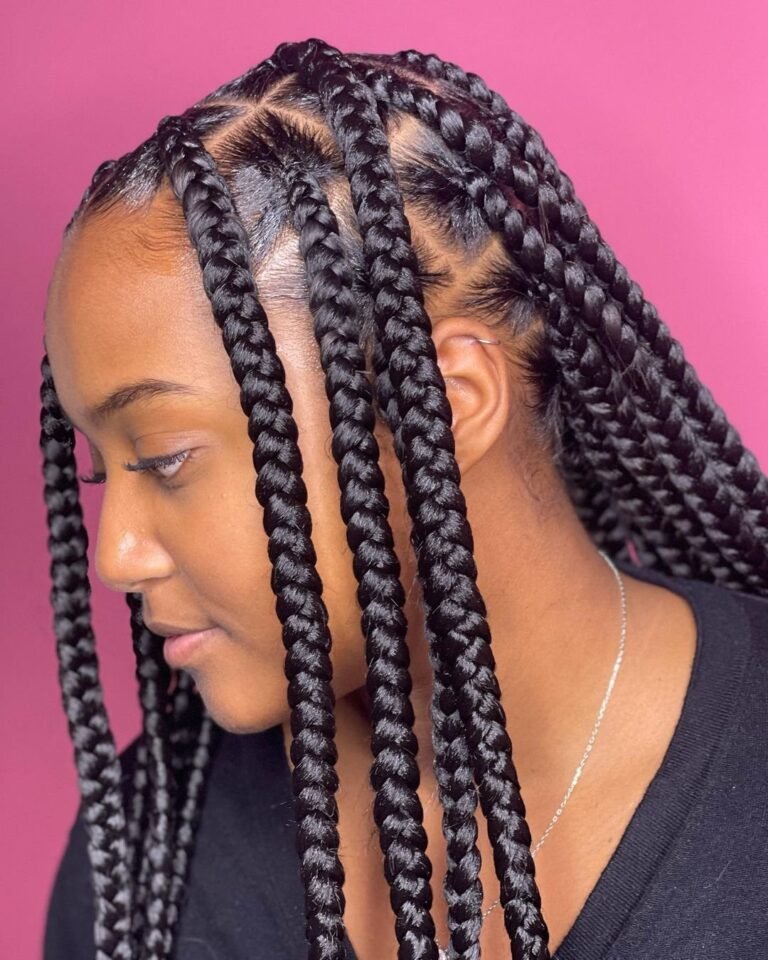
Every winter brings the same dilemma: warmth or good hair. Beanies flatten roots, create static, and leave a dreaded hat line — but the right hairstyle underneath changes everything. The trick is choosing styles that either embrace compression or bounce back the moment the hat comes off. This guide covers 20 beanie hairstyles built to survive hats, plus the prep and products that fight flatness, static, and frizz. Each look notes how it wears under a beanie and how to revive it in seconds when you step indoors.
1. The Low Side Braid

A low side braid drapes over one shoulder, completely avoiding the beanie’s compression zone. She should braid loosely to one side before pulling the beanie on — the braid sits below the hat’s edge and emerges untouched. It suits medium to long hair in all textures. When the hat comes off, the top stays smooth because nothing was pinned under pressure. It works for casual winter days and commutes. Pro tip: use a satin-lined beanie; cotton linings create friction that frizzes the hair at the hat line.
2. Double Low Buns
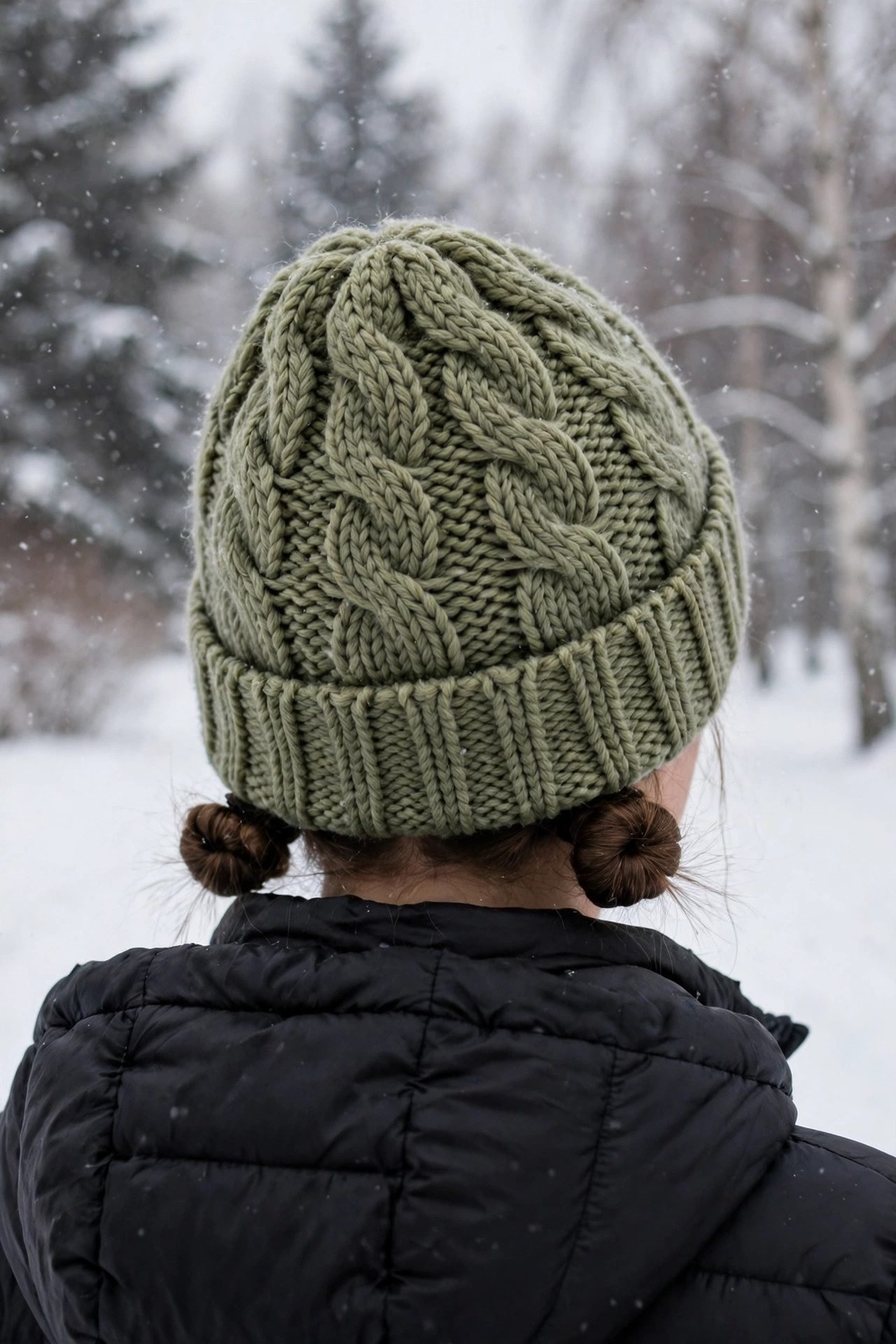
Two low buns at the nape sit below the beanie’s band, so they keep their shape while the hat covers the crown. She should part the hair in the middle, make two low ponytails, and twist each into a loose bun. It suits medium to long hair and is playful enough for weekends. Pulling the beanie on carefully over the top keeps the buns intact. Pro tip: position the buns just behind the ears rather than at the center nape — centered buns get squashed when the beanie sits low.
3. Textured Low Ponytail
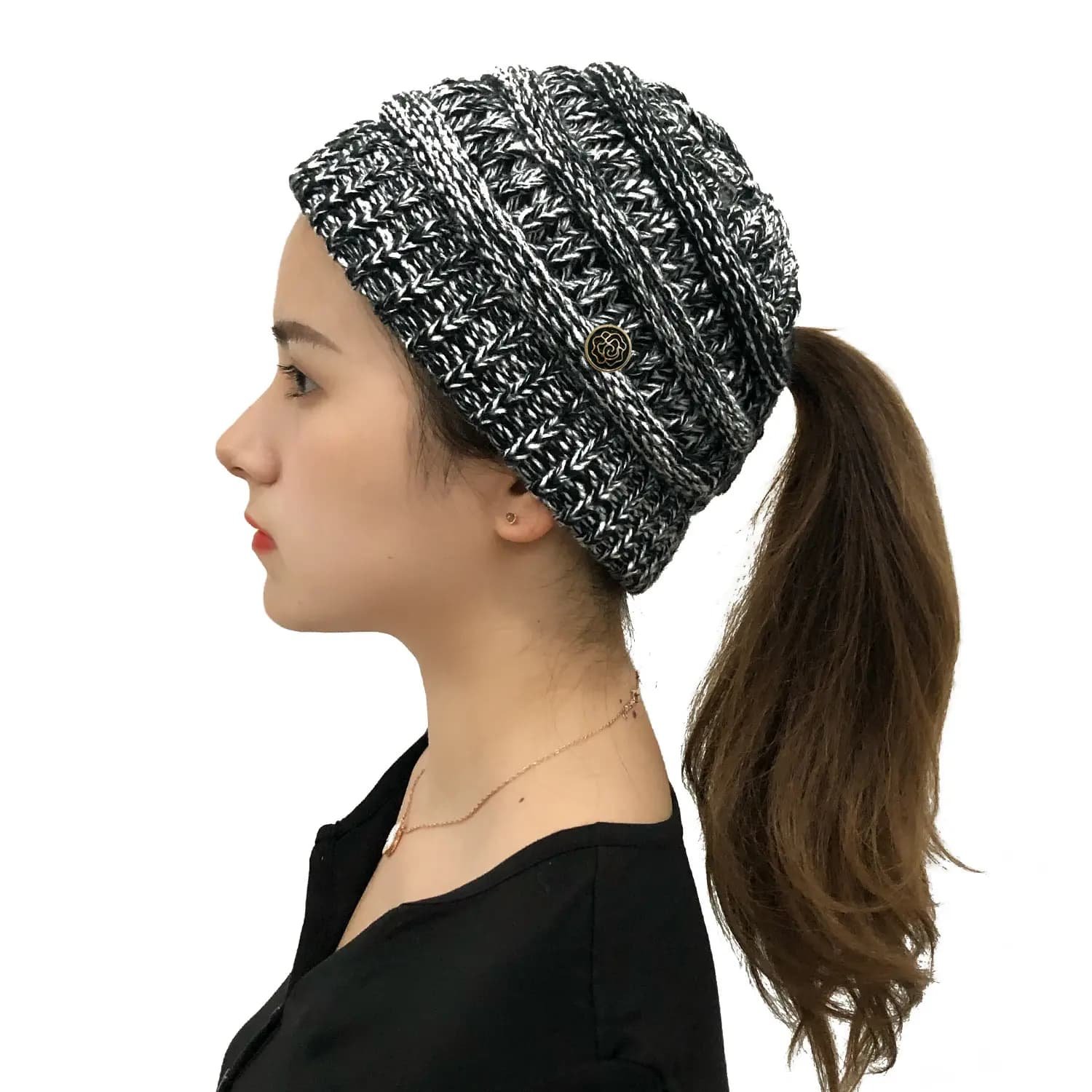
A low ponytail with wave or curl through the lengths survives a beanie because the style lives below the hat. She should add bends with a flat iron, gather the hair low, and let the beanie cover the smooth crown. It suits medium to long hair. When the hat comes off, finger-comb the roots for instant volume. It is the easiest reliable winter style. Pro tip: apply dry shampoo at the roots before the beanie goes on — it absorbs the moisture and oil that cause hat-head flatness.
4. The Hat-Line Hiding Headband Braid
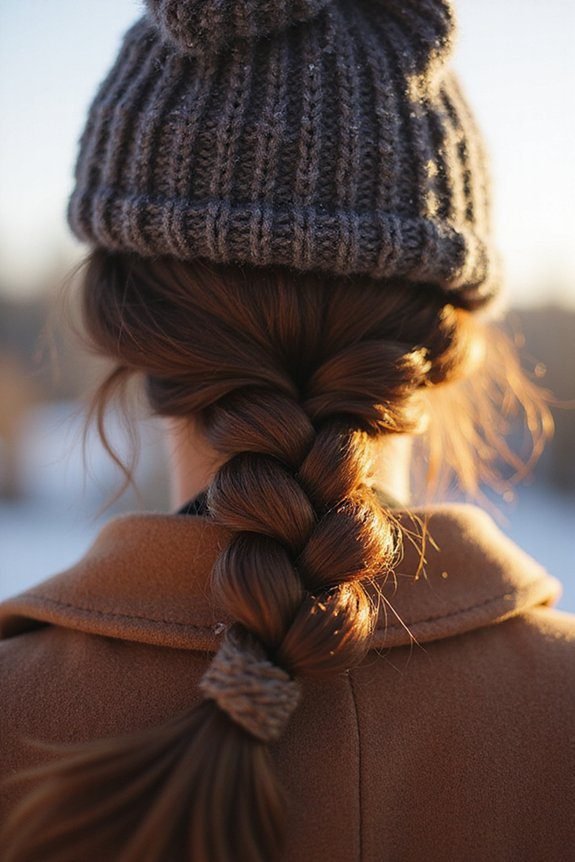
A single braid across the crown doubles as decoration and hat-line camouflage. She should braid a small section along the hairline before putting the beanie on; when the hat comes off, the braid disguises any compression mark. It suits medium to long hair. It works with any beanie style. Pro tip: place the braid slightly back from the hairline — right at the hairline it gets flattened too, but an inch back it stays raised and hides the line.
5. Loose Waves With Root Lift
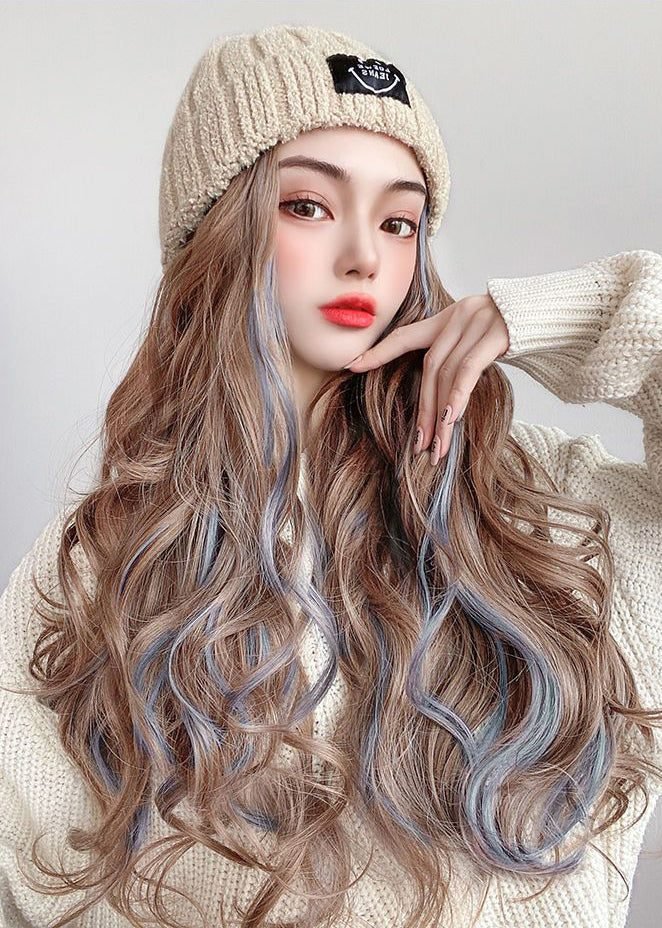
Voluminous waves bounce back after a beanie if the roots get proper prep. She should blow-dry roots upward with a round brush, add loose waves, then apply dry shampoo at the crown before the hat goes on. It suits medium to long hair with natural or added wave. Flip the head upside down and shake when the beanie comes off for instant revival. Pro tip: wear the beanie slightly loose on top rather than pulled tight — compression is what kills volume, and a slouchy fit halves the pressure.
6. Low Messy Bun

A low messy bun at the nape stays fully intact under a beanie since the hat never touches it. She should gather the hair loosely low, twist into an undone bun, and pull out face-framing pieces. It suits medium to long hair. It is ideal for second-day hair — the bun’s texture hides oiliness. The beanie covers any root flatness completely. Pro tip: secure with a silk scrunchie instead of an elastic; it holds without the dent a tight elastic leaves.
7. The Fishtail Side Braid

A fishtail braid over one shoulder looks intricate but survives hats perfectly — braids do not compress. She should sweep the hair to one side and fishtail loosely, pancaking the edges for fullness. It suits long hair best, where the fishtail detail shows. It elevates a casual winter outfit instantly. Pro tip: fishtail over a light oil on the lengths — winter air dries braid ends fast, and the oil keeps them smooth under the hat’s friction.
8. Half-Up Top Knot (Low Version)

A half-up knot positioned low at the back of the crown sits just below the beanie’s pressure zone. She should gather the top half of the hair and knot it loosely at the occipital bone rather than high on top. It suits medium to long hair. The bottom half stays smooth under the hat. Pro tip: this is the one updo that fails if placed too high — keep it at or below the crown’s curve, or the beanie will flatten it into a dent.
9. Sleek Straight With Static Control

Sleek straight hair and beanies can coexist with anti-static prep. She should apply a leave-in conditioner and a pea of serum, flat-iron smooth, then tuck the hair inside the beanie to protect it from wind. It suits medium to long straight hair. A dryer sheet wiped over the finished hair kills static on contact. Pro tip: metal combs generate less static than plastic in winter — switch tools from November through March.
10. Bubble Braid Pigtails

Two bubble braids worn low stay bouncy under a beanie because each bubble holds its own shape. She should make two low pigtails, add elastics down each, and puff the sections. It suits medium to long hair and reads youthful and fun. The bubbles spring back even after hat compression. Pro tip: keep the bubbles below the beanie’s lower edge — any bubble caught under the band gets flattened and will not recover.
11. The Tucked-In Lob

Short to medium hair can simply tuck under the beanie — the hat becomes the style. She should add texture spray, tuck the ends under, and let the beanie’s edge define the silhouette. It suits bobs and lobs best. When the hat comes off, the tucked ends flip out with natural bend. It is the lowest-effort winter option. Pro tip: tuck with the hair slightly damp and a touch of cream — it sets a soft wave that appears when the beanie comes off.
12. Dutch Braid Pigtails

Two Dutch braids keep every strand controlled under a beanie and look intentional when the hat comes off. She should part down the middle and Dutch-braid each side, securing low. It suits medium to long hair and survives wind, snow, and hat friction. The braids emerge as neat as they went in. Pro tip: braid slightly looser than usual in winter — tight braids plus a tight beanie equals a headache by noon.
13. Low Twisted Chignon
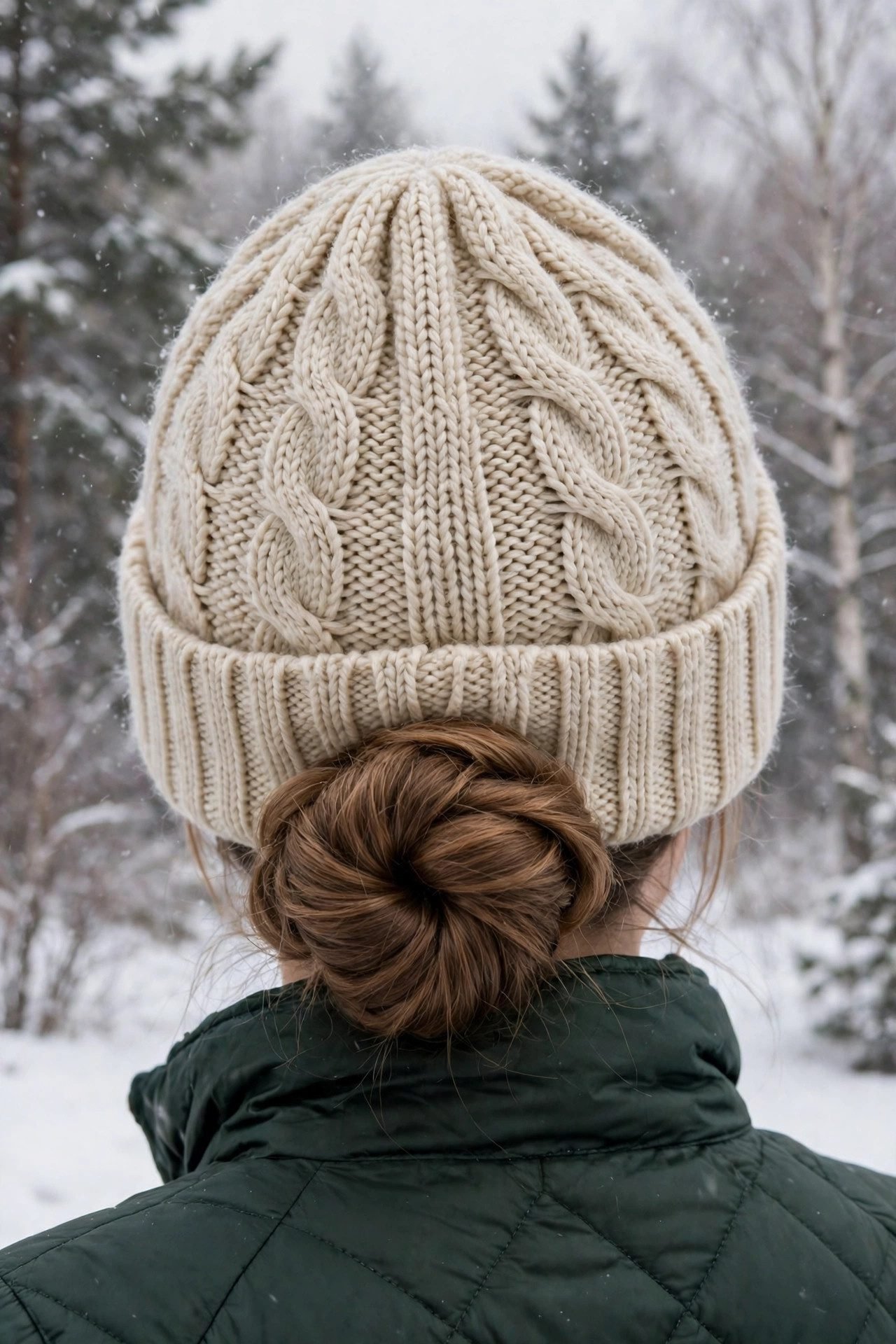
A low chignon at the nape is elegant enough for winter events and completely hat-proof. She should twist the hair into a low coil and pin it flat against the nape. It suits medium to long hair. The beanie covers the crown while the chignon peeks below — polished from every angle. Pro tip: pin the chignon flat rather than round; a flat profile avoids a bulge that pushes the beanie up awkwardly.
14. Curly Pineapple Under a Slouchy Beanie
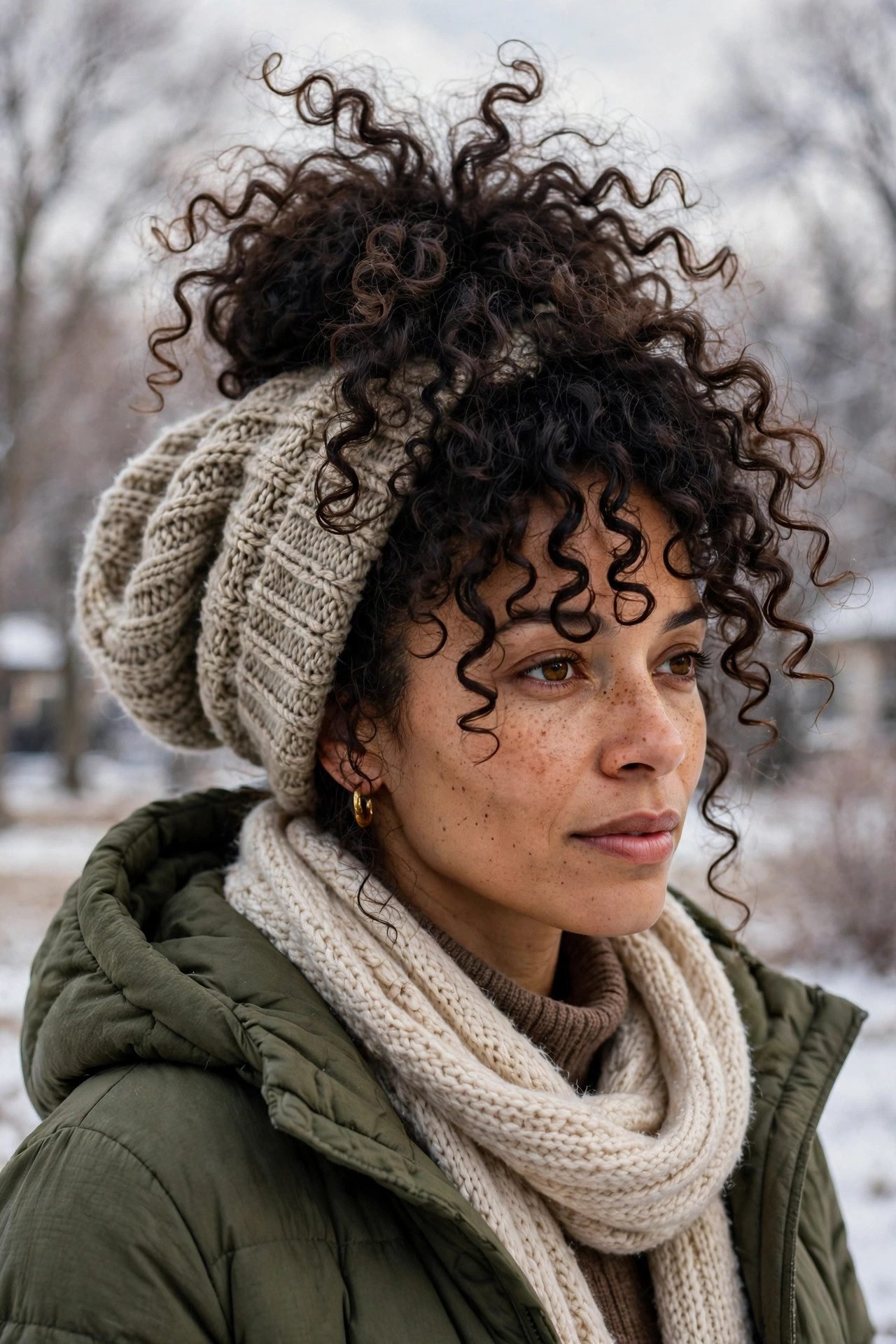
Natural curls survive beanies best in a high pineapple under a slouchy-fit hat. She should gather curls loosely on top with a satin scrunchie and choose a beanie with room — not a tight skullcap. It suits curly and coily hair. The curls stay defined because nothing compresses them. Pro tip: line any beanie with a satin scarf or buy satin-lined — cotton beanies absorb moisture from curls and leave them frizzy and dry.
15. The Rope Braid

A single rope braid down the back is sleek, simple, and immune to hat damage. She should pull the hair into a low ponytail, split in two, twist each section one way, then wrap them the opposite way. It suits medium to long hair. It looks polished with winter coats and scarves. Pro tip: the rope braid’s smooth surface resists the frizz that winter wind causes — it is one of the best protective styles for harsh weather.
16. Wavy Bob With a Deep Side Part

A deep side part gives short hair built-in volume that survives a beanie. She should part deeply, add waves, and let the beanie sit back from the hairline. It suits bobs and lobs. When the hat comes off, the deep part’s lift returns with a quick finger-fluff. It flatters round faces especially. Pro tip: set the part with a light spray before the beanie goes on — hats push parts back toward the middle, and preset hold keeps it deep.
17. Milkmaid Braids

Milkmaid braids wrapped across the crown stay put under a beanie and look romantic when revealed. She should make two braids, cross them over the top of the head, and pin the ends underneath. It suits medium to long hair. The beanie sits over the braids without flattening them much. Pro tip: pancake the braids before wrapping — wider braids grip the head better and show more detail at the crown.
18. The Sleek Low Bun With a Middle Part

Sharp and minimal, the sleek low bun with a middle part looks deliberate even after hours under a hat. She should smooth the hair with gel, part precisely, and coil into a flat low bun. It suits medium to long hair. The gelled roots resist hat-line dents better than any other finish. It pairs with structured winter coats. Pro tip: tie a silk scarf over the smoothed style for five minutes before the beanie — it sets the sleekness so the hat cannot disturb it.
19. Textured Pixie Under a Beanie

Short pixies are the ultimate beanie-proof hair — there is almost nothing to flatten. She should add texture paste for piecey definition and pull the beanie on; when it comes off, a quick ruffle restores the style. It suits all pixie lengths. Static is the only enemy — a tiny amount of serum prevents it. Pro tip: pixie wearers should choose beanies that sit above the ears’ tops or cover fully; mid-ear beanies create an odd compressed ring on short hair.
20. Overnight Heatless Curls, Beanie by Day

Heatless curls set overnight, protected by a beanie during the day, give winter waves with zero heat damage. She should set damp hair in a robe-curl or braids overnight, release in the morning, and let the beanie guard the curls from wind. It suits medium to long hair. The beanie actually helps — it shields curls from the dry winter air that causes frizz. Pro tip: take the beanie off indoors and shake the curls out at the roots — the volume returns instantly and the curl pattern holds.
Winter hair is about strategy, not surrender. Style for the hat, not against it — low profiles, texture that springs back, and anti-static prep. With these 20 looks, the beanie comes off and the hair still looks intentional.