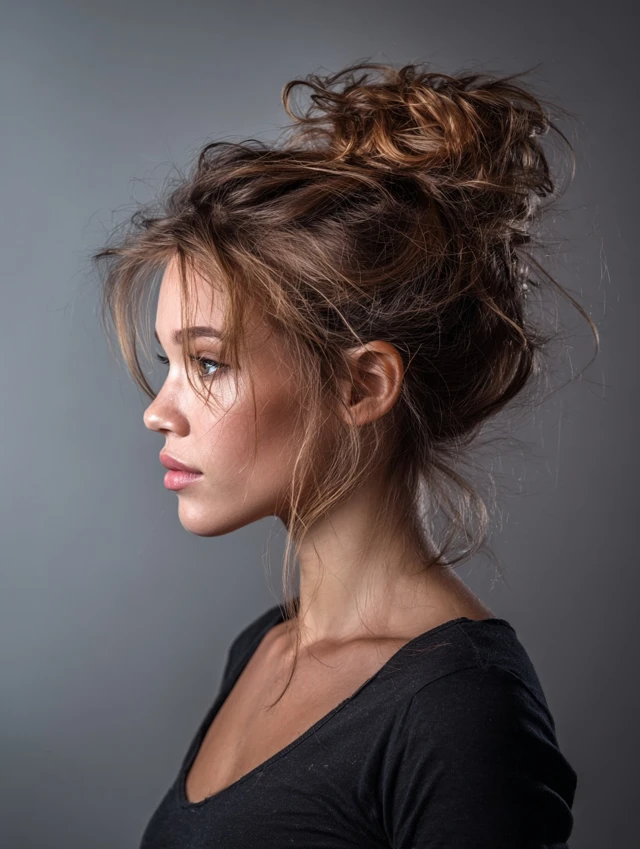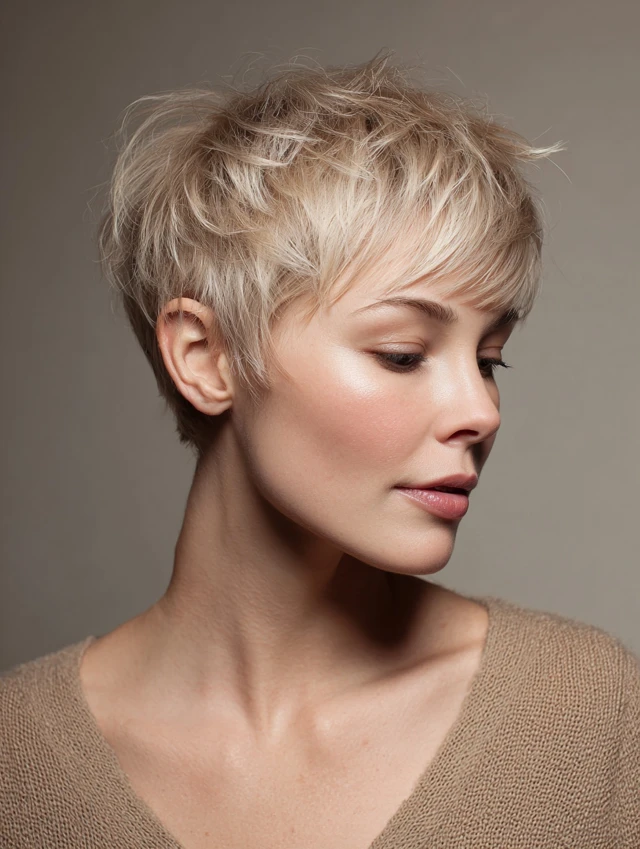
Fine hair and pixie cuts are a perfect match — when the cut is designed for it. The right soft pixie uses longer crowns, feathered texture, and strategic layering to create the illusion of fullness, while the wrong one can expose every thin spot. This list of 19 soft pixie cuts is curated specifically for fine hair: gentle tapers instead of harsh lines, volume-building layers, face-framing fringes, and styling tricks that keep roots lifted. Each idea includes the cut details to request, the best face shapes and textures, and pro tips for styling fine hair so your pixie always looks full, soft, and intentional.
1. The Classic Soft Pixie
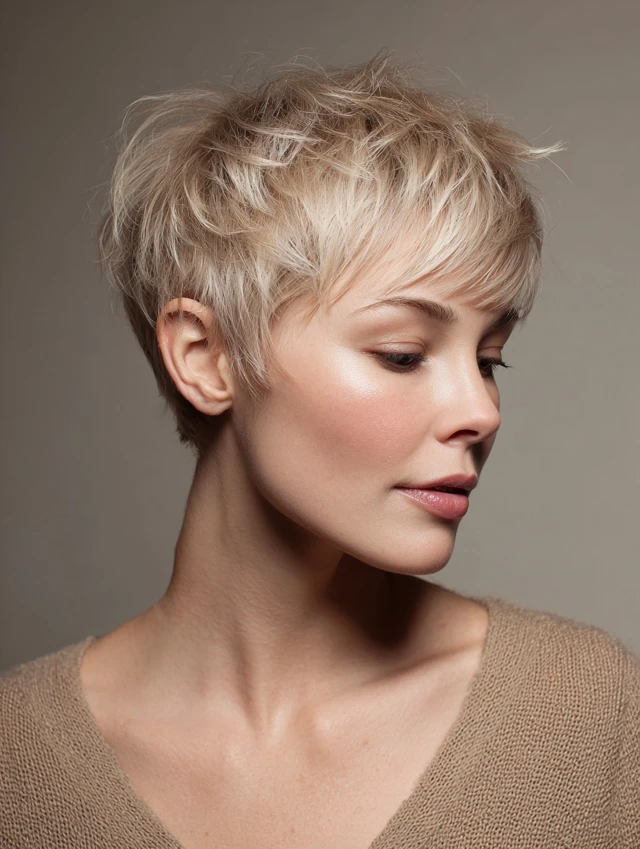
The classic soft pixie keeps length on top (two to three inches) with gently tapered sides and nape — no harsh lines, just soft, touchable shape. For fine hair, the longer crown is the secret: it creates the visual weight that fine hair lacks, while the tapered perimeter keeps the silhouette neat. Style with a pea-sized amount of volumizing mousse on damp hair, blow-dry forward with fingers, and finish with a light texture cream. It is the lowest-risk pixie for fine-haired first-timers.
Best for: Fine, straight to wavy hair, oval and heart face shapes. Pro tip: Ask for point cutting through the crown rather than blunt cutting — it removes bulk without creating visible layers that can make fine hair look thinner.
2. Pixie with Long Side-Swept Bangs
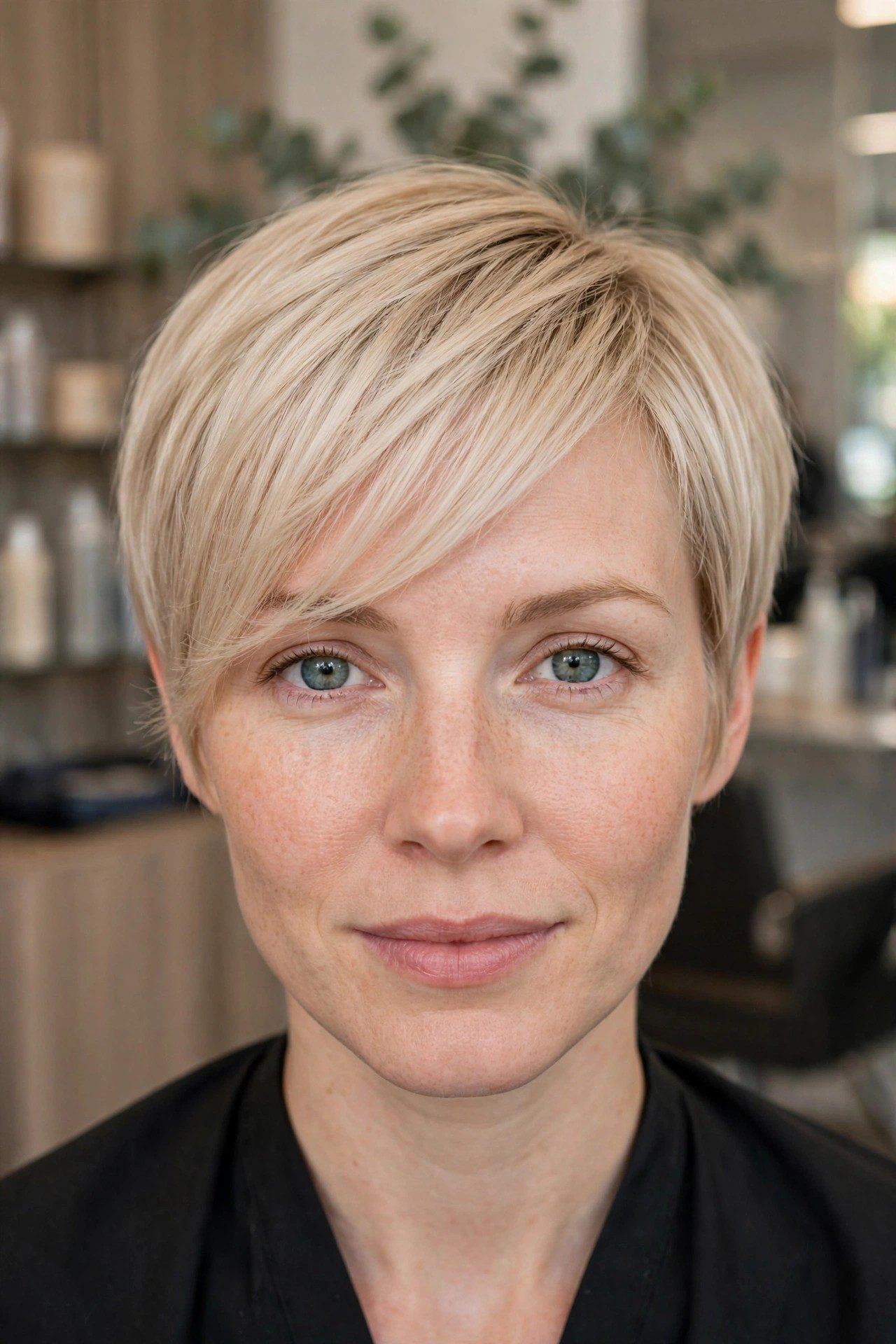
Long side-swept bangs draped across the forehead give a soft pixie instant femininity and face-framing softness. On fine hair, the deep side part creates the illusion of density — hair directed across the head covers more scalp than hair pushed straight back. The bangs also grow out gracefully, blending into the top layers over a few months. Blow-dry the fringe with a small round brush, directing it across, and set with a light-hold spray.
Best for: Fine hair with a high forehead, round and square face shapes. Pro tip: Train the part while hair is damp; fine hair sets its direction as it dries and resists re-parting later.
3. Textured Crop Pixie

Choppy, piece-y texture through the crown is fine hair’s best friend — the separated pieces create shadow and light that read as fullness. Ask for lots of internal texture (not thinned ends, which backfire on fine hair) and style with a matte paste, pinching small sections for definition. The deliberately undone finish also hides the flat spots fine hair is prone to by day two. This is the wash-and-go pixie, needing little more than fingers and product.
Best for: Fine, straight hair, active lifestyles. Pro tip: Use half the product you think you need — fine hair overloads fast, and too much paste makes texture look greasy instead of piece-y.
4. Soft Pixie with Tapered Nape

A softly tapered nape — graduated close at the neckline and lengthening upward — gives the pixie a clean, elegant perimeter without severity. For fine hair, the taper is strategic: it removes the wispy, see-through ends at the neckline where fine hair looks weakest, concentrating visual density up top. The grow-out is forgiving too, since the nape simply softens over six to eight weeks. Keep the neckline cleaned up between cuts for lasting polish.
Best for: Fine hair with thin neckline growth, professional settings. Pro tip: Ask the barber to taper with scissors rather than clippers for a softer, more feminine finish.
5. Curly Soft Pixie

Fine curly hair in a soft pixie is a volume cheat code — curls naturally expand outward, creating fullness no product can fake. Keep the top long enough for the curl pattern to form (usually two-plus inches) and taper the sides gently so the shape stays balanced. Style with curl cream on soaking-wet hair, scrunch, and diffuse or air-dry. The key cut detail: dry-cut or curl-by-curl cutting, since wet cutting shrinks unpredictably on fine curls.
Best for: Fine type 2c–3b curls. Pro tip: Sleep on a silk pillowcase and refresh mornings with a water mist — fine curls revive easily without full re-washing.
6. Pixie with Wispy Fringe
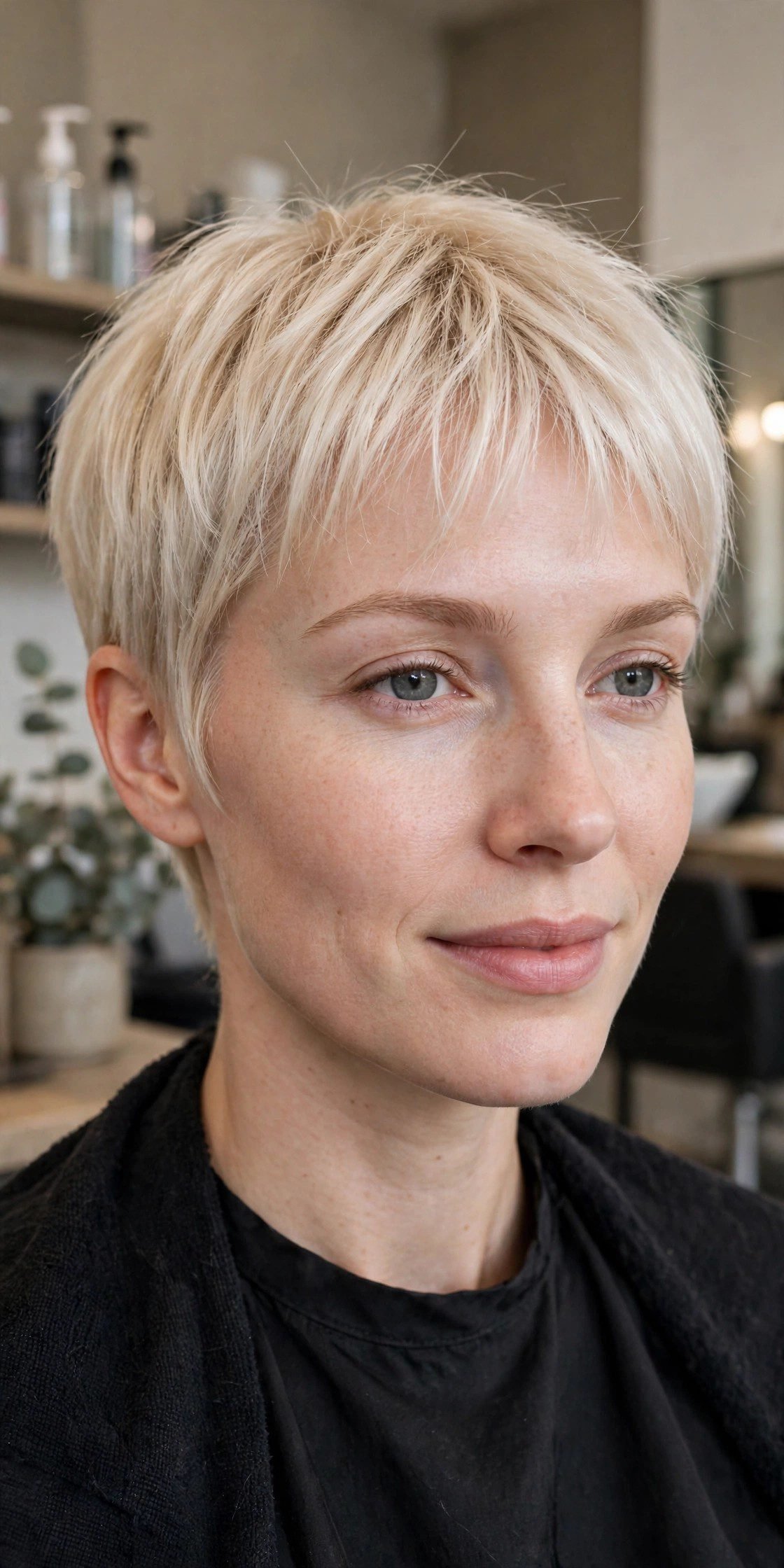
A wispy, feathered fringe softens the pixie’s forehead line and adds movement that flatters fine hair beautifully. Unlike a heavy blunt bang (which can expose scalp on fine hair), the wispy version is cut with lots of texture so it lies in airy pieces. It draws attention to the eyes and works especially well with glasses. Style by blow-drying the fringe forward with fingers, then separating pieces with a tiny amount of cream.
Best for: Fine, straight hair, long foreheads, glasses wearers. Pro tip: Trim the fringe yourself between appointments with sharp shears — just dust the very tips to maintain the wispy texture.
7. Asymmetrical Soft Pixie

One side worn slightly longer than the other gives the soft pixie modern edge while the asymmetry itself creates the illusion of fullness — the eye reads the longer sweep as abundance. On fine hair, keep the shorter side softly tapered (not buzzed) to maintain femininity. The deep side part required by the asymmetry also lifts roots for natural volume. This cut photographs beautifully and grows out into an elegant longer pixie.
Best for: Fine, straight to wavy hair, anyone wanting edge without severity. Pro tip: The asymmetry needs rebalancing every five to six weeks or the longer side starts to drag the shape down.
8. Pixie with Volume-Boosting Layers

Short, stacked layers through the crown build height exactly where fine hair goes flat. The layering removes weight from underneath so the top layers lift instead of lying limp — the fundamental volume trick for fine hair. Ask for layers that are blended, not chunky, so the grow-out stays soft. Style upside-down with a blow dryer and a round brush at the crown, then flip and arrange — the roots will hold surprising lift all day.
Best for: Very fine, limp hair needing maximum lift. Pro tip: A root-lifting spray applied to damp roots before blow-drying multiplies the layered volume.
9. The Grown-In Soft Pixie
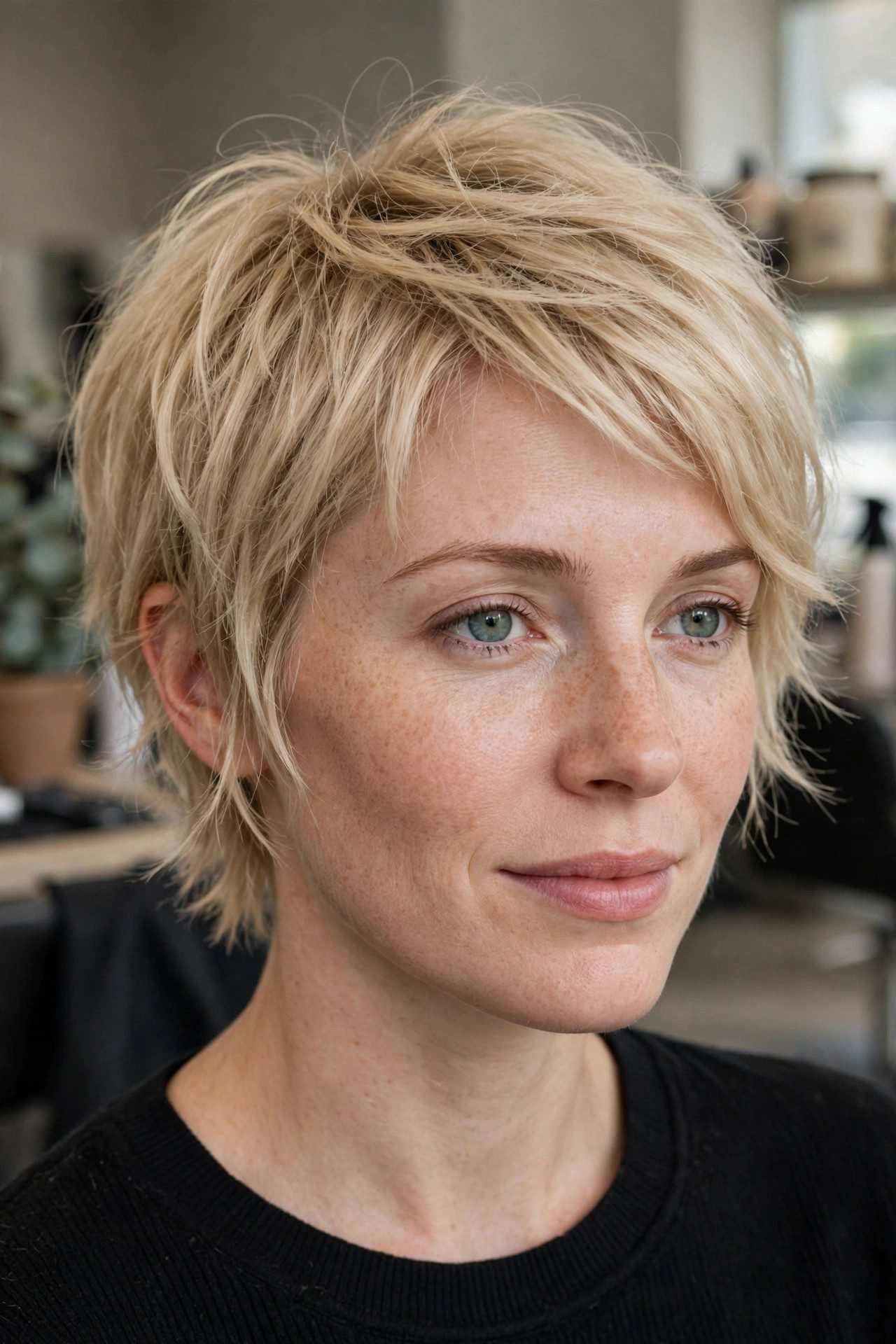
Deliberately grown a touch longer all over — three to four inches on top with soft, blended sides — this pixie reads relaxed and romantic rather than severe. The extra length is a gift for fine hair: more hair to work with means more styling options (tucks, sweeps, soft waves) and better scalp coverage. It is also the ideal transition cut if you are growing out a shorter pixie toward a bob. A light wave with a flat iron adds beautiful soft movement.
Best for: Fine hair in transition, wavy textures, low-maintenance routines. Pro tip: This length shows growth fastest — book trims every six weeks to keep the shape intentional.
10. Soft Pixie with Undercut Detail

A hidden undercut — closely tapered underneath with length left on top — removes bulk where fine hair doesn’t need it and concentrates density where it shows. The undercut is invisible when hair is down but reveals itself in updos or tucked styles for a subtle edge. For fine hair, the real benefit is practical: less hair at the nape means less sweating, faster drying, and a cleaner grow-out. Keep the top soft and textured to contrast the neat underneath.
Best for: Thick-feeling fine hair (lots of strands, thin shafts), warm climates. Pro tip: The undercut needs refreshing every four weeks or the grow-out gets fuzzy — ask your stylist for a quick nape cleanup between full cuts.
11. Side-Parted Sleek Pixie
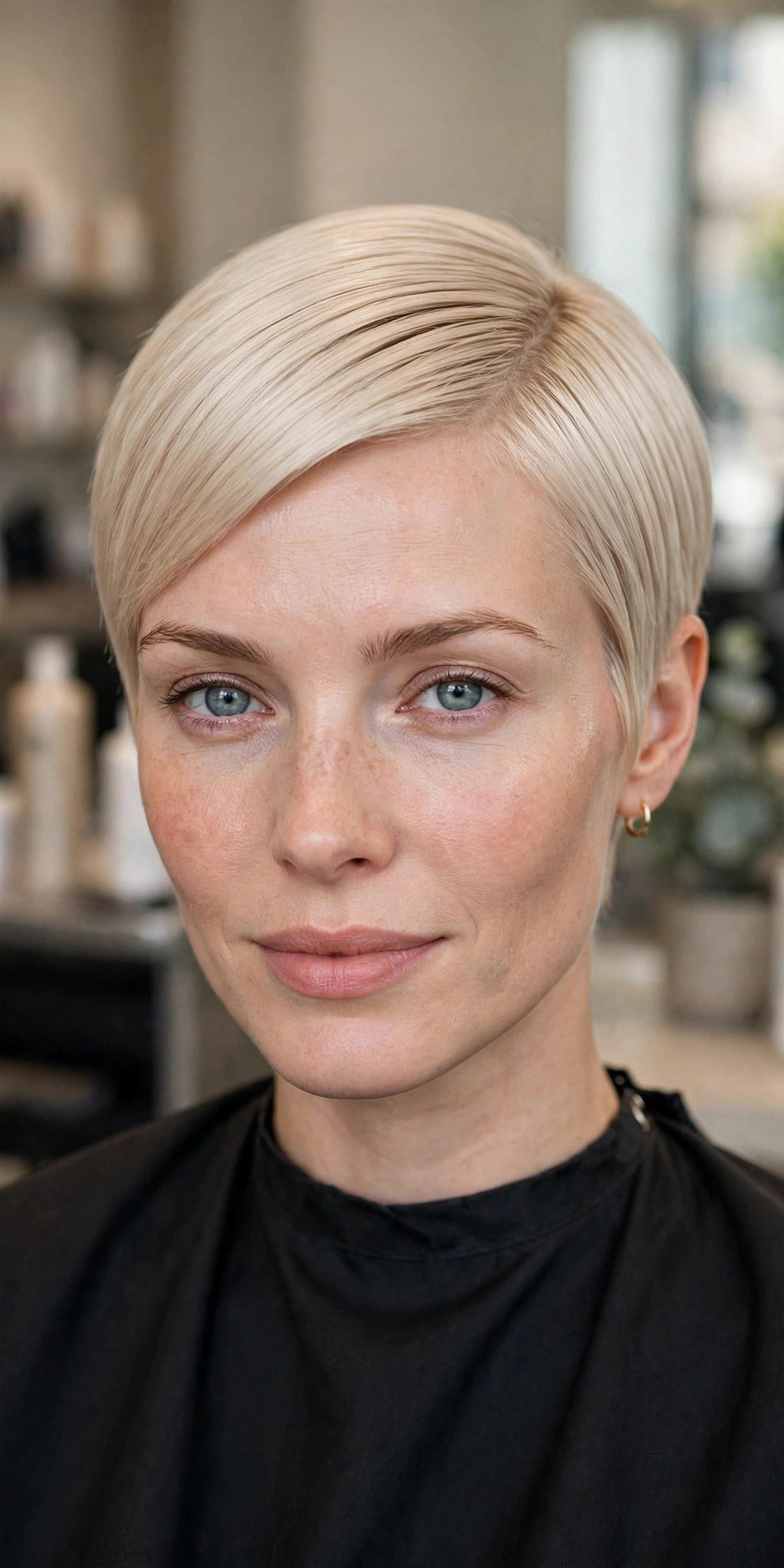
Sleek and side-parted, this polished pixie proves fine hair can do smooth sophistication. A deep side part with hair smoothed across the crown creates a glossy, reflective surface — and shine reads as health and density on fine hair. Achieve it with a smoothing cream on damp hair, a paddle brush blow-dry, and a flat iron pass over the top layer only. Tuck one side behind the ear to show off earrings and keep the look modern.
Best for: Fine, straight hair, formal occasions and offices. Pro tip: Shine spray is the finishing secret — mist lightly from arm’s length so fine hair doesn’t get weighed down.
12. Pixie with Feathered Layers

Feathered layers — soft, outward-flicking texture cut with a razor or point cutting — give the pixie airy movement that flatters fine hair enormously. The feathering creates flicked ends that catch light individually, producing the shimmer of fullness. This 70s-inspired technique is back because it solves fine hair’s flatness problem so elegantly. Style with a round brush flicking ends outward, or let air-dry for a softer version of the flick.
Best for: Fine, straight to slightly wavy hair, vintage lovers. Pro tip: Razor cutting must be done on dry hair by an experienced stylist — on wet fine hair it can remove too much.
13. Tousled Bedhead Pixie
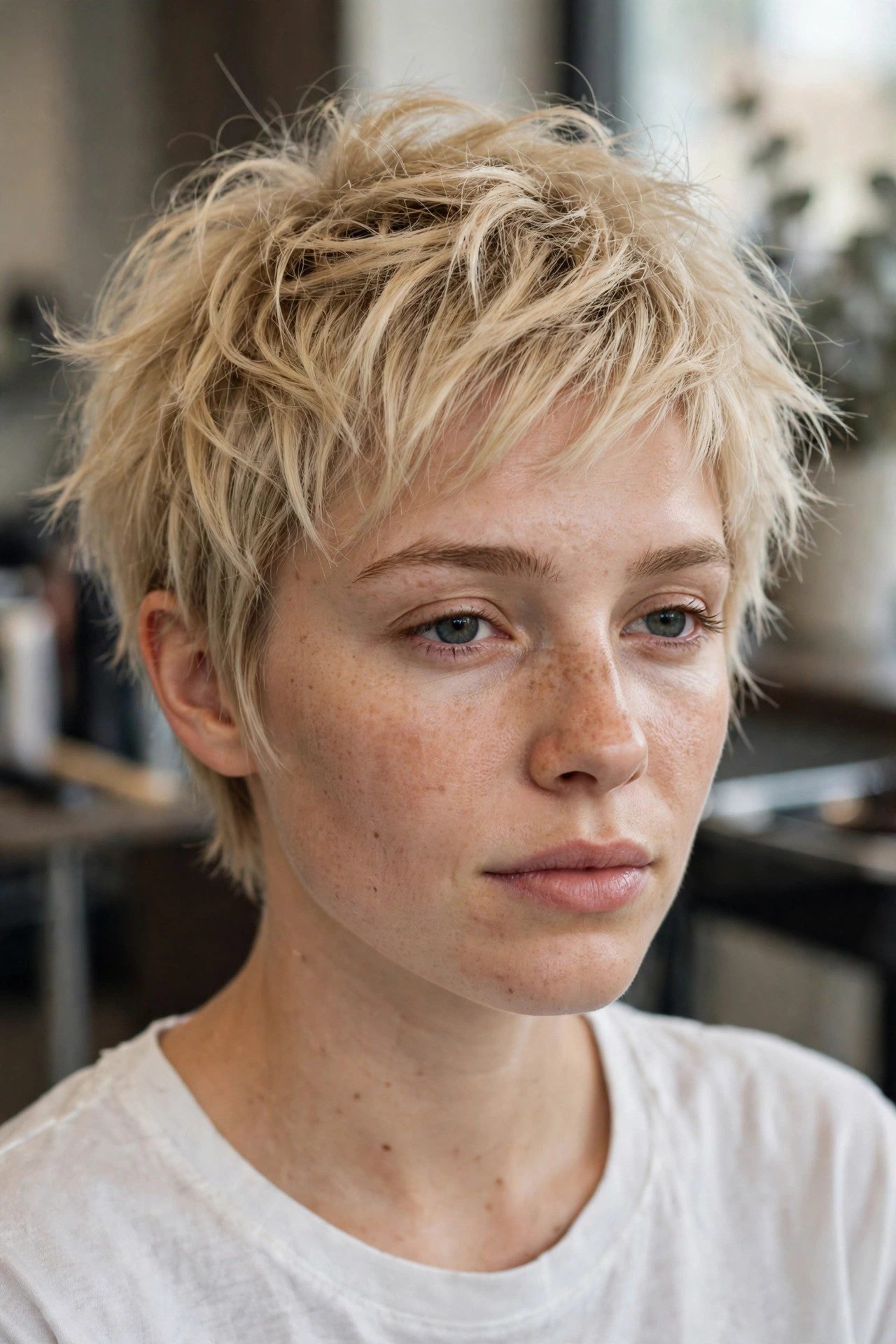
The tousled bedhead pixie embraces imperfection: finger-dried, piece-y, and deliberately undone. For fine hair, this is liberating — the messy texture disguises thin spots and flat roots better than any polished style. Work a texturizing powder into dry roots for grip, then pinch and twist small sections with matte paste. Second-day hair actually styles better than freshly washed, making this the ultimate low-effort pixie.
Best for: Fine, straight hair, casual lifestyles. Pro tip: Dry shampoo at the roots before bed gives you perfect next-morning tousle with zero morning effort.
14. Soft Pixie with Long Nape

Keeping the nape slightly longer — a soft, ducktail-ish finish at the neckline — gives the pixie a feminine, 60s-inspired softness. On fine hair, the longer nape adds precious length and weight at the back, balancing a fuller crown. It is also the most forgiving pixie to grow out, since the nape is already on its way to bob length. Style the nape smooth against the neck with a small round brush for a polished finish.
Best for: Fine hair being grown out, longer necks, retro style lovers. Pro tip: Keep the nape conditioned — fine hair at the neckline rubs against collars and breaks easily.
15. Pixie-Bob (Bixie) for Fine Hair

The bixie — pixie shortness at the back, bob length around the face — is arguably the perfect fine-hair cut: the short back removes weight so the front can swing with volume. Face-framing length softens the jawline and gives styling versatility (tuck, sweep, or wave the front pieces). For fine hair, the contrast between the cropped back and longer front creates the illusion of much thicker hair. It is the most requested hybrid cut for good reason.
Best for: Fine hair wanting versatility, round and square faces. Pro tip: The bixie lives or dies by the back section — keep it trimmed every five weeks or the shape collapses.
16. Soft Pixie with Highlights
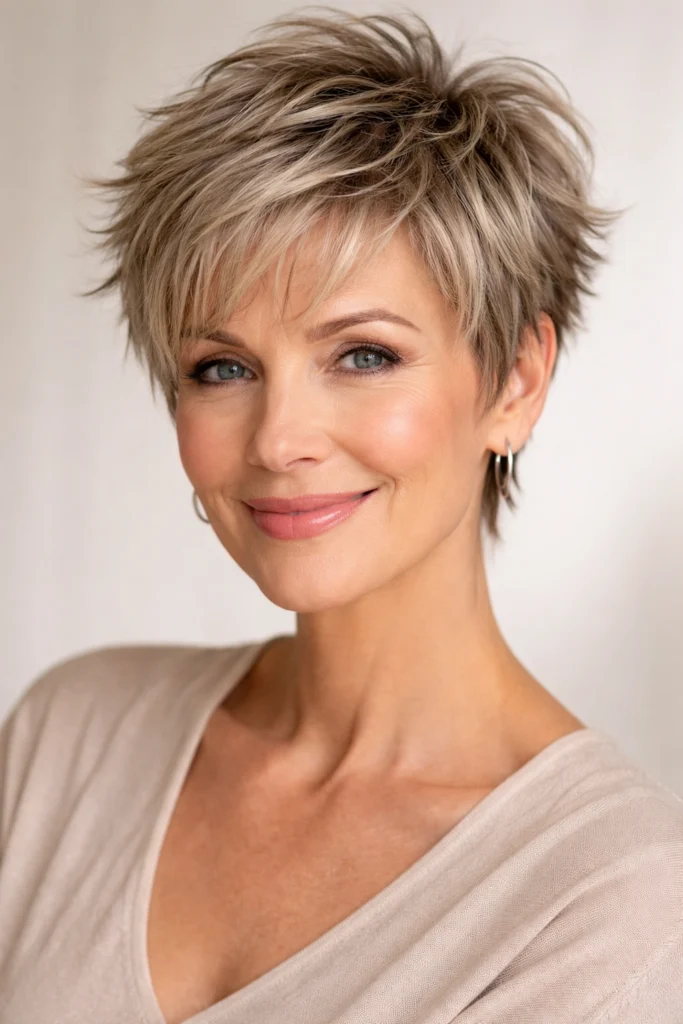
Strategic highlights transform a fine-hair pixie: fine babylights through the crown create light-and-shadow dimension that reads as thickness. Keep the highlights fine and close to your natural base — high contrast exposes scalp, while tonal dimension fakes density. The color also roughs up the cuticle slightly, giving fine hair more grip and body. A gloss between highlight sessions keeps the tone fresh without more lightening.
Best for: Fine, flat-looking hair needing dimension. Pro tip: Ask for “teasy lights” at the crown — backcombed foils that blend seamlessly and need no harsh root line.
17. Windswept Soft Pixie

The windswept pixie directs all the top length to one side in a soft, flowing sweep — movement that gives fine hair life and the illusion of abundance. Achieve it by blow-drying the crown with a round brush in the sweep direction, then setting with flexible-hold spray. The asymmetry of the sweep flatters most face shapes and the style holds well on fine hair because there is so little weight pulling it down. It reads effortlessly chic with minimal product.
Best for: Fine, straight to wavy hair, medium foreheads. Pro tip: A light mousse on damp roots gives the sweep staying power without stiffness.
18. Minimalist Micro Pixie
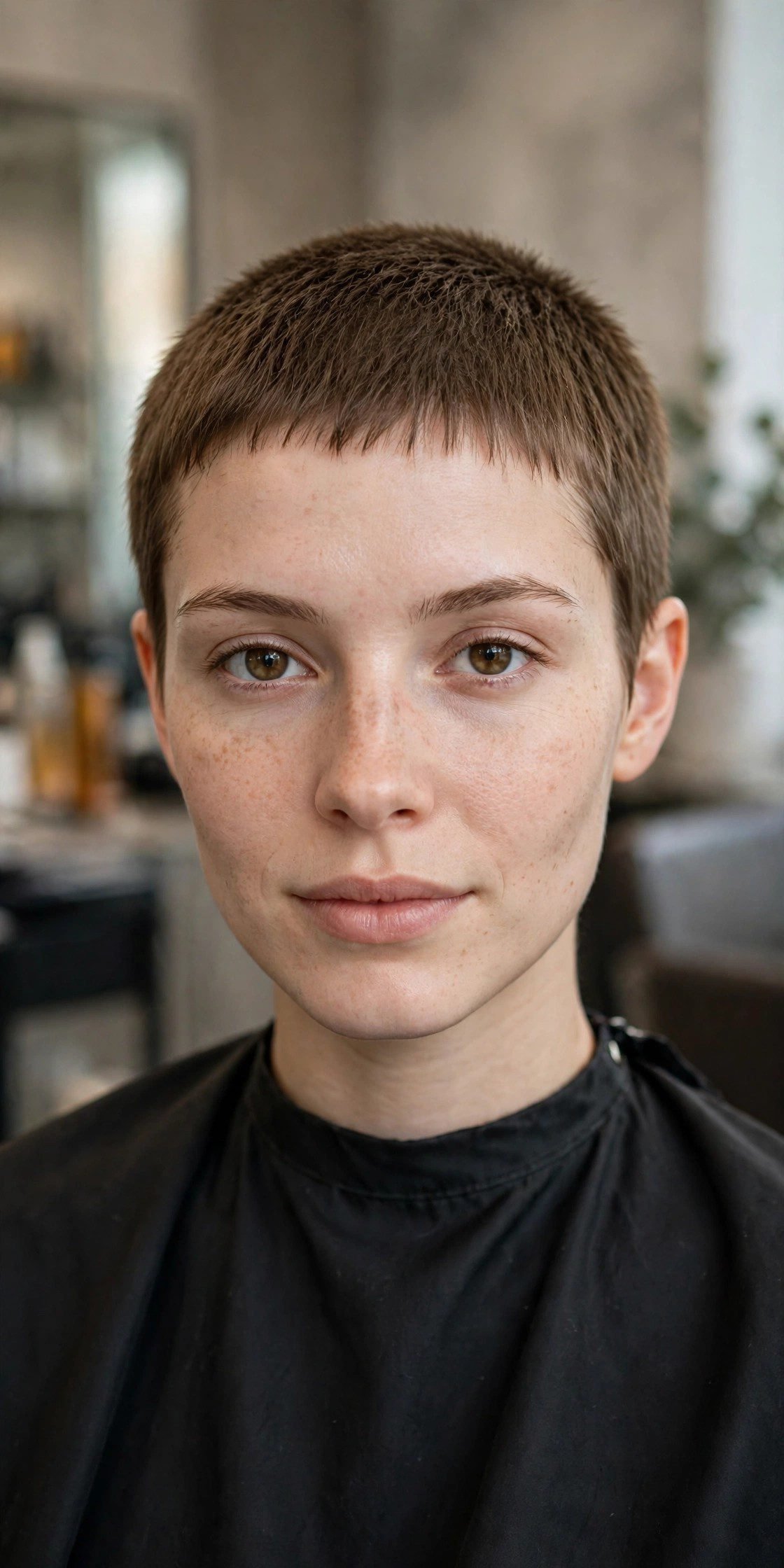
The micro pixie — cropped close all over with soft, non-severe edges — is the bold minimalist choice that paradoxically suits fine hair well: with so little length, there is nothing to go flat, and the focus shifts to bone structure. Keep the edges soft (scissor-tapered, not clippered harsh) and the top just long enough for a whisper of texture. Style with a tiny amount of cream for definition. It is wash-and-go in the truest sense.
Best for: Confident minimalists, strong bone structure, very fine hair. Pro tip: This cut grows out fast and loses its edge — plan trims every three to four weeks.
19. Soft Pixie with Deep Side Part
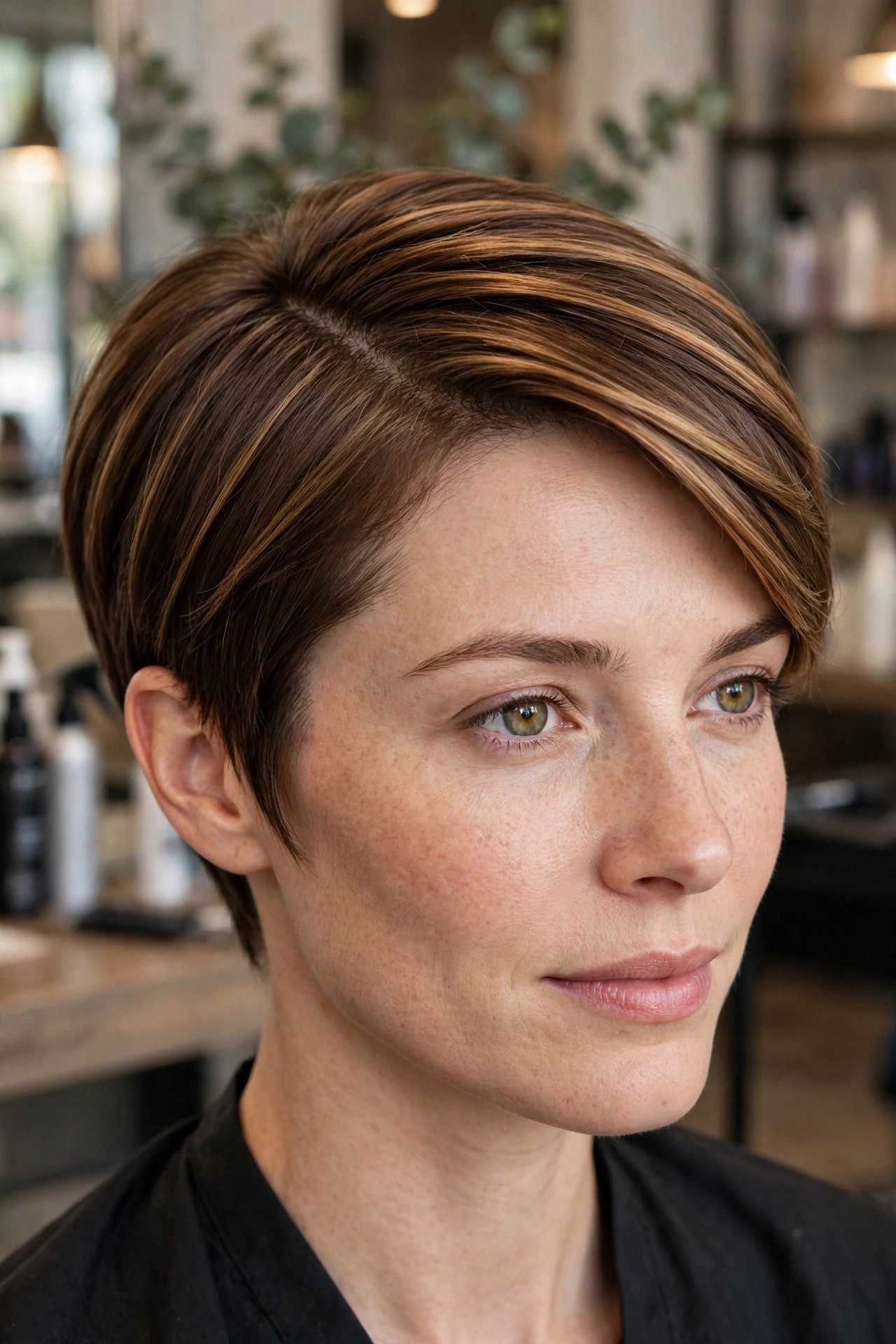
A dramatic deep side part transforms the basic soft pixie, piling most of the hair to one side for instant volume and asymmetry. On fine hair, the deep part is a volume technique in itself — roots lifted against their natural direction stand taller. Combine with a tapered opposite side to emphasize the contrast. Style by blow-drying the heavy side with a round brush for smoothness and letting the short side hug the head.
Best for: Fine hair needing root lift, oval faces. Pro tip: Switch the part side every few months — fine hair “remembers” a part and goes flat if never redirected.
The secret to a great pixie on fine hair is softness with strategy — texture for fullness, length on top for coverage, and tapering that keeps the silhouette clean. Bring these ideas to a stylist experienced with fine hair, and don’t be afraid to ask for point cutting over blunt edges. With the right cut and a light hand with product, fine hair makes some of the most beautiful pixies of all.