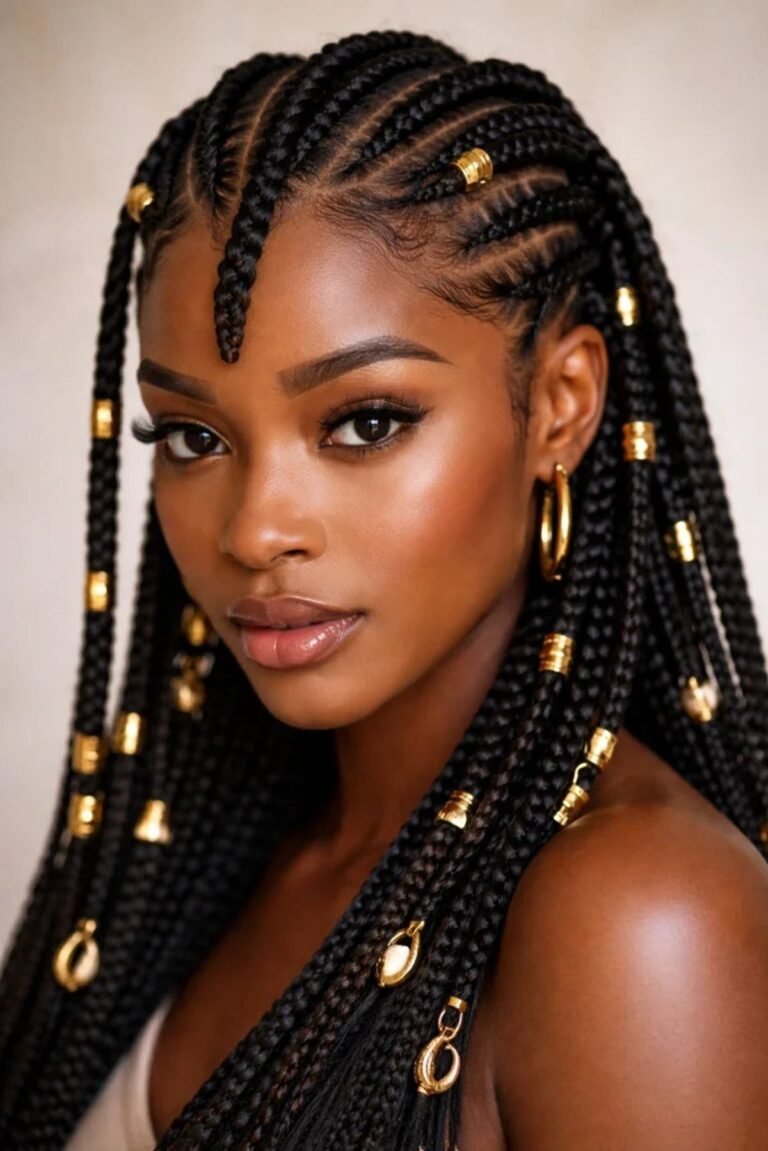
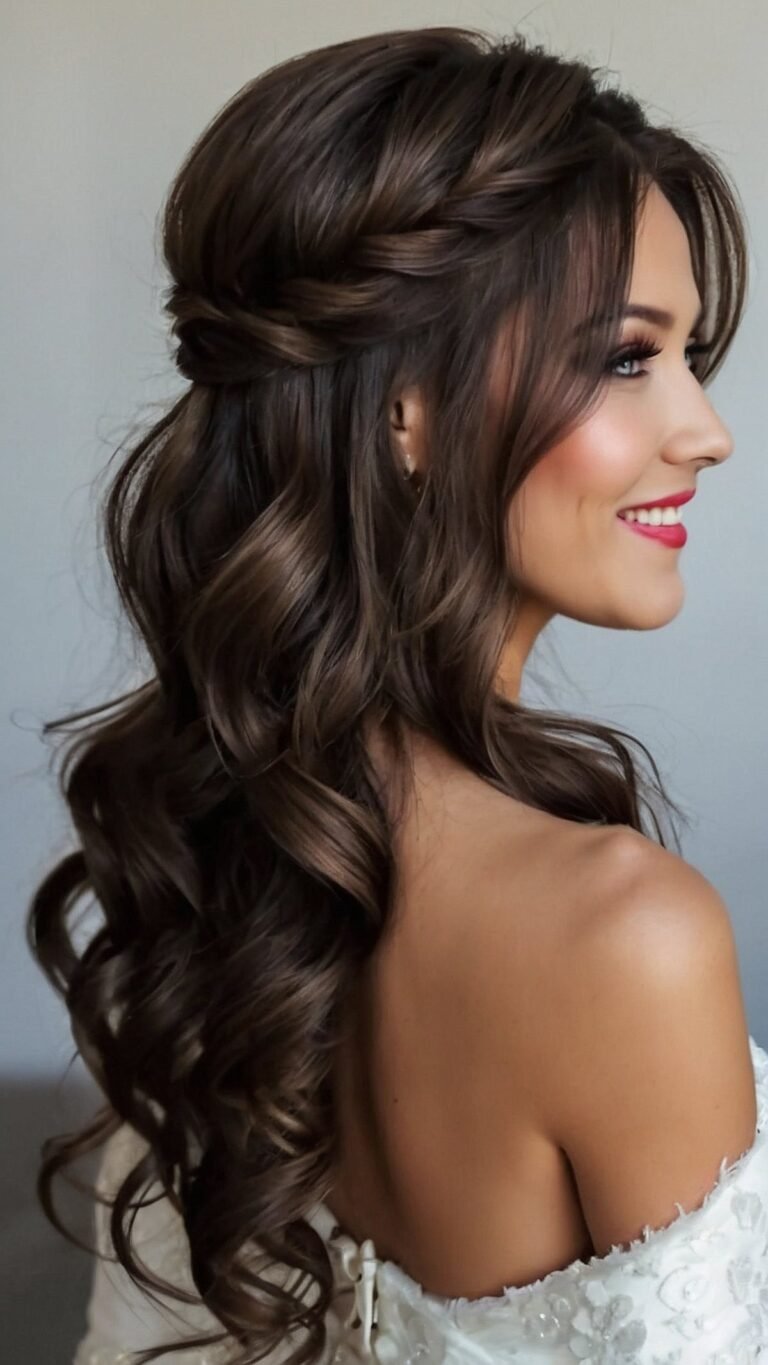
Hat-friendly hairstyles that survive winter headwear start with one rule: keep the crown flat and move the volume low. Beanies, berets, fedoras, and earmuffs all crush volume at the roots, so styles that sit at the nape, drape to one side, or lie close to the scalp look just as good coming off as going on. The trick is choosing shapes that work with compression instead of against it — low ponytails, side braids, tucked buns, and wrapped scarves that actually benefit from a hat’s smoothing effect. These thirteen styles stay neat under wool, felt, and fleece, need no restyling when the hat comes off, and keep static and hat hair under control. Whether she favors a slouchy beanie or a structured fedora, every look below is built to be worn under a hat all day and revealed without a mirror check.
Low Twisted Ponytail

The low twisted ponytail is the simplest hat-friendly hairstyle that still looks deliberate. She gathers her hair at the nape, splits it into two sections, twists them around each other, and secures the ends with a small elastic. Because the style starts below the crown, a beanie or beret slides over it without creating bumps or flattening anything that matters — the twist itself is the detail. It works especially well for medium to long hair and reads polished in professional settings where a plain ponytail might feel too casual. To make it, she should add a drop of smoothing serum first so the twist looks rope-like rather than fuzzy, and wrap a small section of hair around the elastic to hide it. Pro tip: a loose, chunky twist survives a full day under a hat better than a tight one, which can dent.
Double Dutch Braids

Double Dutch braids are the gold standard for surviving hours under winter headwear. The two braids lie flat against the scalp, so a hat sits over them without pressure points, and the raised 3D texture of a Dutch braid holds its definition even after compression. She parts her hair down the middle, Dutch-braids each side from the hairline to the nape, and secures the ends — the whole style takes under ten minutes once practiced. It works for every hair length past the chin and doubles as a heatless wave method: unbraid at night for effortless texture. The braids also tuck neatly under hoods and helmet straps, making them practical for commuters. Pro tip: pancake the braids gently before putting the hat on, because loosening them afterward is harder once static sets in.
Milkmaid Crown Braid

The milkmaid crown braid keeps every strand pinned up and away, which makes it one of the most reliable hat-friendly hairstyles for long hair. She creates two regular three-strand braids, crosses them over the top of her head, and pins them flat against the scalp so the finished ring sits below the hat line. A beret or slouchy beanie rests naturally on the braid’s even surface, and removing the hat reveals a style that looks freshly done rather than rescued. It suits thick hair particularly well, since the braid’s bulk becomes the look’s architecture instead of a problem to hide. To build it, she should braid slightly looser than usual so the crown lies flat, and use U-pins rather than bobby pins for stronger hold. Pro tip: a light mist of flexible-hold spray before the hat goes on prevents flyaways from escaping at the hairline.
Low Messy Bun

The low messy bun sits at the nape where hats never interfere, making it the easiest polished option for second-day hair. She pulls her hair into a low ponytail, twists it loosely around its base, and pins it into a soft bun, leaving a few face-framing pieces out for softness. Unlike a topknot, which a beanie would crush, the nape placement means the hat glides over the crown and the bun stays completely intact underneath. It works for medium and long hair and looks intentional rather than undone when the pieces are pulled deliberately rather than randomly. To make it, she should texturize first with dry shampoo so the bun has grip, and secure it with a second elastic for insurance. Pro tip: position the bun slightly off-center for a more modern, editorial feel that photographs well.
Bubble Ponytail
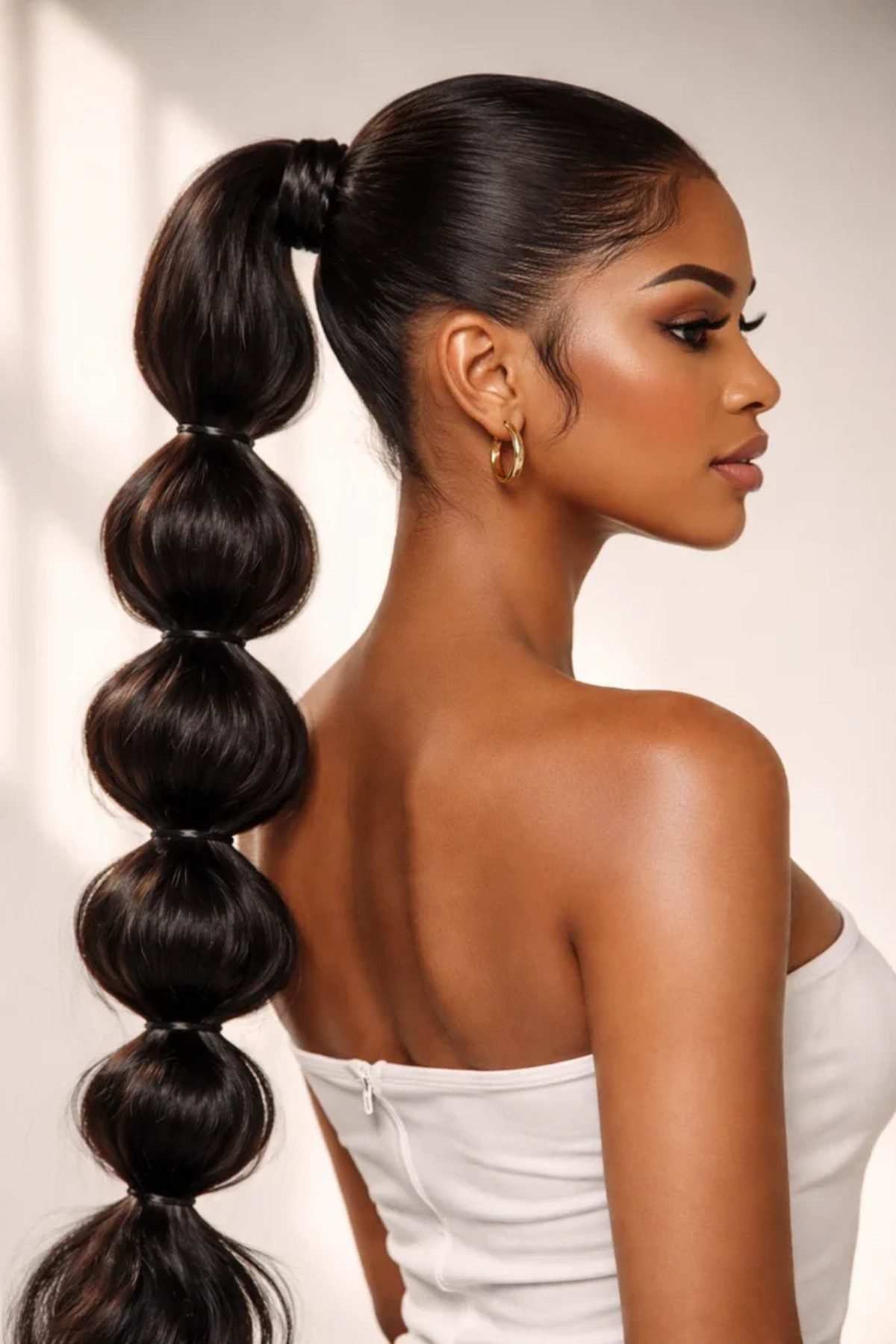
The bubble ponytail turns a basic low pony into a statement that a hat cannot ruin. She secures a low ponytail at the nape, then adds elastics every two inches down the length, gently pulling each section outward to form rounded bubbles. Because the volume sits below the hat line, the style emerges completely unscathed when the hat comes off — and the playful shape draws the eye downward, away from any root flatness. It works best on medium to long hair and is especially fun for younger wearers or casual weekends. To build it, she should use clear mini elastics for a clean finish and backcomb each section lightly before puffing for maximum roundness. Pro tip: two staggered bubble ponytails, one on each side, double the effect and frame a winter coat beautifully.
Loose Side-Part Waves
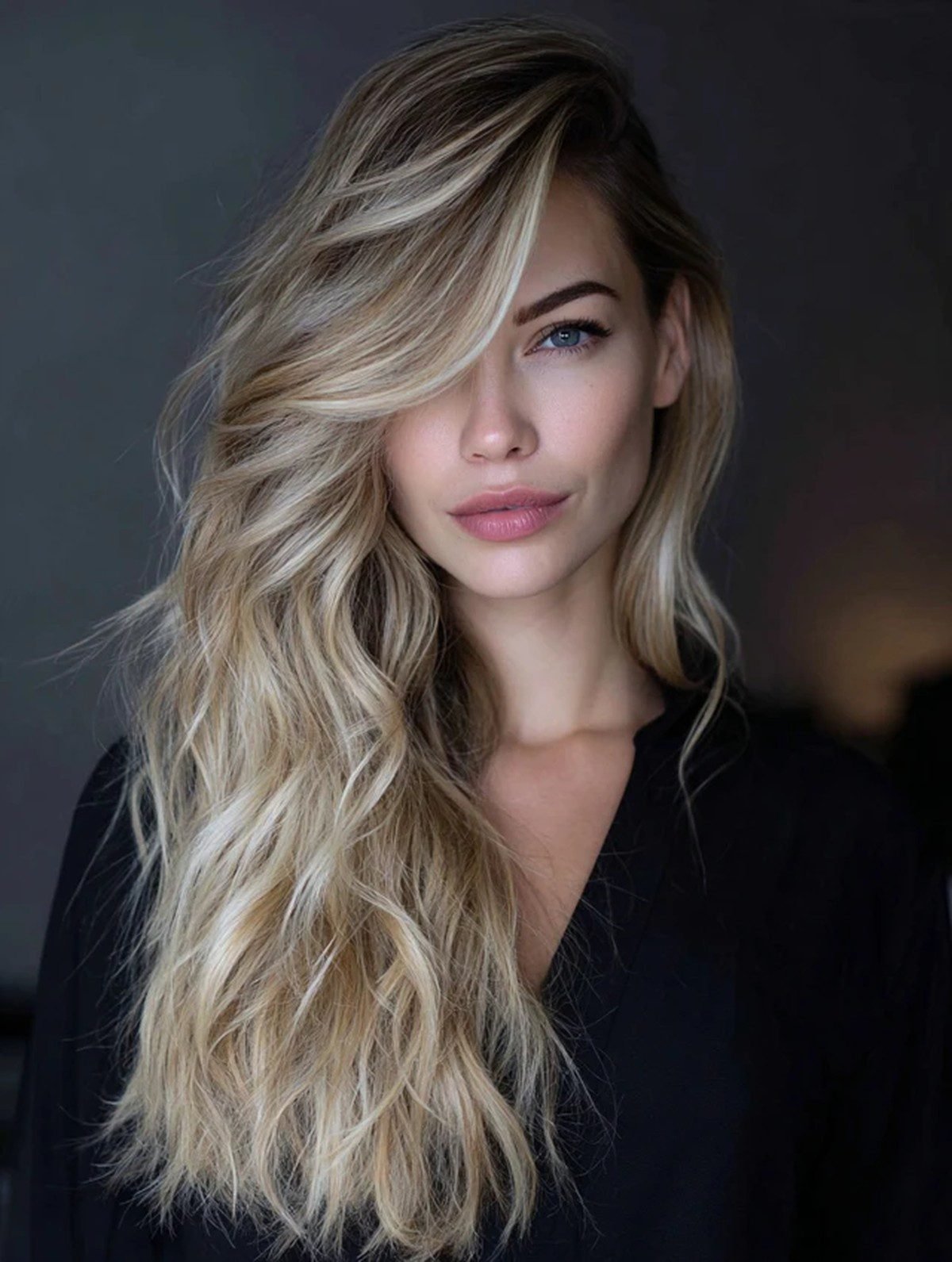
Loose side-part waves are the answer for anyone who refuses to tie her hair up but still wears hats daily. She creates a deep side part, adds loose waves with a large-barrel iron or overnight braids, and lets the heavier side drape forward over one shoulder. A hat sits over the flat part cleanly, and when it comes off, the waves fall back into place with a quick shake — no restyling required. The deep part is the real hero here: it builds root volume on one side that a hat cannot fully flatten, so the style rebounds instantly. This suits all lengths past the chin and flatters round faces by adding asymmetry. Pro tip: she should keep the waves starting below chin level, since curls at the crown get crushed and look limp after hat removal.
Halo Headband Braid

The halo headband braid frames the face like a built-in accessory and lies flat enough for any hat to sit over it. She braids a section from one temple, working across the hairline to the other side, and pins the tail behind her ear, leaving the rest of her hair loose or in a low pony. Because the braid hugs the hairline, a beanie’s band actually anchors it rather than disturbing it — the hat becomes part of the hold. It works beautifully for medium hair and adds polish to otherwise simple loose styles. To make it, she should Dutch-braid for a raised, visible braid or French-braid for a subtler effect, keeping tension even so it lies flat. Pro tip: this style looks best on day-two hair, when natural oils give the braid grip and prevent slipping.
Low Side Ponytail

The low side ponytail is a classic that earns its place by being nearly indestructible under headwear. She sweeps all her hair over one shoulder and secures it low behind the ear, letting the ponytail drape forward where no hat touches it. The crown stays smooth and flat, so beanies, fedoras, and even tight ski hats slide on without creating dents, and the style looks exactly the same at 5 p.m. as it did at 8 a.m. It suits every hair texture and is especially flattering on long faces, since the asymmetry adds width. To elevate it, she can wrap a strand of hair around the elastic, add a loose braid to the tail, or curl the ends. Pro tip: a side ponytail worn on the opposite side of her usual part creates instant root lift that survives hat compression.
Side Fishtail Braid

The side fishtail braid combines intricate texture with a hat-proof silhouette. She sweeps her hair to one side and weaves a fishtail braid from behind the ear down over the shoulder, pancaking the edges for a full, dimensional finish. Everything sits below the hat line, so the braid’s delicate pattern never gets crushed, and the style actually looks better slightly lived-in — which is exactly what a day under a beanie delivers. It works for medium to long hair and reads elegant enough for evening plans after a day outdoors. To build it, she should keep the first few crosses tight for security, then loosen progressively, and finish with a ribbon or velvet scrunchie for winter texture. Pro tip: fishtails hold best on hair with some grip, so a spritz of texturizing spray before braiding prevents the fine sections from slipping.
Half-Up Top Knot

The half-up top knot places its bun high enough to peek above a slouchy beanie’s band but low enough not to fight it — the best of both worlds. She gathers the top section of hair, twists it into a small knot at the crown’s back edge, and leaves the bottom half loose. The knot’s position just behind the hat line means the beanie sits in front of it comfortably, and when the hat comes off, the style looks playful and intentional rather than flattened. It suits medium to long hair and is a lifesaver for growing-out bangs, which get swept into the knot. To make it, she should backcomb the top section lightly for a fuller knot and secure it with a mini elastic plus one pin. Pro tip: pulling a few strands loose around the knot keeps it from looking severe against winter’s heavier fabrics.
Curly Low Ponytail

The curly low ponytail lets natural texture shine while staying completely hat-compatible. She defines her curls as usual, then gathers them into a loose, low ponytail at the nape with a satin scrunchie, letting the curl clumps cascade over one shoulder. The hat rests on the smooth crown while the curls hang safely below its edge, protected from both crushing and frizz-inducing friction. This is one of the best options for curly and coily hair types, since it requires no heat and no restyling after hat removal. To make it, she should refresh curls with a water-and-leave-in mix before gathering, and avoid pulling the elastic tight, which stretches the curl pattern. Pro tip: a satin-lined beanie or a silk scarf under the hat reduces friction on the crown and keeps the roots smooth for days.
French Braid into a Low Bun

The French braid into a low bun merges two hat-proof classics into one seamless style. She French-braids from the crown down to the nape, then coils the remaining tail into a small bun and pins it flat. The braid keeps the crown perfectly smooth for the hat, the bun sits exactly where headwear never reaches, and the combination looks intricate enough for the office or dinner. It works for medium to long hair and stays secure through wind, commuting, and repeated hat removal. To build it, she should braid with firm, even tension so the crown lies flat, and anchor the bun with at least four pins crossed in an X pattern. Pro tip: this style is ideal for workout-to-work winter days, since it survives both a gym session and a beanie without loosening.
Satin Headscarf Wrap Style

The satin headscarf wrap style uses the scarf itself as both the hairstyle and the hat’s best friend. She smooths her hair into a low bun or braid, then wraps a satin or silk scarf around her head, tying it at the nape or side, and wears her beanie or beret over the whole arrangement. The satin layer eliminates the friction that causes static and frizz, so when both layers come off, her hair is smoother than when she left the house. It works for all hair types and is especially protective for natural and relaxed hair in harsh winter air. To wrap it, she should fold the scarf into a wide band, position it over the hairline, and tie securely so it doesn’t shift under the hat. Pro tip: choose a scarf in a rich winter print — if the hat comes off indoors, the wrap alone looks like a deliberate accessory.
The best hat-friendly hairstyle is the one that treats the hat as part of the look rather than its enemy. Keep the crown smooth, move interest to the nape or the side, and let braids, twists, and low buns do the work. With any of these thirteen styles, she can pull on a beanie in the morning and take it off at lunch looking completely intentional.